
Pošip is one of Croatia's most important indigenous white wine grapes and the signature white variety of the island of Korčula. Its historic heartland lies around the villages of Čara and Smokvica, where Pošip produces dry, characterful wines ranging from fresh and citrus-driven to richer, fuller styles with stone fruit, Mediterranean herbs and a distinctly Adriatic personality.
Modern DNA research has confirmed that Pošip is a natural offspring of two old Korčula varieties, Zlatarica blatska and Bratkovina bijela. If you want a broader introduction to the country's grapes and regions, see our guide to Croatian wines.
Pošip quick overview
| Type | White wine grape |
|---|---|
| Origin | Korčula Island, Dalmatia |
| Parents | Zlatarica blatska × Bratkovina bijela |
| Historic heartland | Čara and Smokvica |
| Typical style | Dry, medium- to full-bodied, aromatic and textured |
| Typical flavours | Citrus, apple, peach, apricot, fig, almond and Mediterranean herbs |
| Best with | Fish, shellfish, octopus, risotto, white meat and aged cheese |
| Serving style | Usually well chilled, but not ice-cold |
| Pronunciation | Roughly “POH-ship” |
What is Pošip?
Pošip is a native Croatian white grape most closely associated with the central part of Korčula Island. The variety developed around the fertile fields of Čara and Smokvica and has become one of the best-known white grapes of Dalmatia.
Unlike much of southern Dalmatia, which is internationally better known for powerful red varieties such as Plavac Mali, Korčula has a particularly strong tradition of indigenous white wines.
Pošip is now grown outside Korčula as well, but the island remains its spiritual and historical home. Producers elsewhere in Dalmatia have shown that the grape can adapt to different soils and winemaking styles while retaining its recognisable Mediterranean character.
Where does Pošip come from?
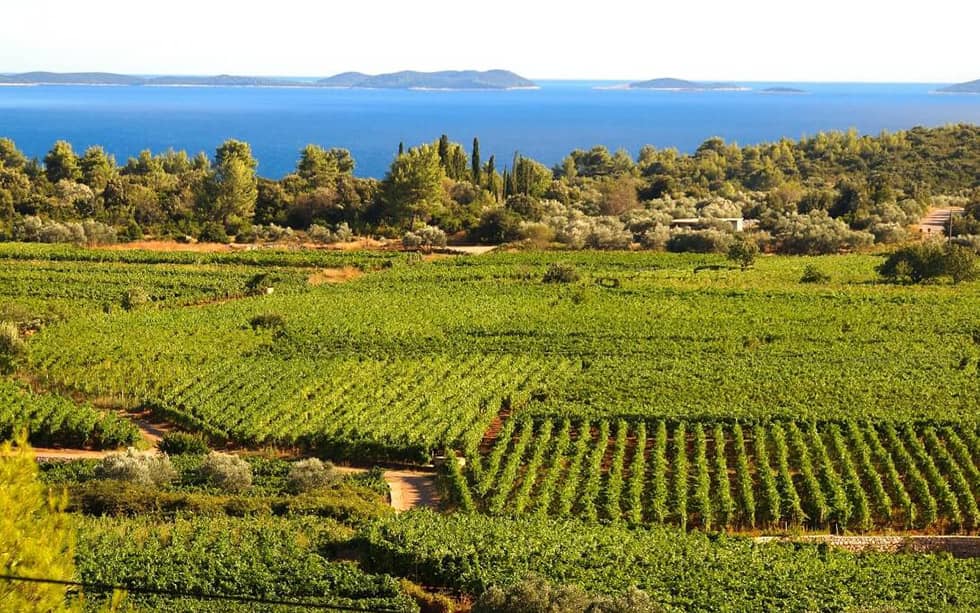
Pošip comes from the island of Korčula in southern Dalmatia. Its traditional centre lies around the villages of Smokvica and Čara, where vineyards occupy fertile fields surrounded by the island's rocky limestone landscape.
Korčula has an ancient winemaking tradition, but Pošip itself is a comparatively recent discovery within that much older history. Local accounts place its discovery in the 19th century, after which growers propagated the variety through vineyards around Smokvica and Čara.
Today, Pošip is also planted in other parts of Dalmatia, including areas of Pelješac, Hvar, Brač and the mainland coast. The grape can produce noticeably different wines depending on vineyard site, ripeness and winemaking.
Korčula and the wider southern Dalmatian wine region form part of the Dubrovnik region.
The story of how Pošip was discovered
Pošip has one of the more memorable origin stories among Croatian grape varieties.
According to local tradition, a farmer from Smokvica named Marin Tomašić discovered an unusual wild grapevine while clearing woodland in the middle of the 19th century. Impressed by the flavour and aroma of the grapes, he took cuttings and planted them in his vineyard.
One popular version of the story says the wild vine had been climbing through a pomegranate bush, or šipak. From the expression po šipku, meaning roughly “along the pomegranate,” the name Pošip is said to have developed.
Another explanation associates the name with the pointed shape of the grape berries. The precise etymology is less certain than the grape's genetic origin, so the pomegranate story is best understood as part of Korčula's local wine tradition rather than proven linguistic history.
Pošip's parent grapes
DNA research has established that Pošip originated from a natural crossing between two old Dalmatian grape varieties:
- Zlatarica blatska
- Bratkovina bijela
Both varieties are associated with Korčula, confirming that Pošip is genuinely native to the island rather than a grape introduced from elsewhere in the Mediterranean.
This genetic evidence is particularly useful because older theories sometimes suggested that Pošip might have arrived on Korčula from another part of the Mediterranean. Modern grape genetics has effectively settled that question.
What does Pošip taste like?
Pošip can produce a surprisingly broad range of wines. Vineyard location, harvest date, fermentation vessel, lees contact and oak ageing all influence the final style.
Common aromas and flavours can include:
- Lemon and other citrus fruit
- Yellow apple and pear
- Peach and nectarine
- Apricot
- Fig
- Almond and almond blossom
- Orange peel
- Mediterranean herbs and maquis
- Occasional tropical-fruit notes in riper examples
Fresh, stainless-steel Pošip tends to emphasise citrus, apple, stone fruit and herbs. Richer examples can become more textured and honeyed, with ripe peach, apricot and fig.
When fermented or matured partly in oak or kept on the lees, Pošip can develop more creaminess, spice, savoury complexity and structure. The better examples can also age well rather than needing to be consumed immediately after release.
Čara and Smokvica: the heart of Pošip
Čara and Smokvica lie in central Korčula and remain the two villages most closely associated with Pošip.
The landscape here is different from the spectacularly steep vineyards associated with some Plavac Mali sites. Vineyards around Čara occupy a relatively fertile valley surrounded by the limestone geology typical of Dalmatia. The combination of Mediterranean sunshine, ventilating winds and local soils provides favourable conditions for white grapes.
Čara in particular has built much of its wine identity around Pošip. Several family wineries and the local agricultural cooperative offer tastings, making this one of the most straightforward places in Croatia to explore the grape in its home territory.
The island's underlying geology is part of Croatia's much wider limestone landscape; our guide to karst in Croatia explains why limestone is so widespread across Dalmatia.
Why 1967 matters for Pošip
The year 1967 is an important milestone in Croatian wine history. Pošip from Čara received protected geographical-origin status, and is widely described as the first Croatian white wine to receive this type of legal protection.
This helped establish Pošip as something more than a local island variety and contributed to its reputation as one of Croatia's leading indigenous white wines.
Production has expanded considerably since then, but bottles from Korčula—particularly Čara and Smokvica—remain the reference point for understanding the variety.
Pošip vs Grk: Korčula's two famous white grapes
Travellers exploring wine on Korčula will quickly encounter another indigenous white variety: Grk.
The two grapes are associated with different parts of the island and produce noticeably different wines.
| Pošip | Grk | |
|---|---|---|
| Traditional home | Čara and Smokvica | Lumbarda |
| Availability | Widely grown across Dalmatia | Much rarer |
| Typical style | Full, aromatic and fruit-driven | Dry, distinctive and often slightly bitter or savoury |
| Best known for | Korčula's signature white wine | Rare indigenous Lumbarda speciality |
Pošip is traditionally centred in the middle of Korčula, while Grk is most strongly associated with the sandy vineyards around Lumbarda on the eastern side of the island.
Tasting both is one of the easiest ways to understand how diverse Korčula's indigenous white wines can be.
Where else is Pošip grown?
Although Korčula remains the grape's historic home, Pošip has spread to other parts of Dalmatia as growers recognised its ability to produce high-quality white wine in warm Mediterranean conditions.
Today you may encounter Pošip from:
- Pelješac
- Hvar
- Brač
- Other parts of southern and central Dalmatia
- Selected vineyards farther north along the Dalmatian coast
Recent high-scoring examples from areas such as Zadar also show that the variety is not confined to its original Korčula vineyards.
That regional spread is one reason not to define Pošip too narrowly. A fresh coastal example fermented in stainless steel can be very different from a richer Korčula wine or an oak-aged bottling from another part of Dalmatia.
Can Pošip age?
Yes, good Pošip can age surprisingly well, although not every bottle is designed for long cellaring.
Fresh, inexpensive examples are usually at their best while their fruit and aromatic character are still youthful. More concentrated wines with sufficient acidity, texture and careful winemaking can develop for several years.
With bottle age, some Pošip wines move from fresh citrus and stone-fruit aromas toward more complex notes of honey, dried fruit, herbs, nuts and savoury flavours.
Oak-aged or lees-aged examples can also have enough structure to develop over time. If ageing is important to you, look at the producer's recommendation rather than assuming every Pošip should be kept for the same number of years.
What food goes with Pošip?
Pošip is an unusually useful food wine because it combines body and ripe fruit with enough freshness to work alongside many Adriatic dishes.
Good Croatian pairings include:
- Grilled Adriatic white fish - one of the classic combinations
- Shellfish - particularly prawns, crab and lobster
- Octopus - grilled or served in a salad
- Black risotto - richer Pošip has enough body for squid-ink dishes
- Shellfish na buzaru - especially with a fuller but fresh style
- Grilled squid
- White meat - chicken, turkey and lighter veal dishes
- Hard and semi-hard cheeses
Fresher Pošip works particularly well with simply prepared seafood. Richer or oak-aged examples can handle creamier sauces, risotto, grilled octopus and more substantial fish dishes.
How to choose a bottle of Pošip
The word Pošip on the label does not guarantee one particular style, so consider both origin and producer.
- For the classic reference point: start with a wine from Čara or Smokvica on Korčula.
- For seafood: choose a fresh, younger Pošip with limited oak influence.
- For richer food: look for wines with lees ageing, greater ripeness or some barrel maturation.
- For ageing: choose a producer that specifically makes Pošip for cellaring rather than keeping a simple fresh bottling indefinitely.
- For comparison: taste Korčula Pošip alongside an example from another Dalmatian region.
Colour alone is not a quality indicator. Pošip can range from pale yellow-green to deeper golden tones depending on ripeness, age and winemaking style.
Where to taste Pošip in Croatia
Korčula is the obvious place to start. The villages of Čara and Smokvica allow you to taste Pošip close to the vineyards where the variety originated, while wineries around the island provide the opportunity to compare it with other indigenous grapes such as Grk and Rukatac.
Wine tasting can also be combined with cycling, local food and visits to small producers, making it one of the easiest ways to experience the agricultural side of Korčula beyond its beaches and historic towns.
Taste of Korčula by Bike Tour
Combine cycling through the Korčula countryside with tastings of local food and wine.
This small-group experience visits local producers and provides an introduction to Korčula's agricultural traditions while keeping the journey active. Tastings can include local wine alongside products such as honey and preserves.
Check the current itinerary before booking to confirm the producers, wine tastings and route included on your travel date.
Private Korčula Wine Tour
Explore Korčula's winemaking heritage and taste indigenous island wines.
A dedicated wine tour is a good option if you want to compare Pošip with other Korčula varieties without driving between wineries yourself. Private tours can also provide more background on the island's vineyard areas, producers and winemaking traditions.
Check the current tour description to confirm which wineries are visited and whether Pošip and Grk tastings are included.
Pošip and Croatian wine
Pošip has become one of the clearest examples of how Croatia's indigenous grapes can combine strong local identity with modern international-quality winemaking.
Its story begins with a wild vine on Korčula, continues through scientific confirmation of its native parentage and protected status in the 20th century, and today extends across vineyards throughout Dalmatia.
For travellers, however, the best introduction remains simple: drink Pošip on Korčula with fresh Adriatic seafood, then compare it with examples from elsewhere in Dalmatia.
Continue exploring Croatian wine with our complete Croatian wine guide, or read about Plavac Mali, Dalmatia's most famous indigenous red grape.