
Plitvice Lakes National Park is Croatia’s oldest and largest national park, famous for 16 named lakes connected by waterfalls and cascades in a forested karst landscape. The continuously developing tufa barriers that shape the lakes are central to the natural processes for which Plitvice was inscribed on the UNESCO World Heritage List in 1979.
This guide covers the practical decisions first-time visitors need to make: which entrance to use, which walking programme to choose, how tickets work, when to visit, how to get there and whether to stay overnight.
Plitvice Lakes quick overview
- Where is it? Inland Croatia in the Lika Region, between Zagreb and the Adriatic coast.
- How long do you need? Allow a full day for a first visit. Two days are useful if you want to explore the Upper and Lower Lakes slowly or combine the park with nearby attractions.
- Best time to visit: Spring for strong water flow and green landscapes, June for long days, September-October for fewer visitors and autumn colours, and winter for snow when conditions allow.
- Entrances: Entrance 1 is convenient for the Lower Lakes and Veliki Slap; Entrance 2 is convenient for the Upper Lakes, Kozjak area and nearby park hotels.
- Tickets: Prices vary by season and visitor category. Tickets are issued for a specific date, entrance and entry period, so check the official e-ticket system before travel.
- Getting around: Visitor programmes combine walking with electric boats on Kozjak Lake and panoramic vehicles where operating.
- Best for: Visitors comfortable with several hours of walking on boardwalks, forest paths, slopes and steps.
Opening hours, routes, boats, panoramic vehicles and ticket arrangements can change according to season and conditions. Check the official Plitvice Lakes National Park information shortly before your visit.
Why is Plitvice Lakes special?
The Plitvice lake system developed through the continuous formation of tufa barriers. Calcium-carbonate-rich water deposits material around mosses, microorganisms and other surfaces, gradually creating natural barriers that redirect the water and form lakes, cascades and waterfalls.
The national park covers almost 300 square kilometres, although the famous lake system occupies only part of this protected landscape. Surrounding forests support a rich variety of wildlife, including large mammals such as brown bears and wolves as well as numerous bird species.
Plitvice Lakes highlights
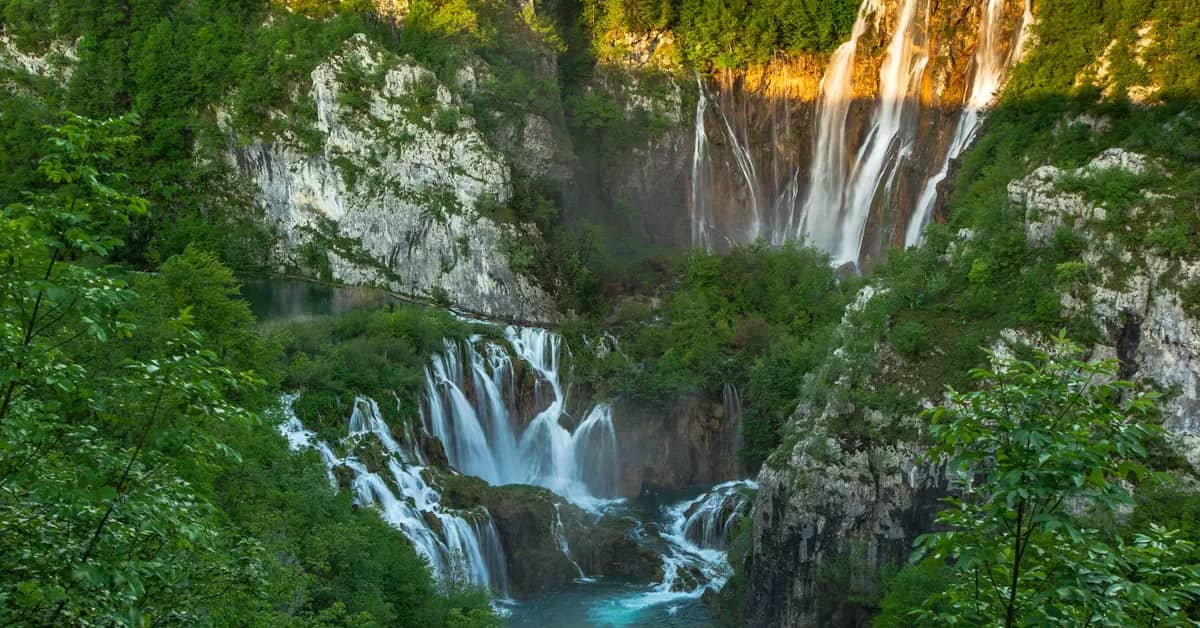
- Veliki Slap: the park’s highest waterfall and the main landmark of the Lower Lakes.
- Lower Lakes: dramatic limestone canyon scenery, boardwalks and several of the park’s classic viewpoints.
- Upper Lakes: a more heavily forested series of lakes and cascades with a different character from the Lower Lakes.
- Kozjak Lake: the largest lake in the system and the main electric-boat crossing used by several visitor programmes.
- Šupljara: a cave within the Lower Lakes canyon area reached from the marked visitor routes when access conditions permit.
Entrance 1 or Entrance 2?
| Entrance | Best for |
|---|---|
| Entrance 1 | Lower Lakes, Veliki Slap, classic first views and routes A, B and C |
| Entrance 2 | Upper Lakes, Kozjak Lake, nearby park hotels and routes E, F and H |
Neither entrance is universally better. For a first visit, Entrance 1 is often the most intuitive starting point because the route begins with the dramatic Lower Lakes landscape and provides easy access toward Veliki Slap.
Entrance and transport arrangements can change seasonally, so do not rely on an old assumption that every entrance and visitor programme operates identically throughout the year.
Plitvice Lakes walking routes and programmes
The national park uses marked visitor programmes that combine walking with electric boats and panoramic vehicles. The available programme depends on your starting entrance, available time and current park operations.
| Programme | Start | Typical time | Best for |
|---|---|---|---|
| A | Entrance 1 | 2-3 hours | Lower Lakes and Veliki Slap |
| B | Entrance 1 | 3-4 hours | Lower Lakes plus Kozjak boat crossing |
| C | Entrance 1 | 4-6 hours | Upper and Lower Lakes; strong first-time choice |
| E | Entrance 2 | 2-3 hours | Upper Lakes |
| F | Entrance 2 | 3-4 hours | Shorter mixed Upper and Lower Lakes visit |
| H | Entrance 2 | 4-6 hours | Upper and Lower Lakes from Entrance 2 |
| K | Either entrance | 6-8 hours | Long walking day through most of the lake system |
Programme times are approximate. Crowds, boat queues, weather, photography stops and current trail conditions can all affect how long a visit takes.
Best Plitvice route for first-time visitors
For most first-time visitors with a full day and average fitness, Programme C from Entrance 1 is one of the strongest choices because it combines the Lower Lakes, Veliki Slap, Kozjak Lake and the Upper Lakes in a single visit.
- 2-3 hours: choose A or E
- 3-4 hours: choose B or F
- 4-6 hours: choose C or H
- 6-8 hours: choose K if you want a long walking day
If you have two days, there is no need to repeat the entire lake system. One option is to concentrate on the Lower Lakes and Veliki Slap on the first day, then explore the Upper Lakes more slowly on the second.
Plitvice Lakes tickets
Plitvice uses seasonal ticket pricing, with rates varying by date, visitor category and ticket type. Admission is tied to a specific entrance and entry period.
Good to know:
- Buy admission from the official Plitvice Lakes e-ticket system.
- Popular entry periods can sell out, particularly during peak summer.
- Electric-boat and panoramic-vehicle transport included in designated visitor programmes is covered by the park ticket when operating.
- Keep your ticket available during the visit.
- Always check the current official price list rather than relying on old annual prices.
If you prefer transport and guiding rather than an independent visit, compare organized tours separately. Compare Plitvice Lakes tour options.
Plitvice Lakes opening hours
Plitvice Lakes National Park is open year-round, but entrance times, ticket sales, individual trails, electric boats and panoramic vehicles can operate on different schedules according to season, weather and park conditions.
Check the park’s current operating-hours information shortly before your visit, particularly in winter and the shoulder seasons.
How to avoid crowds at Plitvice Lakes
- Buy a timed ticket in advance: this removes uncertainty about admission on busy days.
- Stay nearby: an overnight stay makes an early entry much easier.
- Use an early entry period: the main boardwalks generally become busier as day tours arrive.
- Allow time for Kozjak transport: boat waiting times can increase during peak periods.
- Keep narrow boardwalks moving: take photographs without blocking other visitors.
- Stay on marked paths: leaving official routes damages sensitive habitats and tufa formations.
Entrance 1 is a logical starting point if Veliki Slap and the Lower Lakes are your priorities, but no entrance is guaranteed to be quiet. Visitor patterns change throughout the day.
Where is Plitvice Lakes National Park?
Plitvice Lakes lies in inland Croatia in the Lika Region, making it particularly easy to combine with Zagreb, Zadar or a wider road trip between inland Croatia and the Adriatic coast.
It is possible to visit from Split as a long day trip, while Dubrovnik is generally too far away for a comfortable Plitvice day trip and is better combined with an overnight stop elsewhere in Croatia.
Getting to Plitvice Lakes
From Zagreb
Zagreb is one of the most convenient major gateways. You can travel by car, intercity bus or organized tour.
If you want transport and a guide included, see our day trips from Zagreb.
From Zadar
Zadar is one of the most practical coastal bases for Plitvice. Driving, buses and seasonal organized tours are all possible.
See day trips from Zadar for more planning options.
From Split
Plitvice can be visited from Split, but the longer travel time makes for a substantial day. An organized excursion can simplify the logistics if you do not want to drive.
See day trips from Split.
By bus
Intercity buses serve the Plitvice area from Zagreb and several coastal cities. Schedules vary by season and operator, so check both outbound and return services before relying on public transport.
For Zagreb connections, see travelling to and from Zagreb by bus.
By car
A car gives you the greatest flexibility, particularly if you are staying overnight or combining Plitvice with other destinations in Lika.
For rental-car planning, see rent a car in Croatia.
Driving and parking at Plitvice Lakes
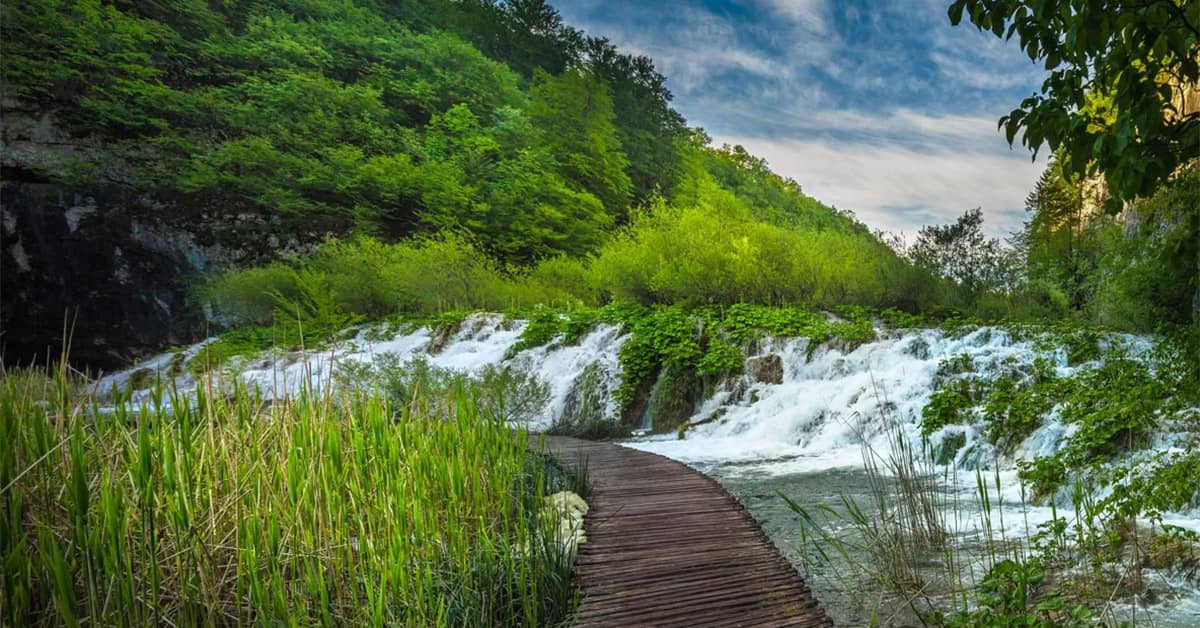
Paid visitor parking is available near both Entrance 1 and Entrance 2. Parking rates vary by vehicle type and season, so check the current official price list rather than relying on an old hourly rate.
- Match parking to your entrance: your admission ticket is tied to an entrance and entry period.
- Allow extra time: walking from the car park and reaching the ticket-control point takes time.
- Peak summer: arriving early generally makes parking and entry simpler.
- Overnight stays: ask your accommodation about parking or transfers if you intend to visit on consecutive days.
Tour or independent visit?
| Option | Best for |
|---|---|
| Independent by car | Maximum flexibility, early entry and combining Plitvice with Lika |
| Independent by bus | Visitors without a car who can work around fixed schedules |
| Organized tour | Simple transport from Zagreb, Zadar or Split and guided interpretation |
An independent visit is usually best if you want to stay overnight or choose your own route and entry time. A tour is useful if you prefer not to deal with driving, parking and return transport.
Best time to visit Plitvice Lakes
April and May
Spring brings lush vegetation and often strong water flow. Weather can be changeable, so waterproof layers are useful.
June
One of the best all-round periods, with long daylight hours and green landscapes before the busiest part of summer.
July and August
The warmest and busiest months. Book admission in advance and consider an early entry period.
September and October
Excellent for cooler walking conditions, fewer visitors and autumn colours, particularly later in the season.
November to March
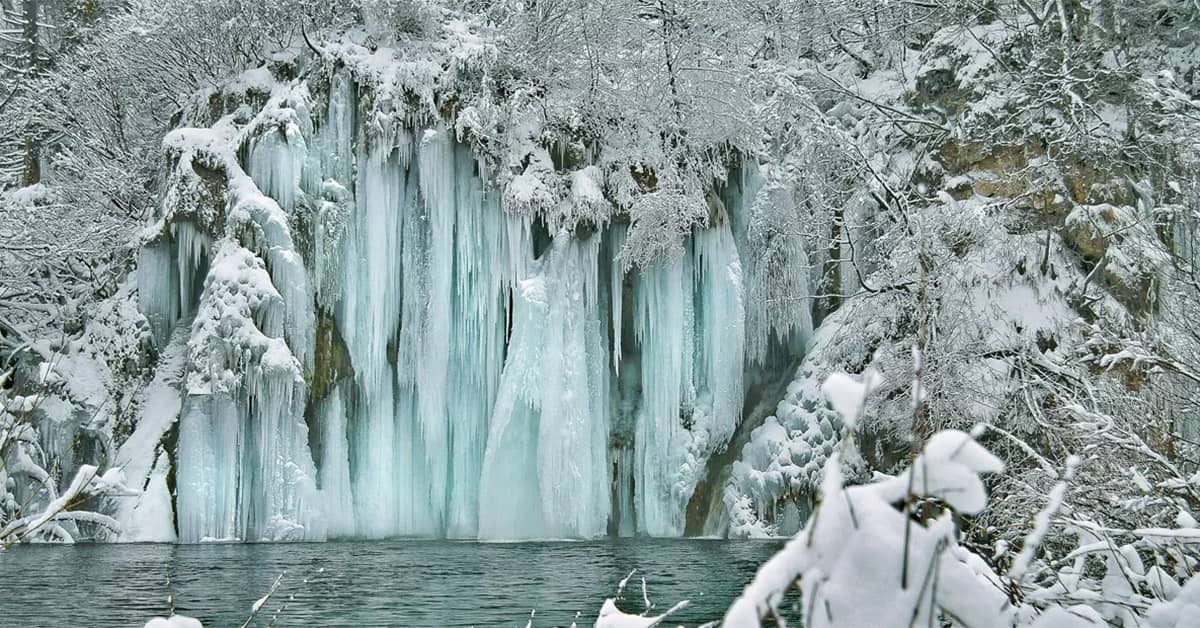
Winter can bring snow, ice and dramatic frozen landscapes, but routes and visitor transport may operate differently according to conditions.
For broader cold-season planning, see Visit Croatia in winter.
Visiting Plitvice Lakes in winter
The national park remains open year-round, but winter visits require more flexibility than summer trips. Snow, ice, water levels and safety conditions can affect routes, entrances, boats and panoramic vehicles.
- Check the official operating conditions on the day of your visit.
- Wear warm, waterproof footwear with good grip.
- Allow extra time on icy or snowy paths.
- Do not assume all summer routes or transport services will be available.
What to wear and bring
Treat a day at Plitvice as an outdoor walking trip rather than a city attraction. Boardwalks can be wet, and weather can change quickly.
- Footwear: comfortable closed shoes or hiking shoes with good grip
- Layers: temperatures can differ considerably between sunny viewpoints, forest and lakeside sections
- Rain protection: lightweight waterproof jacket or poncho when showers are possible
- Sun protection: hat, sunglasses and sunscreen in warmer months
- Water and snacks: particularly useful on longer programmes
- Winter: warm waterproof footwear, gloves, hat and appropriate outer layers
Plitvice Lakes with children
Plitvice can work very well for families, but choose a route that matches your children’s walking ability rather than attempting the longest programme simply to see everything.
Boardwalks can be narrow and do not have railings everywhere, so young children need close supervision near water and drops.
Can you use a stroller?
Some sections contain stairs, uneven forest paths and narrow boardwalks, so a stroller is not ideal for a complete lake route. A baby carrier is often more practical for families with infants or toddlers.
Accessibility at Plitvice Lakes
Full step-free access to the lake system is not possible because the natural terrain includes stairs, slopes, narrow boardwalks and uneven paths.
Some areas can nevertheless be accessed with assistance. The park provides designated accessible parking, and visitors using Entrance 2 can obtain more accessible access toward the Kozjak Lake area via the designated Flora access route.
If mobility is a significant consideration, contact the national park before travel to confirm current route conditions, transport operations and the most appropriate access option.
Accommodation near Plitvice Lakes
Search accommodation near Plitvice Lakes.
| Area | Best for |
|---|---|
| Entrance 1 / Rastovača | Early start at the Lower Lakes |
| Entrance 2 / park hotel area | Direct park access and Upper Lakes routes |
| Mukinje | Nearby village accommodation with access toward the park |
| Jezerce | Guesthouses and a quieter stay close to Plitvice |
| Grabovac | Broader choice of accommodation and restaurants |
| Slunj / Rastoke | Scenic overnight before or after Plitvice |
If you are travelling without a car, check the exact distance between your accommodation, the relevant bus stop and your chosen park entrance before booking.
Food and drink at Plitvice Lakes
Food and drink are available around the main visitor areas, but options are more limited than in a town and can become busy at peak times.
- Inside and near the park: cafés, kiosks and restaurants serve drinks, snacks and simple meals.
- Lička kuća: near Entrance 1 and associated with traditional food from the Lika region.
- Bring water: particularly important on longer walking programmes and warm summer days.
For more regional food ideas, see Delicious Croatia.
What to do near Plitvice Lakes
Plitvice can easily form part of a broader inland Croatia road trip rather than a standalone attraction.
- Rastoke: historic watermill settlement and waterfalls at Slunj
- Barać Caves: underground karst attraction in the wider Plitvice area
- Gacka Valley: clear karst river, traditional mills and countryside around Otočac
- Smiljan: birthplace of Nikola Tesla and home of the Nikola Tesla Memorial Center
- Perušić: rural Lika and karst attractions including the Grabovača area
For broader planning, see our Lika Region Travel Guide.
Plitvice Lakes FAQ
Is Plitvice Lakes worth visiting?
Yes. Plitvice is Croatia’s best-known inland natural attraction and combines 16 named lakes, waterfalls, forest trails and a continually developing tufa landscape protected as a UNESCO World Heritage property.
How many hours do you need at Plitvice Lakes?
Allow at least 4-6 hours if you want to see both the Upper and Lower Lakes. Shorter 2-3-hour programmes are available, while the longest walking programme can take most of a day.
Which entrance is better, Entrance 1 or Entrance 2?
Entrance 1 is a strong first-time choice for the Lower Lakes and Veliki Slap. Entrance 2 is convenient for the Upper Lakes, Kozjak Lake and visitors staying near the main park hotel area.
What is the best Plitvice route for first-time visitors?
Programme C from Entrance 1 is one of the best all-round choices for visitors with a full day because it combines the Lower Lakes, Veliki Slap, Kozjak Lake and the Upper Lakes.
Do I need to book Plitvice tickets in advance?
Advance booking is strongly recommended for busy periods because admission is tied to a specific date, entrance and entry period and popular slots can become unavailable.
Can you swim in Plitvice Lakes?
No. Swimming is not permitted in the Plitvice lake system because of conservation rules. Combine Plitvice with the Adriatic coast or another designated swimming area if swimming is important to your trip.
Can you visit Plitvice without a car?
Yes. Intercity buses and organized tours connect Plitvice with several major Croatian cities. Check return schedules carefully if visiting independently by bus.
Can you visit Plitvice from Zagreb?
Yes. Zagreb is one of the easiest major starting points for Plitvice, with options including car, intercity bus and organized day tour.
Can you visit Plitvice from Split?
Yes, but it is a considerably longer day than visiting from Zagreb or Zadar. An overnight stay near Plitvice is worth considering if your itinerary allows it.
Is Plitvice suitable for children?
Yes, provided you choose a route appropriate for their walking ability and supervise younger children closely on narrow boardwalks and near water.
Is Plitvice wheelchair accessible?
Only partially. The lake system contains stairs, slopes and narrow boardwalks, although some areas can be accessed with assistance and the park provides specific accessibility arrangements near Entrance 2 and Kozjak Lake.
Can you use a stroller at Plitvice Lakes?
A stroller is possible in limited areas but is inconvenient on stairs, uneven trails and narrow boardwalks. A baby carrier is often more practical for a full visit.
Is Plitvice Lakes open in winter?
Yes, but routes, entrances, electric boats and panoramic vehicles can operate differently because of snow, ice, weather and seasonal schedules. Check current conditions before travel.
Should I visit Plitvice or Krka?
Choose Plitvice for a larger lake-and-waterfall landscape and longer walking routes. Choose Krka if you are based around Šibenik or central Dalmatia and want a national park that fits more naturally into a coastal itinerary.
Should I visit Plitvice with a tour or on my own?
Visit independently if flexibility and an early start are priorities. Choose an organized tour if you prefer transport and guiding to be arranged for you.
Where should I stay near Plitvice Lakes?
Stay near Entrance 1 or Entrance 2 for the easiest early start. Mukinje and Jezerce offer nearby guesthouses, while Grabovac has a broader accommodation and restaurant choice. Slunj and Rastoke work well for a scenic overnight before or after the park.