
The Šibenik Region in central Dalmatia combines UNESCO-listed heritage, river landscapes, beaches and two of Croatia’s most distinctive national parks. The historic city of Šibenik is the cultural anchor, while Krka National Park, Kornati National Park, Primošten, Vodice, Murter, Skradin and the inland towns of Drniš and Knin give the region a much broader character than a simple coastal stop.
It is one of Croatia’s easiest regions for combining culture and nature: explore stone streets and fortresses in Šibenik, spend a day among the waterfalls of Krka, then head to Murter or the coast for boat trips through the Kornati archipelago.
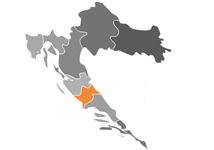
Šibenik Region quick overview
- Region: Central Dalmatia, primarily Šibenik-Knin County
- Main city: Šibenik
- Major coastal bases: Šibenik, Primošten, Vodice and Murter
- Inland destinations: Skradin, Drniš and Knin
- National parks: Krka and Kornati
- UNESCO heritage: Cathedral of St James and St Nicholas Fortress
- Best for: history, waterfalls, sailing, beaches, food and wine, and road trips
- How long to stay: 2-3 days for Šibenik and Krka; 4-7 days for a fuller regional trip including Kornati, Primošten, Murter or the hinterland
- Best time to visit: June and September for a good balance of swimming weather, boat trips and lighter crowds
Why visit the Šibenik Region?
The region sits between the Zadar Region to the north and the Split Region to the south, making it easy to include on a longer Dalmatian road trip.
Its strongest appeal is variety. Šibenik provides heritage and restaurants, Krka adds rivers and waterfalls, Murter gives access to Kornati, Primošten offers a scenic coastal stay, Vodice has a livelier resort atmosphere, and the inland towns show a quieter side of central Dalmatia.
Best places to visit in the Šibenik Region
Šibenik
Šibenik is the cultural centre of the region. Its Old Town climbs from the waterfront through steep stone lanes and small squares toward several historic fortresses.
The main landmark is the Cathedral of St James, while St Michael’s Fortress, St John’s Fortress and Barone Fortress provide some of the best views over the city and bay.
Skradin
Skradin is a small historic town on the Krka River and one of the most popular gateways to Krka National Park.
It works well as a quieter overnight base if your main priority is the park, while its waterfront and restaurants make it more than just a transit point.
Krka National Park
Krka National Park protects a long section of the Krka River with waterfalls, lakes, monasteries, archaeological sites and historic water-powered structures.
Skradinski buk is the best-known section, but the park also includes Roški slap, Visovac, Burnum and the Krka Monastery.
Primošten
Primošten is one of the region’s most photogenic coastal towns, with an old settlement on a former islet, beaches on both sides and famous stone-divided vineyards in the surrounding hills.
The area is closely associated with the Babić red grape variety.
Vodice
Vodice is a larger resort town north of Šibenik with beaches, hotels, restaurants, nightlife and a wide range of boat excursions.
It is a good choice for families and groups who want more resort infrastructure than Šibenik or Primošten.
Murter
Murter is one of the main gateways to the Kornati archipelago. The island is connected to the mainland by bridge and has marinas, beaches and many operators offering boat excursions.
Murter and nearby Betina are also strongly associated with traditional wooden boatbuilding.
Kornati National Park
Kornati National Park is a marine protected area containing 89 islands, islets and reefs. It is best experienced by boat rather than as a conventional land-based national park.
Most visitors join an organized excursion or arrive on their own or chartered vessel.
Knin
Knin is the main historic centre of the inland part of the county and is dominated by the enormous Knin Fortress.
The surrounding landscape is very different from the coast, with mountains, rivers and a stronger focus on medieval and modern Croatian history.
Drniš
Drniš is known for its food traditions, especially Drniš pršut, and for its connections with sculptor Ivan Meštrović and the inland landscapes between Šibenik and Knin.
UNESCO heritage in Šibenik
Cathedral of St James
The Cathedral of St James is a standalone UNESCO World Heritage property, inscribed in 2000.
Built between 1431 and 1535, it is notable for its combination of Gothic and Renaissance design and its unusual stone construction. One of its most recognizable features is the exterior frieze of 71 sculpted heads.
St Nicholas Fortress
St Nicholas Fortress stands at the entrance to St Anthony Channel and was built in the 16th century to defend Šibenik from naval attack.
It forms part of the transnational UNESCO property Venetian Works of Defence between the 16th and 17th Centuries.
Krka National Park
Krka is much more than Skradinski buk, and a full regional itinerary benefits from understanding the different park sections.
Skradinski buk
The best-known waterfall complex and the section most first-time visitors see.
Roški slap
Farther upstream, Roški slap offers a different landscape of cascades and river scenery.
Visovac
The small island of Visovac lies in a widening of the Krka River and is home to a historic Franciscan monastery.
Burnum
Burnum preserves remains of a Roman military complex, including arches and an amphitheatre.
Krka Monastery
The Serbian Orthodox Krka Monastery is another major cultural site within the wider river landscape.
Ticket options, entrance arrangements and boat services vary by season, so check current official park information before travel rather than relying on static prices.
Kornati National Park
Kornati is primarily a nautical national park. The protected area includes 89 islands, islets and reefs and is best suited to sailing, swimming and exploring the marine landscape by boat.
How to visit Kornati
- Organized excursion: simplest option for most visitors
- Private or chartered boat: offers more flexibility but requires suitable experience and compliance with park rules
- Main gateways: Murter and other nearby ports in central Dalmatia
Park tickets are required and activities such as anchoring, hiking and diving are regulated. Check current Kornati rules and prices before entering.
Islands near Šibenik
The inhabited islands off Šibenik are different from the mostly uninhabited Kornati landscape and make easy day trips or quiet overnight stays.
Zlarin
Zlarin is close to Šibenik and is traditionally associated with coral harvesting and craftsmanship.
Prvić
Prvić has two main settlements, Prvić Luka and Šepurine, and retains a relaxed village atmosphere.
Kaprije
Kaprije is a small inhabited island suited to swimming and quieter stays.
Žirje
Žirje lies farther offshore and offers a more remote island experience.
Krapanj
Krapanj, just off the mainland near Brodarica, is closely associated with traditional sponge-diving heritage.
Primošten or Vodice?
| Destination | Best for |
|---|---|
| Primošten | Scenic old town, beaches, wine country and a smaller coastal atmosphere |
| Vodice | Resort facilities, nightlife, family stays and a wider choice of organized excursions |
Beaches and swimming
- Primošten: convenient beaches beside the old town
- Vodice: developed resort beaches with extensive tourist facilities
- Murter: numerous bays and beaches around the island
- Jadrija: traditional Šibenik swimming area near the entrance to the channel
- Brodarica / Amadria area: developed family-oriented coastline south of Šibenik
- Islands: Zlarin, Prvić, Kaprije and Žirje offer quieter swimming spots
Food and wine in the Šibenik Region
Drniš pršut
Drniš is strongly associated with pršut, Dalmatian dry-cured ham traditionally matured in the inland climate.
Babić wine
Babić is the signature red grape of the Primošten area, grown in difficult rocky terrain divided by dry-stone walls.
Seafood
Fish, shellfish and octopus are central to menus along the coast and islands.
Peka
Meat or octopus cooked slowly beneath a metal bell covered with hot embers is one of Dalmatia’s classic traditional dishes.
For broader Croatian food and wine coverage, see Delicious Croatia.
Where to stay in the Šibenik Region
| Base | Best for |
|---|---|
| Šibenik | UNESCO heritage, restaurants, Krka access and central location |
| Skradin | Krka-focused stays and quiet evenings |
| Primošten | Scenic beach stay and wine country |
| Vodice | Resort facilities, nightlife and families |
| Murter | Kornati, boating and island atmosphere |
| Drniš | Food, inland road trips and quieter stays |
| Knin | History and the Dalmatian hinterland |
For a wider accommodation search, see Find accommodation in Croatia.
When to visit the Šibenik Region
April and May
Excellent for Šibenik, Krka, walking and inland road trips. The coast is quieter and temperatures are comfortable.
June
One of the best all-round months for swimming, sightseeing, Krka and boat excursions.
July and August
The busiest and hottest months. Beaches and boat services are at their most active, but expect larger crowds at Krka and along the coast.
September
Excellent for swimming and island trips with generally fewer visitors than in peak summer.
October
Good for culture, food and road trips, while some island and boat services begin reducing frequency.
Winter
Šibenik remains suitable for a cultural visit, but island services and seasonal tourism businesses are much quieter.
For wider off-season planning, see Visit Croatia in winter.
How to get to and around the Šibenik Region
By plane
There is no major commercial airport in Šibenik itself. Split Airport and Zadar Airport are the main air gateways, with the better choice depending on where in the region you are staying.
For broader flight planning, see airline tickets and flights to Croatia.
By car
A car is especially useful for combining Krka’s wider sections, Primošten, inland villages, Drniš and Knin. Šibenik is close to the A1 motorway, making road access from Zadar, Split and Zagreb straightforward.
For general rental advice, see Rent a car in Croatia.
By bus
Buses are useful for travel between Šibenik, Vodice, Primošten, Split, Zadar and other larger mainland destinations. Public transport becomes less convenient for remote inland sites and some national-park locations.
By boat
Boat transport is essential for Kornati and useful for the inhabited islands near Šibenik. Public ferries and excursion boats serve different purposes, so check the exact route and departure port before travelling.
For broader ferry planning, see Ferry booking Croatia.
How many days do you need in the Šibenik Region?
2 days
Spend one day in Šibenik and one day at Krka National Park.
3-4 days
Add Primošten, Vodice or an inhabited-island excursion.
5-7 days
Enough time for Šibenik, Krka, Kornati, Murter and either Primošten or inland exploration without rushing.
7+ days
A longer stay allows a slower mix of coast, islands, national parks and the Dalmatian hinterland.
Šibenik Region FAQ
Is Šibenik Region worth visiting?
Yes. The region combines UNESCO heritage, Krka National Park, Kornati, beaches, inhabited islands and quieter inland destinations within a compact part of central Dalmatia.
How many days do you need?
Two days is enough for Šibenik and Krka. Three to four days allows one coastal or island addition, while five to seven days is better for Kornati and the wider region.
Šibenik or Vodice?
Choose Šibenik for historic atmosphere, UNESCO heritage and restaurants. Choose Vodice for a more conventional resort stay, beaches and nightlife.
Primošten or Vodice?
Choose Primošten for a scenic old-town setting, beaches and nearby wine country. Choose Vodice for a larger range of resort facilities and nightlife.
Krka or Kornati?
Choose Krka for waterfalls, river landscapes, monasteries and archaeological sites. Choose Kornati for boating, islands, swimming and a marine national-park experience.
Can you visit Kornati without your own boat?
Yes. Organized full-day excursions are the easiest option for most visitors without their own or chartered boat.
What is the best base for Krka?
Šibenik is the most versatile base because it combines city attractions with easy access to Krka. Skradin is better if the park itself is your main priority.
Do you need a car?
Not for central Šibenik or some coastal and island trips. A car is much more useful for Krka’s wider sections, Drniš, Knin, wineries and inland villages.
Which UNESCO sites are in Šibenik?
The Cathedral of St James is a standalone UNESCO World Heritage property. St Nicholas Fortress forms part of the multinational Venetian Works of Defence UNESCO property.
Which islands are easiest to visit from Šibenik?
Zlarin and Prvić are among the easiest inhabited islands for short trips from the Šibenik area, while Kaprije and Žirje offer quieter options farther offshore.