
The Split Region is the heart of Central Dalmatia, combining the historic city of Split with UNESCO-listed Trogir, the Cetina canyon and Omiš, the Makarska Riviera, inland karst landscapes and the islands of Brač, Hvar, Šolta and Vis.
Few parts of Croatia offer such an easy mix of culture, beaches, mountains and island travel. You can explore Diocletian’s Palace in the morning and board a ferry for an island that same afternoon, while Split’s ferry network, buses, motorway connections and Split Airport make the region one of Croatia’s easiest areas to explore.
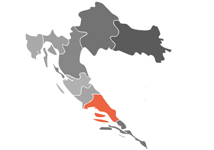
Split Region quick overview
- Region: Central Dalmatia, primarily Split-Dalmatia County
- Main city: Split
- Major mainland destinations: Trogir, Omiš, Makarska, Brela, Baška Voda and Imotski
- Main islands: Brač, Hvar, Šolta and Vis
- UNESCO World Heritage: Diocletian’s Palace and historic Split, Historic City of Trogir and Stari Grad Plain on Hvar
- Best for: first-time Croatia trips, island hopping, beaches, history, sailing, families and active holidays
- Main airport: Split Airport, near Trogir
- How long to stay: 3-4 days for Split plus one excursion; 7+ days for a broader Central Dalmatia trip
- Best time to visit: June and September for a strong balance of swimming weather, transport connections and lighter crowds
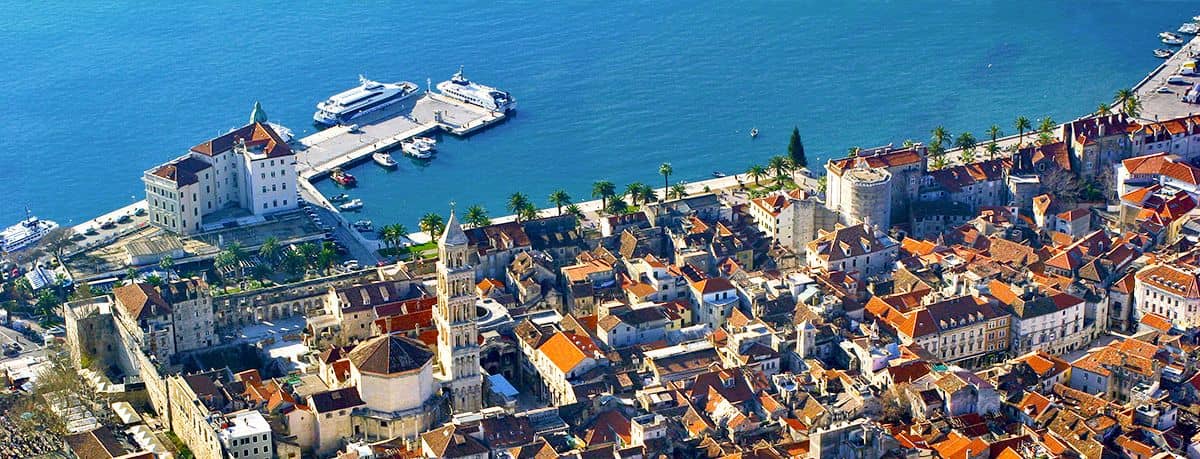
Why visit the Split Region?
The Split Region works especially well because the major experiences are varied but relatively easy to combine. Split provides the transport hub and historic centre, Trogir adds another UNESCO town, Omiš offers adventure on the Cetina River, Makarska combines beaches with Biokovo mountain, and the nearby islands range from lively Hvar to quieter Šolta and more remote Vis.
You do not need to treat every destination as a day trip from Split. A better regional itinerary often combines a few nights in the city with an island stay or several days farther south on the Makarska Riviera.
Best places to visit in the Split Region
Split
Split is the cultural and transport centre of Central Dalmatia. Its historic core developed within and around the Roman palace of Emperor Diocletian, while the Riva waterfront, markets, Marjan hill and city beaches give it the atmosphere of a living Mediterranean city rather than an archaeological site.
Use the dedicated Split attractions guide for detailed city sightseeing rather than trying to cover every palace monument on this regional page.
Trogir
Trogir is a compact UNESCO-listed historic town west of Split and close to Split Airport. Its medieval street plan, Romanesque churches, Renaissance buildings, waterfront and fortifications make it one of the strongest cultural day trips in Central Dalmatia.
Trogir can also work as a quieter alternative base to Split, particularly for short stays close to the airport.
Omiš and the Cetina Canyon
Omiš lies where the Cetina River reaches the Adriatic, beneath steep mountains and historic fortresses. The town is one of the region’s main outdoor-adventure centres, with rafting, canyoning, zip-lining, hiking and boat trips through the Cetina landscape.
Omiš also has beaches and a compact old town, making it suitable for more than an organised adventure excursion. The surrounding Poljica area is associated with soparnik, a traditional savoury dish made with Swiss chard.
Makarska Riviera
The Makarska Riviera stretches beneath Biokovo mountain and includes some of the region’s best-known beach destinations, including Makarska, Brela, Baška Voda and Tučepi.
This is one of the best parts of Central Dalmatia for travelers who want a classic seaside stay with long pebble beaches, waterfront promenades and easy access to mountain scenery.
Brač
Brač is one of the easiest islands to combine with Split. Supetar is the principal vehicle-ferry gateway from Split, while Bol is famous for Zlatni Rat and Milna has its own harbour and passenger connections.
Do not treat Supetar, Bol and Milna as interchangeable ports: each is in a different part of the island and is served by different ferry or catamaran routes.
Hvar
Hvar combines historic towns, beaches, vineyards, nightlife and some of Croatia’s busiest summer passenger-ferry routes.
Hvar Town is the island’s best-known visitor centre and is connected mainly by passenger catamarans. Stari Grad is a quieter historic town and the main vehicle-ferry gateway from Split, while Jelsa offers a smaller-town base with beaches and wine country nearby.
Šolta
Šolta is close to Split but much quieter than Brač or Hvar. Rogač is the main ferry port, while Maslinica and other island settlements work well for relaxed swimming, walking and shorter island stays.
Vis
Vis lies farther offshore and offers a slower, more remote island experience. Vis Town is the ferry port, while Komiža lies on the opposite side of the island and has its own fishing-town atmosphere.
Boat trips to the Blue Cave on Biševo are popular from Vis and Komiža, but access depends on sea and weather conditions and should never be treated as guaranteed.
Imotski and inland Dalmatia
Inland Central Dalmatia offers a completely different landscape from the coast. Imotski is known for its dramatic karst lakes, particularly the Blue and Red Lakes, while the surrounding countryside adds vineyards, villages and road-trip scenery.
UNESCO heritage in the Split Region
Central Dalmatia contains three distinct UNESCO World Heritage properties.
Diocletian’s Palace and historic Split
The Historical Complex of Split with the Palace of Diocletian has been UNESCO-listed since 1979. The Roman palace forms the core of the modern city and contains centuries of later medieval and Renaissance development.
See the dedicated Diocletian’s Palace guide.
Historic City of Trogir
Trogir was inscribed on the UNESCO World Heritage List in 1997 and preserves an exceptionally complete historic urban landscape shaped by Greek, Roman, medieval and Venetian development.
Stari Grad Plain on Hvar
Stari Grad Plain was UNESCO-listed in 2008. Unlike the region’s monumental city sites, this is a cultural landscape whose agricultural field division dates back to Greek colonisation in the 4th century BC and has remained visible through more than two millennia of cultivation.
Split vs the wider region
| Base or destination | Best for |
|---|---|
| Split | First visits, history, nightlife, ferries and public transport |
| Trogir | Compact UNESCO town and airport convenience |
| Omiš | Cetina adventures plus beaches |
| Makarska Riviera | Beach holidays and Biokovo |
| Brač | Easy island access, beaches and family trips |
| Hvar | Historic towns, wine, nightlife and boating |
| Šolta | Quiet island stay close to Split |
| Vis | Slower, more remote island experience |
| Imotski | Inland road trips and karst landscapes |
Islands from Split
| Island | Best for | Important transport distinction |
|---|---|---|
| Brač | Beaches, easy access, families | Supetar, Bol and Milna are separate ports |
| Hvar | History, nightlife, wine and boating | Hvar Town is mainly passenger-catamaran territory; Stari Grad is the main vehicle-ferry port |
| Šolta | Quiet short island trips | Rogač is the principal vehicle-ferry port |
| Vis | Remote island atmosphere | Vis Town is the ferry port; Komiža is on the opposite coast |
Exact schedules change by season, so use the Split ferry guide and individual route pages rather than relying on a static regional timetable.
Split Ferry Port
Split Ferry Port is the main ferry gateway for the central Dalmatian islands, with regular connections to Hvar, Brač, Vis and Šolta, plus longer routes towards Korčula, Lastovo and Italy. The best route depends on whether you are travelling on foot or taking a car.
Car ferries carry vehicles and are the practical choice if you plan to drive once you reach the island. Catamarans are for foot passengers and are often faster, but they can be more seasonal and have fewer spaces. For general booking advice, see our guide to ferry booking in Croatia.
Vehicle ferries and passenger catamarans serve different destinations and not every sailing accepts cars, bicycles or the same types of luggage. Always check the exact route rather than assuming that every “Split to Hvar” or “Split to Brač” service uses the same port.
Hvar Island
Hvar has several useful connections from the Split region. Stari Grad is the main arrival point if you are taking a car, while catamarans serve Hvar Town and Jelsa for foot passengers. Drivers coming from farther south can also reach the island via Drvenik and Sućuraj.
- Split to Stari Grad (Hvar) - car ferry
- Split - Bol (Brač) - Jelsa (Hvar) - catamaran
- Split - Hvar - Korčula - Lastovo - catamaran
- Drvenik - Sućuraj (Hvar) - car ferry
If Hvar is more than a transport stop, see the Hvar travel guide for help choosing where to stay and what to do on the island.
Brač Island
Brač is one of the easiest islands to combine with a stay in the Split region. Supetar is the main ferry port for vehicles, while Bol can be reached by catamaran. Drivers staying farther south may also find the Makarska-Sumartin crossing more convenient.
- Split to Supetar (Brač) - car ferry
- Split - Bol (Brač) - catamaran
- Makarska to Sumartin (Brač) - car ferry
Vis Island
Vis lies farther from the mainland and takes more time to reach than Brač or Šolta. Use the direct car ferry if you are taking a vehicle, or check the catamaran if you are travelling on foot and the sailing times suit your itinerary.
Šolta Island
Šolta is one of the closest islands to Split and a simple choice for a shorter island stay. Rogač is the main ferry port and the usual arrival point if you are bringing a car.
Korčula and Lastovo
Korčula and Lastovo require more travel time and more careful timetable planning. Connections are more seasonal than the busiest Brač and Hvar routes, so check the exact sailing dates before building onward travel around them.
For help deciding where to stay once you reach Korčula, see the Korčula travel guide.
Ferries from Split to Italy
International ferries connect Split with Ancona and, when scheduled, Bari. These services are seasonal and can change from year to year, so use the dedicated route pages for current operating periods and then confirm the final departure with the operator before booking.
Beaches and swimming
The Split Region offers everything from sandy city beaches to long pebble strands and island coves.
- Split: Bačvice, Firule and Kašjuni
- Omiš Riviera: convenient mainland beaches combined with Cetina excursions
- Makarska Riviera: long pebble beaches around Brela, Baška Voda, Makarska and Tučepi
- Brač: Zlatni Rat and numerous island coves
- Hvar: island beaches plus the nearby Pakleni Islands
- Vis: smaller coves and beaches reached by road, foot or boat
For detailed city options, see parks and beaches in Split.
Outdoor activities and mountains
Cetina Canyon
The Cetina around Omiš is the region’s main centre for rafting, canyoning and zip-lining. Activity levels vary, so choose a tour that matches your experience and fitness.
Biokovo
Biokovo Nature Park rises directly behind the Makarska Riviera and offers mountain roads, hiking and wide views over the coast and islands.
The popular Skywalk is one of the best-known viewpoints, but access arrangements, road rules and opening periods can change, so check current park information before driving into Biokovo.
Marjan
For easy outdoor time without leaving Split, Marjan hill offers walking, cycling, viewpoints and access to several swimming areas.
Imotski
The karst landscapes around Imotski, including the Blue and Red Lakes, are particularly suited to road trips and inland sightseeing.
Food and wine in Central Dalmatia
Central Dalmatian cuisine combines seafood and olive oil on the coast with meat dishes, cheese, cured products and traditional baking in the hinterland.
- Pašticada: slow-cooked beef traditionally served with gnocchi
- Peka: meat, octopus or other ingredients slow-cooked beneath a metal bell
- Soparnik: thin savoury pie associated with the Poljica area behind Omiš
- Seafood: grilled fish, shellfish and octopus throughout the coastal region and islands
- Brač: lamb, olive oil and island produce
- Hvar: wine, olive oil and Mediterranean island cuisine
For a broader introduction to Croatian food and wine, see Delicious Croatia.
Where to stay in the Split Region
| Base | Best for |
|---|---|
| Split | First-time visitors, no car, nightlife and ferry connections |
| Trogir | UNESCO atmosphere and Split Airport access |
| Omiš | Beaches plus rafting, canyoning and hiking |
| Makarska | Beach holiday and Biokovo |
| Supetar | Easiest Brač base from Split |
| Bol | Zlatni Rat and a more resort-focused Brač stay |
| Hvar Town | Nightlife, historic sights and boat trips |
| Stari Grad | Quieter Hvar stay and vehicle-ferry access |
| Vis | Slower, more remote island experience |
For Split itself, see our selection of hotels in Split.
When to visit the Split Region
April and May
Excellent for sightseeing, hiking and mainland road trips. Islands are quieter, although some seasonal ferry and tourism services run less frequently.
June
One of the best all-round months for beaches, islands and sightseeing before the busiest summer period.
July and August
The busiest months for the islands, beaches and ferry port. Expect the highest accommodation prices, hottest temperatures and greatest demand for popular ferry departures.
September
Excellent for swimming, island stays and sightseeing with generally fewer visitors than in peak summer.
October
Good for Split, Trogir, Omiš, Makarska and road trips, although seasonal island services begin reducing frequency.
Winter
Split remains a viable city destination year-round, while the islands and beach resorts become much quieter and many seasonal businesses reduce their opening hours.
For broader off-season planning, see Visit Croatia in winter.
How to get to and around the Split Region
By plane
The regional airport is Split Airport (SPU), located near Trogir rather than central Split.
See Flights to Split for current air-travel information.
By ferry and catamaran
Split is Central Dalmatia’s major ferry hub. Vehicle ferries serve islands including Brač, Hvar, Šolta and Vis, while passenger catamarans provide additional connections to island towns and destinations farther along the Adriatic.
Start with the Split Ferry Port guide and Split ferry routes.
By bus
Buses are useful for mainland travel toward Trogir, Omiš, Makarska, Dubrovnik, Zagreb and other Croatian destinations. The Split Main Bus Station is immediately beside the ferry-port area.
See Split by bus for route and ticket information.
By train
Split has passenger rail connections with Zagreb and inland Croatia, although rail is less important for exploring the coastal region than buses, ferries and cars.
See Split by train.
By car
A car is not necessary for central Split or most island trips, but it is useful for the Makarska Riviera, Biokovo, Imotski and inland villages.
See travelling to Split by car and parking in Split.
How many days do you need in the Split Region?
3 days
Spend one or two days in Split and use the remaining day for Trogir, Omiš or one nearby island.
5 days
Combine Split with Trogir or Omiš and spend one or two nights on Brač, Hvar or Šolta.
7 days
A week allows Split, an island stay and either the Makarska Riviera, Omiš/Cetina or inland Dalmatia without rushing.
10-14 days
Enough time for Split, Trogir, Omiš, the Makarska Riviera and two or more islands, with time for slower beach days and inland excursions.
Split Region FAQ
Is the Split Region worth exploring beyond Split?
Yes. Trogir, Omiš, Makarska, Brač, Hvar, Šolta, Vis and inland destinations such as Imotski offer very different experiences and are easy to combine with Split.
How many days do you need in the Split Region?
Three to four days is enough for Split plus one or two excursions. Seven days or more is better if you want an island stay, the Makarska Riviera or inland Central Dalmatia.
Split or Trogir?
Choose Split for nightlife, restaurants, ferries and the widest range of attractions. Choose Trogir for a smaller UNESCO town, quieter evenings and easier airport access.
Brač or Hvar?
Choose Brač for easier vehicle-ferry access, family-friendly beaches and places such as Bol and Zlatni Rat. Choose Hvar for historic towns, nightlife, wine and the Pakleni Islands.
Hvar Town or Stari Grad?
Choose Hvar Town for nightlife, restaurants and passenger-catamaran connections. Choose Stari Grad for a quieter historic setting, vehicle-ferry access and the UNESCO-listed Stari Grad Plain.
Omiš or Makarska?
Choose Omiš for Cetina adventure activities combined with beaches. Choose Makarska for a classic seaside holiday beneath Biokovo mountain.
Do I need a car?
Not for central Split or most island trips. A car is much more useful for Biokovo, Imotski, the Makarska hinterland and a wider mainland road trip.
Which islands are easiest to visit from Split?
Brač and Šolta have particularly straightforward vehicle-ferry connections, while Hvar and Vis also have regular ferry and catamaran services. The best choice depends on whether you are travelling with a vehicle and which island town you want to reach.
Can I visit Hvar as a day trip from Split?
Yes. Passenger catamarans make Hvar Town a popular day trip, but check the return schedule before travelling and consider staying overnight if you want a more relaxed visit.
What UNESCO sites are in the Split Region?
The region contains the Historical Complex of Split with Diocletian’s Palace, the Historic City of Trogir and Stari Grad Plain on Hvar.