
Zagreb Travel Guide
Zagreb is Croatia’s lively capital, a walkable city of grand Habsburg-era streets, café culture, and a historic Upper Town (Gornji Grad) perched above the modern Lower Town (Donji Grad). Come for local market mornings at Dolac, quirky museums like the Museum of Broken Relationships, and easy escapes to parks, lakes, and hillside viewpoints.
If you are planning a wider Croatia trip, Zagreb is also the country’s main transport hub, making it a practical starting point for trains, buses, and flights. Use this page as your gateway to the city’s top attractions, museums, restaurants, nightlife, and the best day trips from Zagreb.
Zagreb quick overview
- Best for: city breaks, food markets and cafés, museums, parks, and a Central European feel without the coastal crowds.
- Ideal stay: 2 days for the essentials; 3 days if you want museums + a day trip or a nature escape to Medvednica/Sljeme.
- City layout: Zagreb’s core is easy to understand: the historic Upper Town (Gornji Grad) for landmarks and viewpoints, and the elegant Lower Town (Donji Grad) for boulevards, parks, galleries, and restaurants.
- Don’t-miss highlights: Ban Jelačić Square, Dolac Market, St. Mark’s Church area, Tkalčićeva Street, and at least one “only-in-Zagreb” museum.
- Getting around: mostly on foot in the centre, backed up by a dense tram network for longer hops across the city.
- Where it is: inland northern Croatia, along the Sava River at the southern slopes of Medvednica Mountain, with quick access to green escapes and nearby towns.
- Good to know: Croatia uses the euro (€) and is in the Schengen Area, which simplifies travel from neighbouring EU countries.
Quick links: Attractions | Museums | Restaurants | Bars & Clubs | Parks | Events | Shopping | Travel info
Top things to do in Zagreb
Zagreb is best explored on foot: start at the city’s central squares, climb into the cobbled lanes of the Upper Town, then loop back through leafy Lower Town parks and museums. The highlights below cover the classic first-timer sights (Dolac Market, St. Mark’s Square, the Stone Gate) plus local favourites like Tkalčićeva Street for cafés, Mirogoj for architecture and sculpture, and Jarun or Medvednica/Sljeme when you want fresh air.
- Start at Ban Jelačić Square - Zagreb’s natural meeting point and the easiest place to get your bearings before exploring on foot.
- Shop and snack at Dolac Market - the city’s main open-air farmers’ market and one of the most “local” things you can do in the centre.
- See St. Mark’s Church in the Upper Town - a Zagreb icon with a colourful tiled roof, surrounded by historic institutions and quiet lanes.
- Walk through the Stone Gate (Kamenita Vrata) - the last remaining entrance of the old fortifications and the city’s most important shrine.
- Time your visit to Lotrščak Tower - come for the views and be ready for the famous noon cannon shot (it is loud).
- Ride the Zagreb Funicular - a quick, classic connector between the Lower Town and the Upper Town; see our guide to the Zagreb funicular for practical tips and what to expect.
- Stroll Tkalčićeva Street - Zagreb’s liveliest strip for cafés, bars, and people-watching; use our Tkalčićeva Street guide to pick where to stop.
- Walk the Green Horseshoe (Lenuci’s Horseshoe) - a U-shaped sequence of parks and squares that defines the best of the Lower Town.
- Unwind in Zrinjevac Park - one of the city’s most atmospheric central parks, ideal for a slow walk and a break between sights.
- Visit the Museum of Broken Relationships - Zagreb’s most talked-about museum; start with our Museum of Broken Relationships guide if you want to know what makes it special before you go.
- Escape into Maksimir Park - a peaceful green retreat when you want long walks, shaded paths, and a change of pace from the centre.
- Choose your outdoor escape: Jarun or Sljeme - Jarun for lakeside recreation and sunset strolls, or Medvednica/Sljeme for nature trails and a true “out of the city” feel.
Planning your sightseeing route? See our full guide to Zagreb attractions and browse museums in Zagreb to match your time and interests.
Top tours and experiences in Zagreb
If you want to make Zagreb effortless (and avoid spending half your trip figuring out what’s worth it), book one or two “anchor” experiences: a great orientation walk, one food-and-wine experience, and one standout day trip. These options are consistently among the most-booked choices from Zagreb on Viator (especially Plitvice and Slovenia day trips).
Zagreb city walking tour (Upper Town + Lower Town)
Best for first-timers who want an easy, high-value overview of Zagreb’s highlights (Cathedral area, Dolac Market zone, Upper Town landmarks, and the city’s “how it fits together” story).
Typical time: ~2 hours. Good to know: Do this early in your trip so the rest of Zagreb feels simple to navigate.
Authentic Croatian Food & Heritage Walk in a Small Group
Best for travellers who want the “where do we eat?” problem solved in one go, with multiple tastings and local context (great for building a shortlist of what to order later).
Typical time: ~3 hours. Good to know: Arrive hungry and book ahead for weekends and peak months.
Zagreb BIG Tour (walking + panoramic drive)
Best for first-timers who want to see more than the city centre: combine an Old Town walk with a comfortable panoramic drive to key sights like Mirogoj Cemetery, with a driver-guide to add context as you go.
Typical time: ~3 to 4 hours. Good to know: Includes hotel pickup and drop-off, which makes it ideal if you want maximum coverage with minimal effort.
Plitvice Lakes + Rastoke day trip (ticket included)
Best “one big day” from Zagreb: Croatia’s most famous national park, plus the postcard village of Rastoke. High demand and high satisfaction—book early in peak season.
Typical time: ~10 hours. Good to know: Start early for the best experience and fewer crowds on the boardwalks.
Ljubljana + Lake Bled day trip (Slovenia)
Best for travellers who want a “two countries” win in one day: a charming capital plus the iconic lake-and-castle scenery of Bled.
Typical time: ~11 hours. Good to know: Some optional activities (boat/castle) may be extra—bring a little cash/card flexibility.
Varaždin + Trakošćan Castle day trip
Best for an easy cultural escape from Zagreb: baroque streets, a castle straight out of a storybook, and a relaxed pace without long travel times.
Typical time: Full day (often ~9 to 11 hours). Good to know: Great choice if you want a “non-national-park” day trip.
Plešivica wine tasting + Samobor (with meal)
Best for wine lovers and couples: Zagreb’s closest vineyard region (known for sparkling wine) plus a charming small-town stop in Samobor.
Typical time: ~6 to 8 hours. Good to know: A top pick in spring/autumn when you want a slower, food-focused day.
Private wine tour from Zagreb (Plešivica region)
Best for a higher-end experience: private transport, multiple wineries, and a more tailored pace (excellent for small groups who want comfort).
Typical time: ~5 to 8 hours. Good to know: Great “upgrade” option when day-trip slots are limited in peak season.
Planning tip: If you only book two things, make it (1) a Zagreb walking tour and (2) one “big day” (Plitvice or Ljubljana & Lake Bled). Everything else can stay flexible around weather and your pace.
Best time to visit Zagreb
Zagreb is a true four-season city with a continental climate: warm summers for parks and festivals, and colder winters that suit museums, cosy cafés, and Christmas markets. For most travellers, the best balance of comfortable weather and a lively city atmosphere is late spring (May-June) and early autumn (September), when temperatures are ideal for walking the centre and adding day trips.
Spring and early summer (April to June)
Best for: sightseeing on foot, markets, café terraces, and easy day trips without peak summer heat. April can still feel cool in the evenings, while May and June are typically the most comfortable months for long walking days. June is often one of the wetter months, so pack a light rain layer and plan a museum option for any showery afternoons.
High summer (July and August)
Best for: long evenings, outdoor events, and lakeside downtime at Jarun. July is usually the hottest month, so plan your “big walk” for the morning (Upper Town + Dolac), then slow down in the afternoon with shaded parks, galleries, or a long lunch. If you want festivals, Zagreb’s flagship open-air event is INmusic Festival at Lake Jarun (officially scheduled for 22-24 June 2026).
Early autumn (September and October)
Best for: a relaxed city break with comfortable daytime temperatures and fewer crowds. September is often the easiest month to recommend for first-timers: the city is still lively, terraces are active, and it’s ideal for pairing Zagreb with Samobor, Varaždin, or a castle day trip.
Winter (November to March) and Advent in Zagreb
Best for: festive atmosphere, museums, and indoor culture. Winters are colder (often around low single digits during the day), so bring warm layers, gloves, and proper shoes. The big seasonal draw is Advent in Zagreb, when the centre fills with lights, music, and food stalls. Advent dates change each year; the official programme lists the current season (most recently 29 November 2025 to 7 January 2026), so always check the official calendar before booking.
Quick month-by-month guidance
- April: spring starts, still cool evenings; good value and fewer crowds.
- May-June: best all-round for walking and day trips; pack for occasional rain.
- July-August: warmest period; plan early sightseeing + slower afternoons; great for lakes and festivals.
- September: top choice for a city break; comfortable and lively.
- October: cooler, atmospheric; strong for museums and café culture.
- Late November-December: Advent season brings the biggest winter buzz (dates vary yearly).
- January-March: coldest period; best for low-season deals, museums, and cosy city breaks.
To match your dates with what’s on, see events in Zagreb and focus on seasonal highlights (Advent in winter, outdoor festivals in summer, and cultural events year-round).
How many days in Zagreb
Zagreb works brilliantly as a short city break. You can see the headline sights in a day, but two days is the sweet spot for most first-time visitors because it lets you slow down, add a museum or two, and actually enjoy the city’s café culture. With three days or more, you can add Sljeme/Medvednica or take a classic day trip from Zagreb without rushing.
1 day in Zagreb
Perfect if you are on a tight schedule or using Zagreb as a stopover. Focus on the walkable centre: start at Ban Jelačić Square, visit Dolac Market, explore the Upper Town (St. Mark’s area and the Stone Gate), then finish in the Lower Town parks and one standout museum. In the evening, head to Tkalčićeva for dinner and a relaxed drink.
- Best for: first-timers, stopovers, weekend extensions.
- Main goal: Upper Town + Dolac + a Lower Town loop + one museum.
2 days in Zagreb
This is the best all-round plan. Day one covers the classic sights; day two lets you choose experiences based on your interests: more museums and galleries, a longer stroll through the Green Horseshoe, local neighbourhood time, and either a bigger park (Maksimir) or a scenic viewpoint day.
- Best for: most travellers who want highlights without rushing.
- Add on day 2: Maksimir or Mirogoj, plus 1-2 extra museums or a food-and-coffee crawl.
3 days or more
With a third day, Zagreb becomes a flexible base: you can escape into nature on Medvednica/Sljeme, or dedicate a full day to exploring beyond the capital. Nearby towns and castles make easy additions, and longer excursions (like Plitvice) are doable if you start early. If you have extra time, start with our guide to the best day trips from Zagreb and choose one that fits your season and pace.
- Best for: slow travel, museum lovers, day trippers, winter city breaks (especially around Advent).
- Best use of the extra time: Sljeme/Medvednica or a day trip (Samobor, Varaždin, Trakošćan, or longer options like Plitvice).
Scroll down for practical routes in the Suggested Zagreb itineraries section (1 day, 2 days, and 3 days), so you can plug in your dates and go.
Getting to Zagreb
Zagreb is Croatia’s capital and a major inland transport hub, with straightforward arrivals by plane, long-distance bus, and train. The city is easy to navigate once you arrive thanks to frequent trams and buses, and the main arrival points are all well connected to the centre.
 Arriving by plane
Franjo Tuđman Airport (ZAG) is located about 15-16 km from central Zagreb. The fastest way to reach the city depends on where you are staying: the airport shuttle is the simplest for the centre and the main bus station, while public bus line 290 can be good value if you are connecting via Kvaternik Square.
Zagreb Airport to the city centre
- Airport shuttle bus (most convenient for most travellers): The dedicated shuttle runs between the airport and Zagreb Main Bus Station (AKZ) and typically takes around 35-40 minutes. For stops, timetable notes, and ticket tips, use our guide to the Zagreb Airport shuttle bus.
- Public transport (budget option): ZET bus line 290 runs between Kvaternik Square (Kvaternikov trg) and Velika Gorica, stopping at the airport in both directions. Expect roughly 45-50 minutes depending on traffic, then continue by tram from Kvaternikov trg toward the centre.
- Taxi (door-to-door, good for late arrivals): Official airport taxis have a published tariff; a trip to the centre is typically around €33.50 (route-based pricing). Confirm the fare and payment method before you depart, especially if you are travelling with extra luggage or in a larger vehicle.
- Ride-hailing and private transfers: Ride-hailing apps can be convenient for an upfront estimate, while private transfers suit families and groups who want a meet-and-greet arrival.
If you take the shuttle to the main bus station, the centre is a short tram ride away (tram line 6 is a common option) or around a 20-minute walk if you are travelling light.
Planning your arrival or onward journey? Our Flights to and from Zagreb Airport guide brings everything together in one place, including practical airport tips, transfer options into the city, and the easiest ways to connect from Zagreb to other Croatian and European destinations.
 Arriving by bus
Zagreb Main Bus Station (AKZ) is the main hub for domestic and international coaches, with frequent routes to destinations across Croatia and neighbouring countries. It is close to the centre (about 2 km) and connected by tram and taxis, making it the easiest arrival point if you are travelling overland.
If you want to plan ahead, you can buy a bus ticket online. For station layout, facilities, luggage storage, and the best ways to reach your accommodation, use our Zagreb Main Bus Station guide.
If you are travelling overland, our Travelling to/from Zagreb by Bus guide is the easiest place to start. It explains how the bus network works, what to expect at the main station, and how to plan routes and tickets for the most popular domestic and international connections.
 Arriving by train
Train travel to Zagreb can be a scenic, relaxed way to arrive, with domestic routes from cities such as Split and Osijek and international services that vary by season and timetable. One advantage of rail is that bicycles are often allowed on certain services (check operator rules before you travel).
The Zagreb Main Train Station (Glavni kolodvor) sits near the central parks and is about a 15-minute walk to the heart of the Lower Town, with easy tram connections if you are staying further out.
Prefer rail travel? Our Trains To & From Zagreb and Zagreb Main Train Station guides covers the essentials, from arriving at Glavni kolodvor (Main Train Station) to planning domestic and international routes, ticket tips, and how to connect smoothly onward by tram once you reach the centre.
 Arriving by car
Driving to Zagreb is straightforward via Croatia’s motorway network (A1, A2, A3, A4, and A6), with tolls on most motorways. Since Croatia is in the Schengen Area, EU travellers arriving overland from nearby Schengen countries (such as Slovenia and Hungary) generally do not face routine border controls, though checks can still occur in exceptional situations.
Zagreb is well connected by Croatia’s motorway network. The A1 is the main route toward the Adriatic coast, while the A3 runs east-west across the country and links Zagreb with key border crossings and onward routes toward Central Europe. Coming from the north and northeast, the A4 connects Zagreb with Hungary, and if you are arriving from Istria, the Istrian Ypsilon feeds into the A6 toward Zagreb via Rijeka.
Once in the city, central parking is limited and paid, so consider booking accommodation with parking or using a public garage. For sightseeing, Zagreb’s trams and walking routes are usually faster than driving through the centre.
Driving to and beyond Zagreb? Our Croatian Motorways guide gives you a clear, practical overview of the entire network, including the key routes between regions, what to expect at tolls, and the best motorway choices for reaching the coast, Istria, or neighbouring countries.
Getting around Zagreb
Zagreb is one of the easiest Croatian cities to explore without a car. The historic centre is highly walkable, and the blue trams (plus city buses) make it simple to cover longer distances, reach parks like Maksimir and Jarun, or return to your accommodation at the end of the day.
Trams and buses (ZET)
Public transport in Zagreb is run by ZET and covers most areas visitors need, including the centre, main stations, and major neighbourhoods. For tourists, the key decision is whether you need a quick single ticket for a couple of rides, or a day/multi-day pass for unlimited travel.
- Single tickets (daytime): 30 minutes (€0.53), 60 minutes (€0.93), or 90 minutes (€1.33) when purchased in advance (kiosks/partners).
- Night ticket: €1.99.
- Day ticket (all-day): €3.98 for unlimited rides within the City of Zagreb (first tariff zone).
- Multi-day tickets: 3 days (€9.29), 7 days (€19.91), 15 days (€26.54), 30 days (€53.09) for unlimited rides within the first tariff zone (day and night service).
- Buying from the driver costs more: 30 minutes (€0.80), 60 minutes (€1.33), 90 minutes (€1.99); day ticket €3.98.
Important: Always validate your ticket when you board (or validate digitally in the app). Keep it until the end of your journey in case of inspection.
If you want a quick overview of routes and how to use the system, see Zagreb tram lines for the most useful connections around the centre.
Moj ZET app (digital tickets)
If you prefer digital tickets, the official Moj ZET app lets you buy tickets on your phone and validate them on board by scanning a QR code (or using NFC, depending on your device). If you change vehicles during a valid ticket window, use the in-app option to register your trip in the new vehicle.
Walking routes
For most visitors, the best “default” way to get around is walking: the Lower Town parks and squares link together naturally, and the Upper Town sights sit close enough for an easy half-day loop. Wear comfortable shoes: the Upper Town has cobbles, steps, and a few steep stretches.
Funicular and Upper Town access
Zagreb’s funicular is usually a classic shortcut between the Lower Town and the Upper Town, but it is currently out of service due to renovation works (ZET expects completion around March 2026). Until it reopens, use the stairs/walking routes or ZET alternatives such as bus lines 105 (Kaptol - Britanski trg) and 150 (Tuškanac garage - Gornji grad - Ban Jelačić Square) for reaching Upper Town areas.
Taxis and ride-hailing
Taxis are widely available, and ride-hailing apps (such as Uber and Bolt) can be convenient for late nights, bad weather, or direct trips across town. If you take a street taxi, confirm how the fare is calculated before you start the ride.
Simple tips that save time
- Buy tickets before boarding when you can (kiosks/partners or the app) to save money versus the driver.
- Use a day or multi-day ticket if you plan multiple rides (especially if you are visiting Maksimir, Jarun, or moving between neighbourhoods).
- Plan the “big walk” for morning (Upper Town + markets), then use trams for afternoon hops between parks, museums, and dinner areas.
Zagreb neighborhoods guide
Zagreb’s centre is compact, but each area has a distinct feel. For most visitors, the easiest approach is to base yourself in (or near) the walkable core, then use trams for quick hops to parks and local districts. The guide below helps you choose where to spend your time (and where to stay) depending on your interests.
- Best base for first-timers: Lower Town (Donji Grad) for easy walking, trams, museums, and restaurants.
- Best for history and postcard streets: Upper Town (Gornji Grad) + Kaptol.
- Best for cafés and evening atmosphere: Tkalčićeva area and the lanes around it.
- Best green escapes: Maksimir, Jarun, and Bundek.
- Best for modern Zagreb: Novi Zagreb (MSU + wide boulevards and parks).
Upper Town (Gornji Grad)
Gornji Grad is Zagreb’s oldest, most atmospheric part: cobblestone lanes, viewpoints, and many of the city’s landmark sights clustered around St. Mark’s area. It sits above the centre and is ideal for slow wandering, historic architecture, and sunset views.
- Don’t miss: St. Mark’s area, Stone Gate, Lotrščak viewpoints.
- Best for: history, photos, quieter evening walks.
- Time needed: half a day is a comfortable first visit.
Lower Town (Donji Grad)
Donji Grad is the elegant, 19th-century heart of modern Zagreb: wide streets, grand façades, museums, and the park-and-square chain known as Lenuci’s Green Horseshoe, which is widely considered the best walking route for exploring the Lower Town.
- Don’t miss: the Green Horseshoe parks (a perfect walking loop) and the museum cluster around them.
- Best for: first-timers, short stays, easy sightseeing without hills.
- Why stay here: you can walk almost everywhere and use trams for anything further out.
Kaptol and the Cathedral area
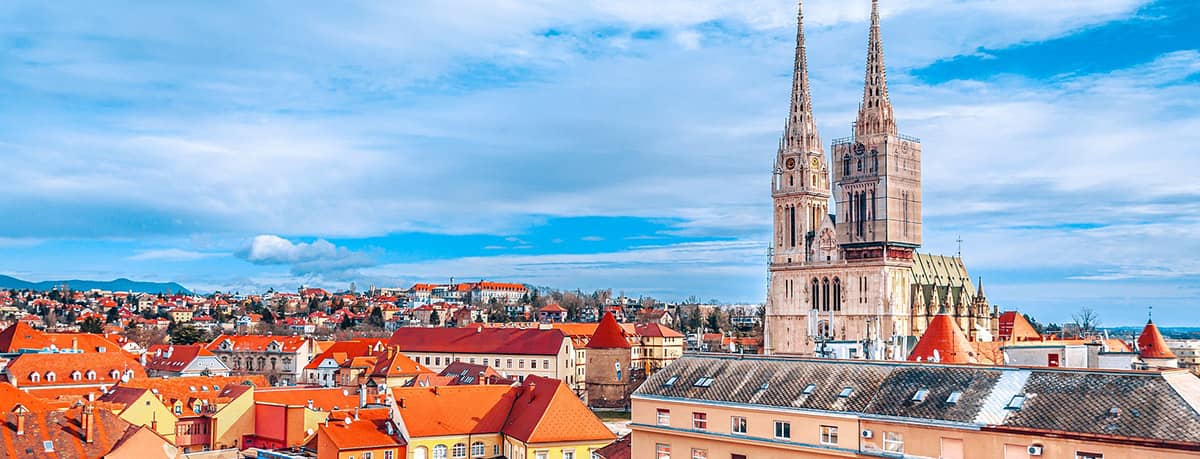
Kaptol is one half of Zagreb’s medieval “twin” core and the natural bridge between Ban Jelačić Square, Dolac Market, and the Upper Town lanes. It is dominated by Zagreb Cathedral and feels more traditional and local, especially in the mornings.
- Don’t miss: the Cathedral area and nearby market streets.
- Best for: early starts, market culture, historic Zagreb atmosphere.
Tkalčićeva and the café streets
If you want Zagreb’s most consistently lively vibe, aim for the streets around Tkalčićeva, a busy strip packed with cafés, restaurants, and bars that’s ideal for people-watching and easy evenings after sightseeing.
- Best for: dining, casual nightlife, central convenience.
- Tip: come earlier for a relaxed coffee, then return later for dinner and drinks.
Britanski trg and Ilica west
This is a great “local Zagreb” area just off the main shopping street (Ilica). It is best known for its Sunday antiques and flea market, when the square turns into a browsing-and-coffee ritual for locals.
- Best for: Sunday market mornings, cafés, a slightly quieter base that still walks into the centre.
- Tip: go early if you want the best selection at the flea market.
Maksimir
Maksimir is Zagreb’s classic green escape: a vast park area that feels like a forested retreat from the city and is an easy tram ride from the centre. It is a perfect choice when you want a slower half-day outdoors.
- Best for: long walks, nature breaks, families.
- How to use it: pair it with a museum-heavy day for balance.
Jarun
Jarun is Zagreb’s favourite warm-weather hangout: a recreation lake with paths and sports facilities, popular for cycling, running, skating, and sunset walks. It is also known for its evening energy in summer.
- Best for: summer afternoons, outdoor activity, relaxed evenings.
- Tip: treat it like Zagreb’s “mini seaside” when the city feels hot.
Novi Zagreb (modern Zagreb south of the Sava)
Novi Zagreb is where you go to see a more modern side of the city: big open spaces, contemporary architecture, and standout attractions like the Museum of Contemporary Art (MSU). It is also home to green spaces like Bundek Park, a popular spot for picnics and outdoor downtime.
- Don’t miss: Museum of Contemporary Art (MSU) and Bundek Park.
- Best for: modern culture, a change of pace from the historic centre.
If you are deciding where to base yourself, start with Donji Grad for convenience, then choose Upper Town/Kaptol for historic atmosphere or Tkalčićeva for easy evenings. Parks like Maksimir, Jarun, and Bundek are quick add-ons by tram when you want fresh air.
Where to stay in Zagreb
Zagreb has accommodation for every style and budget, from grand historic hotels to modern apartments and affordable hostels. For first-time visitors, the best strategy is to stay close to the walkable centre (Upper Town/Lower Town) so you can reach the main sights on foot and use trams only when you want to hop out to parks like Maksimir or Jarun.
Best areas to stay in Zagreb
- Donji Grad (Lower Town): the easiest base for most travellers. You are close to central parks, museums, restaurants, and tram connections, with simple walking routes to Ban Jelačić Square and the Upper Town.
- Gornji Grad (Upper Town) and Kaptol: best for historic atmosphere and postcard streets. Ideal if you want to step outside into cobblestones, viewpoints, and landmark sights, but expect more stairs and slopes.
- Tkalčićeva and the café streets: best if you want lively evenings. You will be central for dining, bars, and people-watching, while still walking-distance to the main sights.
- Near the main train station and central parks: practical if you are arriving by rail, taking day trips, or want fast tram access across the city. It is also a great option for shorter stays when you want everything “plug-and-play”.
- Maksimir or Jarun (slower pace): best if you prefer quieter nights, more green space, or warm-weather outdoor time. You will rely on trams more, but the trade-off is space and a calmer feel.
Luxury and classic hotels
If you want a five-star, old-school Zagreb experience, the Esplanade Zagreb Hotel is a classic choice with a prestigious location. Two other trusted, high-end options in or near the centre include the Sheraton Zagreb Hotel and the Westin Zagreb Hotel, both well placed for walking and tram connections.
Budget stays, hostels, and apartments
Zagreb is very friendly for budget travellers, with hostels and guesthouses that keep you close to the action without high nightly rates. Apartments are also a strong option if you want more space, a kitchen, or a quieter residential feel while still staying within easy tram range of the centre.
Hotels and apartments in Zagreb
Best Hostels in Zagreb
Zagreb Card and city passes
If you plan to use public transport and visit several paid attractions, the Zagreb Card can be good value and very convenient. It combines unlimited ZET public transport within Zone 1 with free entry to selected museums and attractions, plus extra discounts at partner venues around the city.
The card is sold in two durations: 24 hours (€31) and 72 hours (€37). You choose your start date/time when you activate it, so you can time it to cover your busiest sightseeing days. Because prices and inclusions can change, it’s still smart to confirm the latest rate on the official purchase page before you buy.
What the Zagreb Card includes
- Free public transport (ZET, Zone 1): unlimited rides on Zagreb trams and city buses within city limits (useful if you are following different Zagreb tram lines to hop between neighbourhoods, parks, and museums).
- Free entry (one visit per attraction): a curated list of popular museums and sights, including several of Zagreb’s most-visited collections.
- Discounts: reduced prices at additional museums, galleries, services, and selected shops (partners can change over time).
How it works (practical tips)
- Validity: choose a 24h or 72h card and set the start date/time.
- Delivery: if you buy online, the card is delivered by email (you can show it on your phone or print it).
- Transport note: the card covers ZET city transport in Zone 1 only; airport transfers are not included.
- Attractions rule: each included attraction is typically valid for one entry per cardholder.
- Queues: the card does not provide skip-the-line access.
Is the Zagreb Card worth it?
It is usually worth considering if you plan to combine several museums in Zagreb with multiple tram/bus rides in the same day (for example, pairing the centre with Maksimir or Jarun). If your plan is mostly walking and free sights (markets, parks, viewpoints), a regular ZET ticket or day pass may be better value, and you can still prioritise shopping areas using our Zagreb shopping guide.
Important note about the funicular
Zagreb’s funicular is usually a classic shortcut between the Lower Town and the Upper Town, but it is currently out of service due to renovation works (with completion expected around March 2026). If it reopens during your visit, it is a fun, quick ride; until then, use walking routes or public transport alternatives and see our Zagreb Funicular guide for the latest practical details.
Food and drink in Zagreb
Zagreb’s food scene blends Central European comfort dishes with modern bistros, craft beer, and a café culture that can easily become the highlight of your trip. Start with a morning at Dolac Market, build your day around one or two signature dishes (štrukli is the local must-try), then finish with a long coffee on a terrace or a relaxed dinner in the centre. For curated picks by neighbourhood and budget, see our restaurants in Zagreb guide.
What to eat in Zagreb
- Štrukli: Zagreb’s most iconic comfort food-cheese-filled dough that can be boiled or baked (savory is the classic, but sweet versions exist too). It’s the one dish almost everyone recommends trying in the capital.
- Zagrebački odrezak: a Zagreb-style stuffed cutlet (typically filled with ham and cheese, then breaded and fried), often served with a simple side and lemon.
- Market snacks and bakery staples: grab something quick around the centre - fresh bread, local cheeses, cured meats, and warm pastries are easy wins when you want a fast, tasty lunch.
- Seasonal, continental Croatian cooking: expect hearty stews, roasted meats, dumpling-style sides, and simple “home-style” plates in traditional restaurants.
Where to eat and drink
- Dolac Market area: ideal for a morning wander and casual bites, pair it with a walk through the surrounding streets before heading uphill to the Upper Town.
- Tkalčićeva and nearby lanes: best for café hopping, people-watching, and easy evenings (lots of terraces and relaxed spots for dinner and drinks).
- Lower Town (Donji Grad): great for modern bistros and date-night dinners, with museums and parks close by for a full evening plan.
- Bars, beer, and a casual night out: Zagreb has a strong craft scene and a relaxed bar culture, see our bars and clubs in Zagreb guide to pick the right vibe.
Zagreb café culture
Coffee in Zagreb is more than caffeine, it’s a daily ritual. Locals often linger over an espresso on a terrace, especially in the centre and along social streets like Tkalčićeva. The easiest way to do Zagreb “like a local” is to plan at least one slow coffee stop per day and use it as a reset between walking loops.
Practical tips (payment, tipping, and timing)
- Tipping: tipping is appreciated but generally not mandatory. A common approach is rounding up or leaving around 10% for good service, especially in sit-down restaurants.
- Card vs cash: cards are widely accepted, but it’s smart to carry a little cash for markets, bakeries, and small purchases.
- Peak times: popular terraces fill quickly in the early evening; if you want a specific restaurant, aim a bit earlier or reserve when possible.
Nightlife in Zagreb
Zagreb nightlife is more about atmosphere than mega-clubs: terrace bars, cocktail spots, live music, and alternative venues that keep the city buzzing well past dinner. The easiest plan is to start central (around Ban Jelačić Square), do a relaxed bar hop in the centre or along Tkalčićeva, then choose a venue based on your music taste (live gigs, techno, rock, or an alternative arts space). For more venue ideas by style, see our bars and clubs in Zagreb guide.
Best bars and cocktail spots (popular picks)
- Peaches & Cream (Trešnjevka) – a standout cocktail bar featured on 50 Best Discovery, worth the short trip outside the strict centre if cocktails are your priority.
- Swanky Monkey Garden (near Ilica) – a well-known terrace and cocktail hangout that’s especially fun in warmer months, often with DJ sets and a lively courtyard vibe.
- Botaničar (Lower Town) – a stylish café-bar near the Botanical Garden with a relaxed, local feel that works equally well for an afternoon drink or an easy evening start.
Clubs and late-night venues (where to party)
- Boogaloo – one of Zagreb’s best-known club venues for bigger nights (DJs, theme events, and touring acts).
- Masters – a go-to name for electronic music nights.
- Depo Klub – a classic Zagreb club option for late-night parties.
- AKC Medika – an alternative cultural complex with club nights and a distinctly underground feel.
- Močvara – a landmark alternative venue by the Sava, known for concerts, DJ nights, and a wider cultural programme.
- Katran (Shock Show Industry nights) – a warehouse-style space that hosts varied weekend club nights and events.
Live music (rock, alternative, and jazz)
- Vintage Industrial Bar – a favourite for alternative live music and gigs, popular with locals.
- Club Sax! – a long-running live-music spot with frequent concerts and a classic Zagreb night-out feel.
- Močvara – doubles as a strong live-music venue, especially for alternative and contemporary scenes.
Easy nightlife areas (where to base your evening)
- Tkalčićeva Street: the simplest “one street” choice for bars, restaurants, and people-watching.
- Centre side streets (around the main squares): best for cocktails, wine bars, and a more relaxed evening that stays walkable.
- Jarun (summer nights): a warm-weather option with bigger venues and late-night energy by the lake.
Practical tips for going out
- Check what’s on: many venues run event-based schedules, so the best nights depend on what’s happening that week.
- Getting home: the centre is walkable; taxis and ride-hailing are easy for late returns, especially if you end outside the core.
- Simple safety: Zagreb is generally considered safe, but use normal big-city common sense at night (well-lit streets, keep valuables secure, watch your drink).
Shopping and souvenirs
Shopping in Zagreb is a mix of local markets, design-led souvenirs, and easy modern shopping streets. If you want the most “Zagreb” purchases, start with Dolac Market for edible souvenirs and local produce, then look for Croatian design, crafts, and small-batch products in the centre. For a deeper list of streets, markets, and what to buy, see our Zagreb shopping guide.
Best places to shop in Zagreb
- Dolac Market: the classic stop for local food gifts like honey, dried herbs, olive oil, cheeses, and seasonal produce.
- Ilica: Zagreb’s main shopping street stretching west from the centre, good for a casual browse between sights.
- Britanski trg (Sunday flea market): great for antiques, vintage finds, and a very local Zagreb weekend atmosphere.
- Cvjetni trg (Flower Square): a central shopping-and-café hub; see our guide to Cvjetni for what to expect and why it’s worth a stop.
What to buy (souvenir ideas that feel local)
- Croatian design and crafts: small studios and concept stores often carry locally made jewellery, ceramics, prints, and homeware.
- Food souvenirs: honey, jams, truffle products, local herbs, and regional sweets are easy to pack and genuinely useful.
- Lavender and natural cosmetics: popular gifts that are easy to find in the centre (look for locally made brands).
- Wine and liqueurs: pick up a bottle from a specialist shop if you want something beyond supermarket basics.
Practical tips
- Go early for markets: Dolac is best in the morning; Britanski trg is most fun early on Sunday.
- Carry some cash: cards are common, but small stalls and market purchases can be cash-friendly.
- Check Sunday hours: trading hours can be limited on Sundays and public holidays, so plan key shopping earlier in your trip.
Day trips from Zagreb
Zagreb is one of the best bases in Croatia for day trips: you can swap city streets for baroque towns, castles, countryside food, waterfalls, or even a quick hop into Slovenia. If you have an extra day (or you are staying 3+ nights), choose one of the options below and plan an early start for the longer routes. For more ideas and practical planning, see our best day trips from Zagreb guide.
Samobor
Samobor is the easiest “escape” from Zagreb: a charming small town known for walks, cafés, and classic local pastries. It is ideal when you want a low-effort half-day or full-day trip without a long journey.
- Why go: relaxed old-town atmosphere, easy countryside walks, and a classic Croatian day-out feel.
- Getting there: buses run from Zagreb to Samobor and the ride typically takes around 30–40 minutes.
- Best for: short stays, families, and anyone who wants a simple break from the city without committing to a long transfer.
Varaždin
Often recommended as a top cultural day trip, Varaždin is a beautiful baroque city with a compact, walkable centre that feels very different from Zagreb’s pace. It is a great pick if you want architecture, history, and an easy “stroll city” day.
- Why go: baroque streets, elegant squares, and a sightseeing day that stays easy on the feet.
- Getting there: direct buses are common and typically take about 1.5 hours (trains exist but can be slower depending on the service).
- Best for: history lovers, photographers, and travellers who want a calm cultural day.
Trakošćan Castle
If you want a fairytale castle setting, Trakošćan is the standout. The castle and lake create a classic “postcard” day trip, especially enjoyable in spring, summer, or early autumn when the grounds are at their best.
- Why go: castle interiors, lake walks, and one of Croatia’s most scenic castle settings.
- Getting there: driving is the simplest (around 1 hour), while public transport usually involves a longer journey with transfers (often 2+ hours depending on the connection).
- Best for: couples, families, and anyone who wants a castle-and-nature day.
Rastoke and Plitvice Lakes
For waterfalls and “big scenery,” the classic day trip pairing is Rastoke (the watermill village near Slunj) plus Plitvice Lakes National Park. This is a full-day outing and works best with an early departure, especially in peak season.
- Why go: Rastoke’s river cascades and Plitvice’s lakes and waterfalls in one high-impact day.
- Getting there: buses run toward the Plitvice region; Plitvice National Park recommends checking current schedules via the Zagreb bus station timetable before you travel.
- Planning tip: if you are doing Plitvice in one day, book park entry in advance when possible and start early to make the most of daylight.
Ljubljana (Slovenia)
Because Zagreb is close to the Slovenian border, Ljubljana can be a surprisingly doable international day trip. It is a great option if you want a change of country, a compact old town, and an easy city walk along the river.
- Why go: pretty old town, riverfront cafés, and a “two countries in one trip” highlight.
- Getting there: frequent buses can take as little as about 2 hours 15 minutes; trains are also possible but journey times vary by service.
- Good to know: both Croatia and Slovenia are in the Schengen Area, so border formalities are generally minimal (though checks can still occur in exceptional situations).
If you are choosing just one: pick Samobor for the easiest local escape, Varaždin for baroque charm, Trakošćan for castles, or Rastoke + Plitvice for the biggest nature day.
Events and seasonal Zagreb
Zagreb is a year-round city, but it feels very different depending on the season: winter is all about festive lights and markets, spring brings cultural events and comfortable walking weather, and summer adds outdoor concerts, festivals, and lakeside evenings. Because dates can shift year to year, use this section as a planning guide and check our events in Zagreb hub for what’s on during your exact travel dates.
Advent in Zagreb (late November to early January)
If you’re choosing one “must-time-it-right” season in Zagreb, make it Advent. The city centre turns into a chain of Christmas markets, music stages, and food zones around Ban Jelačić Square, Zrinjevac, King Tomislav Square, European Square, and parts of the Upper Town. For the latest locations, highlights, and practical tips, see our Advent in Zagreb guide. Advent dates change each year, but the official programme currently lists the season running from 29 November 2025 to 7 January 2026.
Spring highlights (March to May)
Spring is one of the best times for a city break: it’s comfortable for walking, parks look their best, and the event calendar ramps up. Zagreb often hosts a major light festival in early spring (dates vary), and April is a strong month for film and culture thanks to ZagrebDox, scheduled for 19–26 April 2026. If you’re visiting in spring, plan your sightseeing days with one evening “event night” to catch the city at its most atmospheric.
Summer festivals (June to August)
Summer in Zagreb is about long evenings, outdoor venues, and festivals that pull the city outside. Early summer is especially busy, with major events often concentrated in June.
- Animafest Zagreb (World Festival of Animated Film): a flagship cultural event with screenings, talks, and exhibitions, scheduled for 8–13 June 2026.
- Cest is d’Best (international street festival): the centre becomes an open-air stage with performers, music, and street art (dates vary each year, often in early June).
- INmusic Festival (Lake Jarun): Croatia’s biggest open-air music festival, officially set for 22–24 June 2026.
- Zagreb Summer Evenings: a seasonal programme of concerts and performances in prominent city locations (dates vary; check the current programme).
Autumn culture (September to November)
Autumn is a sweet spot for Zagreb: the city stays lively, crowds thin out, and cultural events pick up again. If you enjoy cinema, keep an eye on the Zagreb Film Festival, typically held in November (in 2025 it ran 10–16 November). It’s an easy add-on to a city break because venues are central and the programme is designed for casual drop-ins as well as film fans.
If you want your trip to “feel like Zagreb,” time it for Advent (winter), festival season (June), or cultural autumn (November). Then use our events in Zagreb page to confirm dates, ticket links, and any last-minute schedule changes.
Suggested Zagreb itineraries
These routes are designed to be practical and easy to follow: they group sights by location so you spend more time exploring and less time zig-zagging across the city. Use the 1-day plan for a fast first visit, the 2-day plan for the best all-round pace, and the 3-day plan to add nature or a day trip.
1 day in Zagreb (classic first-timer route)
- Morning: Start at Ban Jelačić Square, then head to Dolac Market for a quick local-food browse and snack.
- Late morning: Walk into the Upper Town for St. Mark’s area and the Stone Gate. Add Lotrščak viewpoints if you want photos.
- Lunch: Eat near the centre (or do a casual bakery/market lunch if you want to keep moving).
- Afternoon: Do a Lower Town loop through the central parks (Green Horseshoe highlights like Zrinjevac and Tomislavac) and choose one signature museum (start with the Museum of Broken Relationships if you want the most “Zagreb” pick).
- Evening: Finish on Tkalčićeva Street for dinner, a terrace drink, and people-watching.
2 days in Zagreb (best all-round itinerary)
Day 1 follows the classic route above. Day 2 lets you choose based on your interests: parks and outdoors, bigger museums, or a deeper “local Zagreb” day.
- Morning: Choose one “big” museum block (MSU in Novi Zagreb for contemporary art, or the Nikola Tesla Technical Museum for hands-on exhibits).
- Midday: Take a long café break in the centre and do a small shopping wander (Ilica/Cvjetni area) if you want souvenirs.
- Afternoon (choose one): Maksimir Park for a nature walk, or Jarun for lakeside paths and sunset energy in warm weather.
- Evening: Pick your nightlife style: casual bars and terraces or a venue night using our bars and clubs in Zagreb guide.
3 days in Zagreb (add nature or a day trip)
The third day is where Zagreb shines as a base. Add a true outdoors escape or a classic excursion beyond the capital.
- Option A: Nature day (Sljeme/Medvednica): hike or take an easy trail day above the city, then return for a relaxed dinner in the centre.
- Option B: Easy nearby town: do a relaxed Samobor or Varaždin day for a completely different vibe.
- Option C: Big scenery day: go early for Rastoke + Plitvice if you want waterfalls and a high-impact “one day” adventure.
Not sure which excursion fits your season and pace? Start with our day trips from Zagreb guide and choose one plan that matches your travel dates.
Best museums in Zagreb
Zagreb has one of the strongest museum scenes in this part of Europe, ranging from major national collections to quirky, one-of-a-kind concepts. If you only choose one, go for a “signature Zagreb” museum in the centre, then add a larger collection (history, art, or technology) depending on your interests. For a full list and more detail, browse our museums in Zagreb hub.
Start here: the “only in Zagreb” museums
- Museum of Broken Relationships: the city’s most famous modern museum concept, built around personal objects and stories from past relationships. If you’re curious, start with our Museum of Broken Relationships guide.
- Chocolate Museum Zagreb: a fun, sensory museum experience that’s especially popular for couples and families.
- Cravaticum (boutique museum): a small museum dedicated to the Croatian necktie story and design history.
Classic culture: history and Zagreb’s story
- Zagreb City Museum: the best place to understand the city’s past, from medieval roots to modern Zagreb.
- Croatian Natural History Museum: great if you enjoy geology, fossils, and natural collections, and an easy add-on to a central sightseeing day.
- Ethnographic Museum: a strong pick for traditional culture, textiles, and everyday-life history.
Art and modern culture
- Museum of Contemporary Art (MSU): the top choice for modern art lovers and the easiest “big museum” to pair with a trip into Novi Zagreb.
- Art Pavilion: a landmark exhibition space in the Lower Town, often hosting major rotating shows.
For families and hands-on exhibits
- Nikola Tesla Technical Museum: a favourite for interactive exhibits, big machines, and “hands-on” learning.
- Zagreb Zoo (Maksimir): not a museum, but an easy family-friendly add-on if you are already spending time in Maksimir Park.
If you are short on time, pick Broken Relationships plus one “classic” museum that matches your interests. If you have two days, add a larger collection like MSU or the Technical Museum and balance it with a park walk.
Practical tips for visiting Zagreb
Zagreb is an easy city to visit independently: the centre is walkable, public transport is straightforward, and most travellers find the atmosphere relaxed. A few practical details will make your trip smoother, especially around money, Sundays and holidays, and getting around at the right times.
Money, prices, and payments
- Currency: Croatia uses the euro (€). If you want a quick overview of exchange tips, card use, and what to expect with prices, see our guide to currency in Croatia.
- Cards vs cash: cards are widely accepted in restaurants, cafés, shops, and museums, but keep a little cash for markets, small bakeries, and quick purchases.
- ATMs: use bank ATMs when possible and avoid “dynamic currency conversion” prompts that offer to charge you in your home currency.
Sundays and public holidays
- Plan shopping earlier: retail opening on Sundays is restricted, so some stores may be closed (or run shorter hours) depending on the time of year.
- Check holiday dates: if your trip overlaps with a national holiday, opening hours can change across museums, shops, and transport services. Use our Croatia public holidays overview to plan ahead.
- Markets and cafés: many cafés still operate, but it’s smart to confirm hours for any must-visit attractions if your stay includes a Sunday or holiday.
Getting around without hassle
- Walk the centre: most key sights are within easy walking distance (Upper Town has cobbles and steps, so wear comfortable shoes).
- Use trams strategically: trams are best for “long hops” (stations, parks, Jarun, Maksimir) while walking works best for the core. If you want a simple overview of the most useful connections, see Zagreb tram lines.
- Validate tickets: if you’re using trams/buses, make sure your ticket is valid for the whole ride and keep it until you finish.
Safety and common-sense advice
- Petty theft: Zagreb is generally considered safe, but keep an eye on your belongings in crowded areas (main squares, markets, trams).
- Nightlife caution: stick to well-lit streets late at night and use licensed taxis or reputable ride-hailing for longer rides home.
- Emergency contacts: save the key numbers to your phone before you arrive. For a handy reference list, see important numbers in Croatia.
Quick comfort tips
- Summer heat: plan heavier sightseeing for mornings, then slow down in shaded parks, museums, or long café breaks.
- Winter cold: bring warm layers and plan a museum-heavy day if temperatures drop.
- Language: Croatian is the local language, but English is widely spoken in tourist-facing places in the centre.
Parks in Zagreb
Zagreb is a surprisingly green capital, and its parks are part of everyday city life: morning walks, long coffee breaks, picnics, and easy cycling routes. Even if you are only in town for a short stay, plan at least one “park loop” in the centre and one bigger green escape outside it. For more ideas and park-by-park tips, see our full guide to Parks in Zagreb.
Green Horseshoe (central park loop)
The easiest way to get a “green Zagreb” feel is to walk part of Lenuci’s Green Horseshoe, a chain of landscaped squares and parks in the Lower Town. It links museums, elegant façades, and shaded benches, so it works perfectly as a sightseeing break between attractions.
- Zrinjevac (Nikola Šubić Zrinski Square): one of the city’s most popular central parks for strolling, sitting by the fountains, and soaking up the café-and-city atmosphere.
- Strossmayer Square + Art Pavilion area: a calm continuation of the horseshoe, great for a gentle walk and photo stops.
- King Tomislav Square (Tomislavac): a broad, open green space near the main train station, ideal for a relaxed pause at the start or end of a walking day.
- Zagreb Botanical Garden: a compact oasis in the heart of the city, perfect when you want greenery without leaving the centre.
Maksimir Park
If you choose just one “big park” in Zagreb, make it Maksimir. It is the city’s classic green escape with forest-like paths, lakes, and long walking routes that feel far from the bustle of the centre. It is also one of the oldest public parks in this part of Europe, which adds a nice layer of history to a simple outdoor afternoon.
- Best for: long walks, shade in summer, nature breaks, families.
- How to do it: go in the morning for a quieter feel, or late afternoon for a slower, cooler walk.
Jarun Lake
Jarun is Zagreb’s warm-weather playground: a recreational lake with cycling and walking tracks, sports areas, and a relaxed sunset vibe. It is a great option when the city feels hot and you want a more “holiday” atmosphere without travelling far.
- Best for: cycling, running, skating, summer evenings, casual drinks by the water.
- Tip: treat it like a half-day escape and stay through sunset for the best atmosphere.
Bundek Park
Bundek is a favourite for picnics, easy walks, and family time, with lakes, lawns, and paths that make it feel like a simple local “reset button”. If you want a green break without committing to a long walk, Bundek is a very easy win.
- Best for: picnics, playgrounds, light walking, relaxed downtime.
- Good to know: it is especially enjoyable in spring and early summer when the park is at its most colourful.
Ribnjak Park
Right behind the Cathedral, Ribnjak is a small, central park that feels surprisingly peaceful given how close it is to the busiest sights. It is a great “between stops” park: quick to reach, easy to enjoy, and ideal for a short breather after the market and Upper Town.
- Best for: a quiet break near the Old Town core, short walks, shade.
Tuškanac (forest park)
Tuškanac is one of the closest “forest-feel” escapes to the city centre. In minutes you can swap traffic noise for shady trees and calm paths, which makes it perfect when you want a nature vibe without leaving Zagreb.
- Best for: a romantic walk, fresh air, a quiet loop close to the centre.
Bonus: Medvednica Nature Park (Sljeme)
If you have more time (or you want a true outdoors day), head north to Medvednica Nature Park and Sljeme for hiking paths, viewpoints, and a real mountain break above the city. It is a popular local escape and a great counterbalance to museum-and-café days in the centre.
If you are short on time: walk Zrinjevac + Tomislavac in the centre, then choose Maksimir for a big green escape or Jarun for lakeside summer energy. For the complete park list and planning tips, visit Parks in Zagreb.
FAQ - Zagreb
Is Zagreb worth visiting?
Yes, especially if you want a walkable city break with café culture, markets, museums, and a Central European atmosphere that feels very different from Croatia’s coast. It’s also a smart base for inland day trips.
How many days do you need in Zagreb?
Plan 2 days for the main sights at a comfortable pace. Add a third day if you want a slower itinerary, extra museums, or a day trip from Zagreb.
What is the best time to visit Zagreb?
Late spring (May–June) and early autumn (September) are best for comfortable walking weather. For festive atmosphere, Advent in Zagreb is the big seasonal highlight and dates change each year.
How do I get from Zagreb Airport to the city centre?
Most travellers use the airport shuttle bus to Zagreb Main Bus Station, then continue by tram or on foot. A cheaper option is public transport (ZET bus line 290) via Kvaternik Square, while taxis and ride-hailing are the most direct door-to-door choices. For full details, see our Zagreb Airport guide.
Is it easy to get around Zagreb without a car?
Yes. The centre is highly walkable and the tram network covers most places visitors want to go. If you want an easy overview of useful connections, see Zagreb tram lines.
How much are tram tickets in Zagreb?
ZET sells time-based tickets (30/60/90 minutes) plus day and multi-day options. The cheapest approach is to buy in advance (kiosk/app) rather than from the driver, then validate when you board.
Is the Zagreb funicular running?
Not at the moment. The funicular is out of service due to renovation works with completion expected around March 2026. If it reopens during your visit, it’s a quick and iconic ride—see our Zagreb funicular guide for the latest practical details.
Where is the best area to stay in Zagreb?
For first-timers, Donji Grad (Lower Town) is the easiest base for walking and trams. Choose Upper Town/Kaptol for historic atmosphere, or the Tkalčićeva area for easy evenings. Start with our hotels and apartments in Zagreb and best hostels in Zagreb pages to match your budget.
Can you do good day trips from Zagreb?
Yes—Zagreb is one of Croatia’s best day-trip bases. Easy picks include Samobor and Varaždin, while bigger “full day” options include castles or Plitvice. Browse options in our day trips from Zagreb guide.