
Croatia Travel Guide - Plan Your Visit to Croatia
Croatia's coastline boasts thousands of miles of stunning seafront, crystal blue Adriatic sea and over 1000 islands to enjoy. Lately, cultural sites of Central Croatia, emerald forests and golden fields of Slavonia attract more visitors each year.
Travelers are drawn to its beaches, warm summer climate, and many natural attractions. Yet, amidst the natural beauty, Croatia also offers a rich tapestry of history, with remnants of Roman arenas, Byzantine mosaics, Venetian towers and Habsburg estates. While you might be tempted to concentrate on the breathtaking Dalmatian Coast we strongly advise you to explore other parts of Croatia as well. Discover the Venetian charm of the Kvarner Gulf and Istrian Peninsula, the enchanting waterfalls of Plitvice Lakes and Krka National Park and the vibrant capital city of Zagreb.
Croatia offers you much more than sun and sea - culture, nature, gastronomy, oenology, hunting, sports - an adventure waiting to be discovered!
Croatian Highlights
True jewel of Croatian tourism is Dubrovnik and its massive walls - an unique attraction with rich history of rivalry between small Republic and naval superpower Venice. Dubrovnik each year earns it's place in top 10 lists of places worth visiting in the world! But Croatia isn't only Dubrovnik. Split, Zadar, Rovinj and Zagreb are gaining more attention each year and Plitvice Lakes are a favourite spring destination. We encourage you to explore the possibilities!
Discover the best destinations and places to visit in Croatia. Planning your next dream winter getaway? Here are our Top Reasons to Choose Croatia for Your Winter Break.
Travel information and advice
If you're travelling to Croatia, our up-to-date travel information and advice gives you practical tips on staying healthy, insurance, money, emergency contacts, security and other essential information.
When to visit Croatia?
Each region has its specific time that's the best, but to keep the long story short, seaside in summer, rest of Croatia in other seasons.
Travel Services
Accommodation in Croatia | Ferry booking | Rent-a-car in Croatia | Airline tickets
Travel Inspiration
Need more inspiration? Check out our Travel Magazine articles packed with expert advice, helpful tips, and fresh insights to ignite your wanderlust.
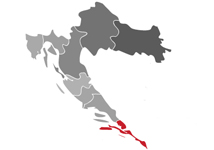
Explore by region
The Dubrovnik Region is Croatia’s southernmost travel region, combining the UNESCO-listed city of Dubrovnik with the seaside town of Cavtat, the rural landscapes of Konavle, the Pelješac Peninsula, Korčula, Mljet, Lastovo, the Elaphiti Islands and the Neretva Valley.
It is one of Croatia’s most varied regions: medieval stone towns, island national parks, vineyard-covered slopes, oyster farms, quiet fishing villages and dramatic coastal scenery can all be combined within one trip.
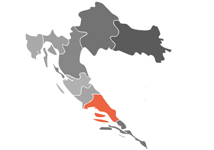
- Details
- Written by: Orsat Munitić
The Split Region is the heart of Central Dalmatia, combining the historic city of Split with UNESCO-listed Trogir, the Cetina canyon and Omiš, the Makarska Riviera, inland karst landscapes and the islands of Brač, Hvar, Šolta and Vis.
Few parts of Croatia offer such an easy mix of culture, beaches, mountains and island travel. You can explore Diocletian’s Palace in the morning and board a ferry for an island that same afternoon, while Split’s ferry network, buses, motorway connections and Split Airport make the region one of Croatia’s easiest areas to explore.
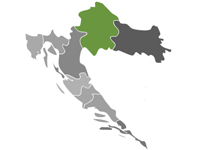
- Details
- Written by: Orsat Munitić
Zagreb, Croatia’s capital, is the natural gateway to Central Croatia, a region of Baroque towns, hilltop castles, vineyards, thermal spas, forested mountains and historic villages.
Within an hour or two of the city you can explore Samobor, the wine hills of Plešivica, Hrvatsko Zagorje, Krapina, Trakošćan Castle, Varaždin, Marija Bistrica and the trails of Medvednica. It is one of the easiest parts of Croatia to combine with a city break while seeing a completely different landscape from the Adriatic coast.
- Details
- Written by: Orsat Munitić
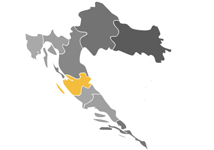
The Zadar Region lies in northern Dalmatia between the Adriatic Sea and the Velebit mountains. It combines the historic city of Zadar with sandy beaches around Nin, islands such as Dugi Otok and Ugljan, the canyons of Paklenica, the Zrmanja River and the coastal landscapes around Biograd and Pag.
The region works particularly well for travelers who want to combine history, beaches, islands and outdoor activities without changing bases every day. Zadar is the main transport hub, while Nin, Dugi Otok, Starigrad and Pag offer very different alternatives for longer stays.
- Details
- Written by: Orsat Munitić
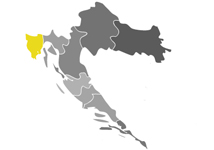
Istria is Croatia’s heart-shaped peninsula in the northern Adriatic, where Venetian-influenced coastal towns, medieval hill settlements, vineyards, olive groves and truffle forests all sit within easy driving distance of one another.
The region works equally well for a beach holiday, food-and-wine trip or road trip. Rovinj, Poreč and Pula are the main coastal anchors, while Motovun, Grožnjan, Buzet and Pazin reveal the quieter inland side of the peninsula.
- Details
- Written by: Orsat Munitić
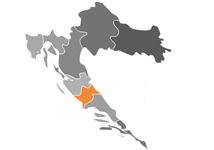
The Šibenik Region in central Dalmatia combines UNESCO-listed heritage, river landscapes, beaches and two of Croatia’s most distinctive national parks. The historic city of Šibenik is the cultural anchor, while Krka National Park, Kornati National Park, Primošten, Vodice, Murter, Skradin and the inland towns of Drniš and Knin give the region a much broader character than a simple coastal stop.
It is one of Croatia’s easiest regions for combining culture and nature: explore stone streets and fortresses in Šibenik, spend a day among the waterfalls of Krka, then head to Murter or the coast for boat trips through the Kornati archipelago.
- Details
- Written by: Orsat Munitić
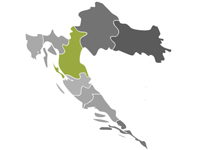
Lika is one of Croatia’s wildest and least densely populated regions, stretching between the mountains of Velebit and Plješevica and linking inland Croatia with the Adriatic coast. Its landscapes are dominated by forests, karst rivers, caves, high plateaus and two major national parks: Plitvice Lakes and Northern Velebit.
Plitvice is the best-known attraction, but Lika is worth exploring beyond the lakes. Gospić and nearby Smiljan connect the region with Nikola Tesla, Otočac sits beside the clear Gacka River, Krasno is a gateway to Northern Velebit, while Senj and Karlobag show where the mountains fall dramatically toward the Adriatic.
- Details
- Written by: Orsat Munitić
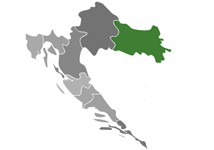
Slavonia is eastern Croatia’s great region of rivers, wetlands, vineyards, Baroque towns and fertile plains. It stretches between the Drava, Sava and Danube and offers a very different experience from the Adriatic coast: quieter roads, generous food, strong wine traditions and a landscape shaped by agriculture and water.
The best regional base is Osijek, with easy access to Kopački Rit and Baranja, while Vukovar and Ilok anchor the Danube, Đakovo is known for its cathedral and Lipizzans, and Požega, Kutjevo and Papuk form the main wine-and-nature cluster in western Slavonia.
- Details
- Written by: Orsat Munitić
Read more: Slavonia Travel Guide: Visit Croatia's Golden Valley