
Croatia is one of the Adriatic's most appealing windsurfing destinations, with reliable summer thermal winds in some areas, stronger local wind systems in others, and a long coastline that gives riders very different spot styles to choose from. From the Pelješac channel and the Brač-Hvar channel to beginner-friendly lagoons and more exposed northern bays, windsurfing in Croatia suits everyone from first-time learners to experienced sailors planning a wind-based trip.
The best-known windsurfing spots in Croatia include Viganj on the Pelješac peninsula, Bol on Brač, and a growing list of regional favourites such as >Nin, Premantura and Preluk. What makes Croatia especially attractive is that you can combine beach time, island scenery and straightforward holiday logistics with real windsurfing potential. Below, you'll find where to go, what the local winds mean, and how to choose the right Croatian spot for your level.
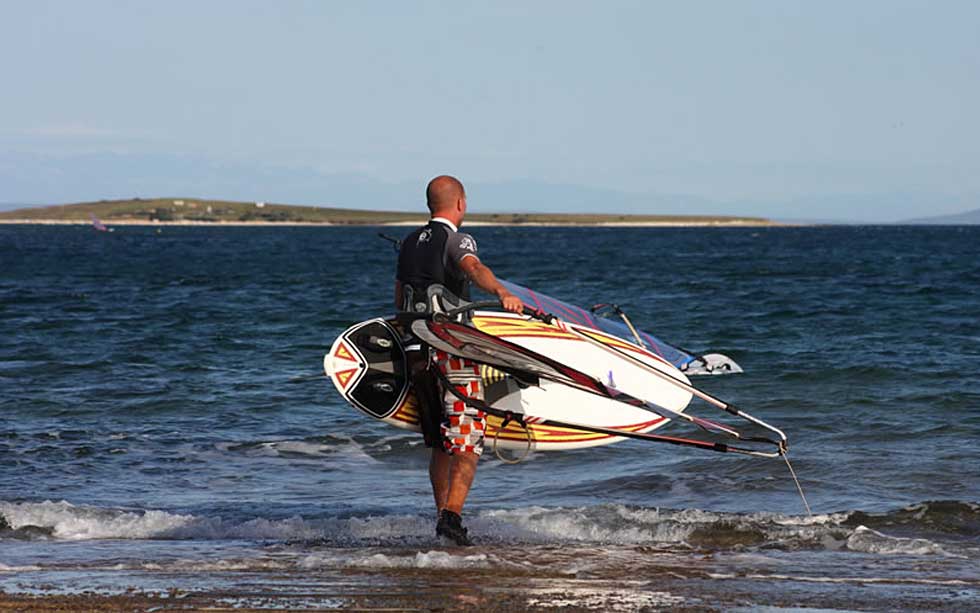
Is Croatia good for windsurfing?
Yes, Croatia is a very good windsurfing destination, especially for travellers who want warm-weather sailing, scenic coastal bases and a choice between beginner-friendly areas and stronger, more technical spots. The country's best-known locations are spread across several regions rather than concentrated in one place, so the right choice depends on your level, the type of wind you want, and whether you are planning a dedicated surf trip or a broader Croatia holiday.
For many travellers, the biggest advantage is variety. The Pelješac channel is one of Croatia's best-known windsurfing areas, Bol is one of the country's classic summer windsurfing bases, and northern areas such as Istria and the Kvarner coast offer different wind patterns and riding conditions. That gives Croatia genuine appeal for beginners, progressing intermediate riders, freeride sailors and experienced wind-seekers alike.
| Best for | Where to look first | Why it stands out |
|---|---|---|
| Beginners | Nin, Neretva Delta, Kučište, selected schools in Bol | Shallower or more approachable learning conditions with easier access to lessons |
| Intermediate riders | Bol, Viganj, Premantura | Well-known Croatian spots with stronger identity and more progression potential |
| Stronger wind seekers | Viganj, Preluk, exposed Istrian spots | More wind-focused setups and a more technical feel on the water |
| Mixed holiday + wind-sport trip | Bol, Pelješac, Neretva Delta, Istria | Easy to combine sailing or kiting with beaches, towns and wider Croatia travel plans |
Understanding Croatia's windsurfing conditions
Croatia is not a one-pattern windsurfing destination. Conditions change a lot from one stretch of coast to another, and the kind of trip you have will depend on whether you are chasing reliable summer thermal wind, easier beginner water, or stronger and more technical setups. That is why the same country can suit first-timers in shallow lagoons, freeride sailors looking for regular summer sessions, and experienced riders who are happy to work around local wind windows.
Croatia's best-known holiday windsurfing spots usually work best when local summer patterns line up well, especially in places like Viganj and Bol. Stronger winds such as bura and jugo matter too, but they are often more important for reading the wider weather picture than for choosing a relaxed first windsurfing holiday. If you are planning to sail, always check the latest marine forecast before going out.
The main Adriatic winds for windsurfers
The five names below matter most because they help explain why Croatian spots feel so different from each other.
- Maestral - the best-known summer sea breeze for many holiday riders. It is the classic afternoon wind linked with some of Croatia's most famous windsurfing areas, especially Viganj and Bol.
- Bura - a strong, often gusty north-easterly that can be much more serious. It is one of the Adriatic's defining winds and can create powerful, demanding conditions rather than easy learning sessions.
- Jugo - a warmer, wetter southerly or south-easterly pattern that can build rougher seas and a heavier weather feel. It is more relevant for forecast awareness than for ideal beginner windsurfing days.
- Tramontana - a northerly wind that matters especially at spots such as Preluk, where riders often target early-morning sessions.
- Burin - a lighter night or early-morning land breeze. It is not usually the main reason people travel to Croatia to windsurf, but it helps explain why some places start calm before stronger daytime wind develops.
What each wind means on the water
| Wind | What riders usually want to know | Best fit |
|---|---|---|
| Maestral | Usually the friendliest holiday pattern - more stable, more usable, and often strongest later in the day | Summer freeride, progression, many intermediate trips |
| Bura | Can be strong, gusty and much more technical, with a more demanding feel on the water | Experienced riders and careful forecast watching |
| Jugo | Often linked with rougher weather and lumpier sea state rather than easy textbook learning conditions | Advanced riders, weather-aware sessions |
| Tramontana | Most useful where local geography turns it into a known session window, especially early in the morning | Preluk-style dawn sailing and spot-specific plans |
| Burin | Usually lighter and less important as a main trip-planning wind, but relevant for understanding calmer mornings | Background local pattern, not a primary Croatia draw |
When Croatia is best for windsurfing
The easiest season to understand is late spring through early autumn, with summer being the most straightforward period for classic holiday windsurfing. This is when places such as Viganj and Bol are best known for regular thermal or afternoon wind patterns, active rental centres and a full-service beach setup.
Outside peak summer, Croatia can still deliver excellent sessions, but the trip becomes more weather-dependent and less predictable. Shoulder-season travel can suit stronger-wind riders who are comfortable reading forecasts and choosing days carefully, while complete beginners usually benefit most from warm-water months, active schools and spots with easier launches.
Before sailing, check the latest DHMZ marine forecast for the Adriatic, especially if bura or jugo is in the forecast.
The (ideal) Winds in more detail
Knowing the winds is very important because the sailing style depends on the type and strength of the wind.
Maestral (NW)
Maestral is a typical Adriatic summer north western wind and one of those winds that are characteristic for beautiful and stable weather. It's a daily wind created by the differences in temperature between the mainland and sea. It is fairly frequent from spring to autumn and strongest in July and August. It usually starts blowing between 10:00 and 12:00 in the morning and reaches its highest strength around 17:00, slowly fading till the evening.
On the Beaufort scale it's usually between 3 and 6. (12-49 km/h). Maestral is suitable for learning fun techniques or new freestyle tricks, and with regard to the fact that it creates waves up to 150cm in height, it is also suitable to practice your jumps.
Tramontana (N)
During the day, Maestral can often turn on Tramontana. It is a colder northern wind of moderate strength with strong gusts, that usually forms in clear weather. Its strength is 5-10 (29-102 km/h) on the Beaufort scale and its waves can reach up to 3 meters which makes it the most desirable wind of many windsurfers.
Burin (NNE)
Burin occurs due to the difference in temperature between land and sea and is enhanced by the force of gravity while coming down from the hilly banks. It blows from north-north east early in the morning and reaches a strength of 3-6 (12-49 km/h) on the Beaufort scale.
Best windsurfing spots in Croatia
No single Croatian spot suits every rider. Viganj and Bol are the classic names for many dedicated windsurf trips, Nin and the Neretva Delta are easier to recommend to beginners and mixed wind-sport travellers, while Preluk and southern Istria appeal more to riders who understand local wind windows and want a more exposed feel on the water.
Viganj, Pelješac peninsula
If you want Croatia's most established windsurfing name, start with Viganj. Set on the narrow Pelješac channel in the Dubrovnik region, it is one of the country's best-known windsurfing bases and has the kind of identity serious riders usually look for when they plan a wind-focused trip. This is the place people most often mean when they talk about Croatia as a real windsurfing destination rather than just a beach holiday with occasional rental gear.
Viganj works best for intermediate and experienced riders, but it is not only for experts. The long local surf tradition, rental options and schools make it a realistic choice for motivated beginners too, especially if they want to learn in a place where windsurfing is central to the atmosphere rather than just an add-on activity.
Bol, Brač island
Bol remains one of the best all-round choices for a Croatia windsurfing holiday. The channel between Brač and Hvar gives the area its classic windsurfing appeal, and Bol's long-standing surf infrastructure makes it easier than most places to organise lessons, rentals, storage and beach logistics in one place. For many visitors, that makes it the easiest spot to recommend without too many caveats.
It also works especially well as a mixed holiday base in the Split region. You get a lively town, strong accommodation choice, easy beach access and a destination that still feels like a proper windsurfing centre rather than a generic island resort with a small school on the side.
Neretva Delta and Ušće Neretve
The Neretva Delta deserves a place in this guide, but with the right framing. It is best known in Croatia for kitesurfing rather than pure windsurfing, yet it is still a very useful destination for travellers who want shallow water, open space and a more approachable learning environment in the wider Dubrovnik region. If your trip is about building confidence, improving board control or combining several wind sports, Neretva becomes much more interesting.
The big advantage here is the shallow-water setup and sandy sections around the mouth of the river. That makes it easier to recommend to learners and progressing riders than some of Croatia's more exposed or more gust-dependent spots. At the same time, the more open parts of the estuary become more serious when the wind rises, so stronger conditions still reward riders who know what they are doing.
For travellers based in Dubrovnik, Neretva is also one of the easiest ways to experience a very different side of Croatia's wind scene without planning a full multi-stop surf trip. Instead of organising transport, gear and local logistics separately, it often makes more sense to treat the delta as a straightforward day excursion, especially if you are curious about the area but do not want to build the entire holiday around staying there.
That setup works particularly well for beginners who want guided support, but it also suits more experienced riders who would rather focus on the session itself than on the practical side of getting to the spot. A well-organised day trip can therefore be a smart option from Dubrovnik, giving you easier access to Neretva's shallow sections, open riding space and wind-focused atmosphere without adding too much planning to the rest of your trip.
Exhilarating One Day Windsurfing Adventure
This day trip is a practical way to experience the Neretva Delta from Dubrovnik without dealing with the transport and lesson planning yourself. It works well for travellers who want to try windsurfing or kitesurfing in one of Croatia’s best-known wind areas, with guidance on hand and a setup that is easy to fit into a wider Dubrovnik stay.
The experience is suitable for different skill levels, so beginners can use it as an accessible introduction while more confident riders can focus on improving technique and enjoying time on the water. If you want a structured, low-stress way to discover the delta’s windsurfing appeal, this tour is a strong option.
Nin and Ždrijac Beach
For beginners, Nin is one of the easiest Croatian spots to understand. Official tourism material presents Ždrijac as a popular centre for windsurfing and kitesurfing thanks to favourable winds, and the beach has a simpler, more approachable feel than places that are famous mainly because they get stronger wind. That matters if the goal is not maximum adrenaline, but a better first experience on the water.
It is also one of the most sensible options in the Zadar region for families, first-timers and recreational riders who want a broad sandy setting rather than a technically demanding launch. If you are choosing between "best-known" and "most forgiving", Nin often wins the second category.
Preluk, Kvarner
Preluk is not the place to choose if you want a lazy all-day beach-surf schedule. Its reputation is built around tramontana in Preluk Bay, and that gives it a very specific personality: early starts, forecast awareness and sessions that reward riders who know exactly why they are there. That is why Preluk has such a strong reputation among dedicated local and regional riders.
In practice, Preluk suits experienced windsurfers far better than casual holiday beginners. It is a spot for people who are happy to plan around a short early-morning window, get on the water quickly and treat the session itself as the main event.
Premantura and southern Istria
Premantura and Cape Kamenjak are strong choices for riders who want a more exposed southern Istria setup. This part of the coast is repeatedly associated with wind, active-water sports and established centres, which makes it a good fit for travellers who want more than a single textbook beginner beach. It also works well for people who are already building a wider Istria trip and want a windsurf base with a more adventurous edge.
The main caution is that southern Istria is not just about "more wind" - it is also about more exposure. Around Kamenjak the weather, currents and sea conditions can change quickly, so this area makes more sense for confident riders and weather-aware travellers than for absolute beginners choosing their very first lesson location.
Savudrija and other Istria alternatives
Savudrija works better as a northern Istria alternative than as Croatia's headline windsurf base. The appeal is different: calmer pacing, moderate winds and a spot that fits well into a broader coastal stay rather than a highly specialised wind-focused trip.
That makes Savudrija and similar Istrian alternatives good secondary recommendations. They are worth considering if you are already planning time in Istria and want to add windsurfing to the trip, but they are not usually the first answer for travellers building the whole holiday around wind alone.
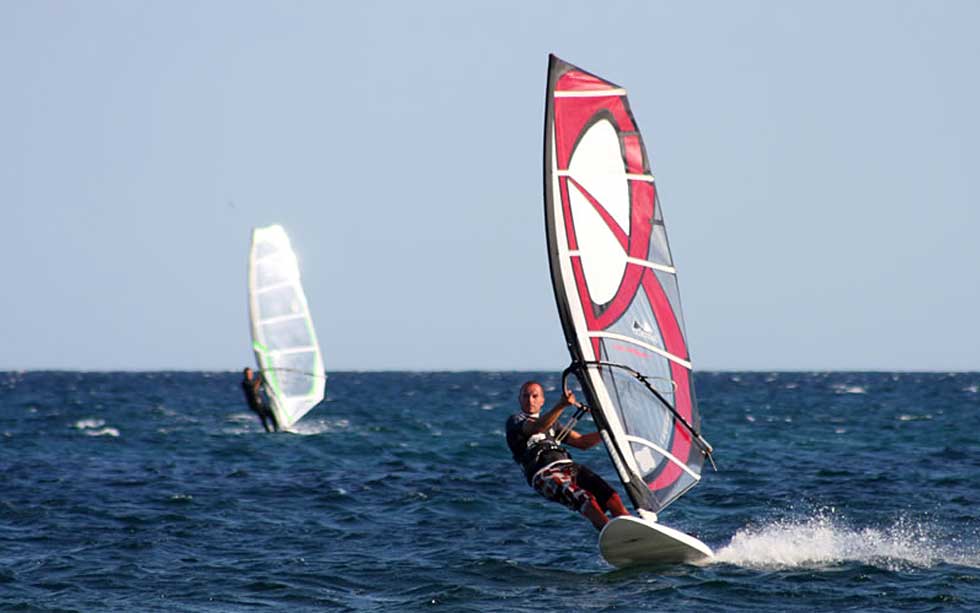
Quick comparison table of Croatia's main windsurfing spots
| Spot | Region | Best for | Typical feel | Notes |
|---|---|---|---|---|
| Viganj | Pelješac - Dubrovnik region | Intermediate riders, experienced sailors, dedicated windsurf trips | Classic Croatia windsurf base with strong local identity and afternoon wind reputation | One of the country's best-known windsurfing spots, with schools, rentals and nearby surf accommodation |
| Bol | Brač - Split region | Beginners, intermediates, lessons, all-round holiday trips | Balanced island base with established centres and easy holiday logistics | Strong full-service option with rental, storage and schools for both beginners and advanced riders |
| Neretva Delta | Dubrovnik-Neretva County | Beginners, progression, mixed wind-sport holidays | Shallow-water learning area with steady wind and more open advanced sections | Best known for kitesurfing, but still worth including for windsurfing lessons and beginner confidence |
| Nin - Ždrijac Beach | Zadar region | Beginners, families, first lessons | More forgiving sandy setup with favourable local winds | One of the easiest beginner recommendations in Croatia |
| Preluk | Kvarner | Experienced riders, dawn sessions, forecast-driven trips | Specialist early-morning tramontana spot rather than an all-day holiday beach | Best for riders who already understand the timing and local wind window |
| Premantura and Cape Kamenjak | Southern Istria | Confident riders, active outdoor trips, stronger wind appeal | More exposed Istria setup with quick weather and sea-state changes possible | Good school support in the area, but a more weather-aware choice than Nin or Bol |
Which Croatia windsurfing destination is best for you?
The right Croatian windsurfing base depends less on which spot is most famous and more on what kind of rider you are. Some places are easier to learn in, some are better once you already have control and want more wind, and some work best if your priority is simple holiday logistics with lessons, rentals and accommodation close by.
Best spots for beginners
If you are starting from scratch, the most sensible choices are the places that make learning easier rather than the places with the strongest reputation. In Croatia, that usually means shallow water, more forgiving beach setups, and easy access to lessons.
- Nin and Ždrijac Beach - one of the easiest beginner recommendations in Croatia thanks to favourable winds, a broad beach setting and a more approachable overall feel.
- Neretva Delta - especially good for confidence-building and mixed wind-sport holidays because of shallow water and open sandy space. It is better known for kitesurfing, but still worth considering for windsurfing beginners and progressing riders.
- Bol - a strong beginner option if you want a more polished holiday setup with established schools, rental infrastructure and the flexibility to improve gradually.
Best spots for intermediate riders and freeride progression
Once you are past the first learning stage, Croatia becomes much more interesting. This is where you start benefiting from places that combine more regular wind with enough infrastructure to keep the trip practical.
- Bol - one of the best all-round progression bases in Croatia because it combines dependable windsurfing identity with easy holiday logistics in the Split region.
- Viganj - ideal if you already know the basics and want a destination where windsurfing feels central to the place rather than secondary to the holiday.
- Premantura and southern Istria - a good step up for active travellers who want stronger wind potential and an Istria base with more edge than a classic learner beach.
Best spots for stronger wind and more technical sessions
If your priority is not ease but wind quality, local reputation and a more committed session style, the shortlist changes. These are the places that make more sense for confident riders who already understand forecasts, local timing and more exposed water.
- Viganj - Croatia's best-known windsurfing name and still the most obvious choice for riders who want a real wind-focused trip..
- Preluk - the specialist option for riders who are happy to work around early-morning tramontana and treat the session itself as the main reason to be there.
- Premantura and Cape Kamenjak - best for riders who are comfortable with a more exposed, active-water setup and want a southern Istria base.
Best spots for lessons, rentals and first-timers who want easy logistics
If you want the easiest possible setup - book accommodation, walk to the centre, arrange lessons, store gear and keep the rest of the holiday simple, not every Croatia spot is equally practical. A few stand out much more clearly than the rest.
- Bol - the easiest full-service recommendation on this page, with multiple centres, equipment rental, storage and beginner-to-advanced lesson options.
- Viganj - excellent if you want a true windsurfing atmosphere with local schools and camps, even if the overall trip feels more wind-focused and less mainstream than Bol.
- Premantura - a good Istria choice if you want school and rental support in an active outdoor setting.
- Neretva Delta - a smart option for beginners and mixed wind-sport travellers who want lessons, shallow water and room to practice without a more technical launch.
Quick recommendation summary
- Choose Nin if your main priority is a forgiving first windsurfing experience.
- Choose Neretva Delta if you want shallow water, beginner confidence and a trip that may include kitesurfing too.
- Choose Bol if you want the most balanced combination of lessons, rentals, holiday comfort and progression potential.
- Choose Viganj if you want Croatia's strongest windsurfing identity and a more serious surf-trip feel.
- Choose Preluk if you already know exactly why an early tramontana spot suits you.
- Choose Premantura if you want an active Istria base with stronger wind appeal and school support.
Best time to go windsurfing in Croatia
The best time to go windsurfing in Croatia is from late spring to early autumn, with summer being the easiest season to recommend. That is when Croatia's best-known spots are most consistently set up for visiting riders, with schools, rentals, camps and beach infrastructure running at full pace and with the most straightforward holiday conditions for people who want to sail regularly without building the whole trip around volatile weather.
If you are choosing the safest all-round window, think in two layers. June to September is the most practical season for most visitors, while July and August are usually the easiest months for beginners, lesson-based holidays and mixed beach-plus-windsurf trips. Outside the warmest months, Croatia can still be excellent, but it becomes more forecast-dependent and more suitable for riders who are comfortable adjusting plans around local wind windows rather than expecting easy daily sessions.
Quick picks
- Best all-round months - June to September for the easiest balance of windsurfing, warm weather and active centres.
- Best for beginners - July and August, when warm water, full-service schools and simpler holiday logistics make learning easier.
- Best for stronger wind seekers - late spring and early autumn can be more interesting, but they are less predictable and more weather-dependent.
- Best for Viganj and Bol style trips - summer, when thermal and afternoon wind patterns are most closely tied to the classic reputation of these spots.
- Least suitable period for most casual visitors - winter, when stronger systems such as bura become more serious and the trip stops feeling like an easy holiday windsurf week.
What to expect by season
| Season | What it is best for | What to expect |
|---|---|---|
| Late spring | Progression trips and riders with flexible plans | Good potential, but less certainty than peak summer and more need to watch forecasts closely |
| Summer | Most visitors, beginners, lessons and classic Croatia windsurf holidays | The easiest season for Viganj, Bol, Nin and other better-known spots, with active schools and simpler logistics |
| Early autumn | Confident riders and quieter shoulder-season travel | Still attractive, but less plug-and-play than summer and more dependent on local weather timing |
| Winter | Not the best fit for typical holiday windsurfing | More serious weather, stronger wind risk and fewer reasons to recommend it to casual or first-time visitors |
How spot choice changes with the season
In summer, it makes sense to prioritise the destinations that are already famous for easy repeat sessions and complete infrastructure, especially Viganj and Bol. That is also the season when beginner-friendly areas such as Nin and the Neretva Delta are easiest to enjoy, because you are not relying on more technical or more aggressive weather patterns to make the trip work.
Windsurf schools, rentals and beginner lessons
If you are not bringing your own gear or you are still learning, the best Croatian windsurfing spots are not just the windiest ones. They are the places where lessons, rentals, storage and launch access are all easy to organise. In practice, that usually makes Bol and the Viganj-Kučište area the easiest full-service choices, with the Neretva Delta and Premantura also worth considering depending on your level and the style of trip you want.
Where lessons are easiest to find
For the easiest lesson-and-rental planning, Bol is the safest all-round recommendation. The windsurfing centres there offer equipment rental, gear storage and sailing schools for beginners and advanced riders, which is exactly the kind of full-service setup that makes a short holiday trip much easier to organise.
Viganj and Kučište are the strongest choice if you want a more dedicated windsurf atmosphere.
Neretva Delta is especially worth considering if you are a beginner or you want a mixed wind-sport trip. Schools in the estuary area provide lessons and equipment rentals, and the shallow-water setting makes it more approachable than some of Croatia's more exposed spots.
Premantura works best as an active outdoor base with windsurf support rather than as the easiest first-lesson destination in the country. Southern Istria makes more sense for travellers who already like active-water settings and want a stronger Istria trip structure around the sessions.
Where to stay for a windsurfing trip in Croatia
Where you stay can make a big difference to how much you actually sail. The best Croatia windsurfing bases are not always the most polished resort towns, they are the places that make launch access, lessons, rental logistics and forecast timing easy. In some destinations that means staying right in the windsurf village, while in others it means choosing a comfortable town with strong infrastructure and walking distance or a short transfer to the centre.
If your trip is mainly about windsurfing, stay as close to the main launch or school as possible. If windsurfing is only part of a wider Croatia holiday, it usually makes more sense to choose a stronger accommodation base and accept a little extra movement between your room and the beach.
Best bases for a dedicated windsurf holiday
These are the places that make the most sense if windsurfing is the main reason for the trip.
- Viganj and Kučište - the strongest dedicated windsurf base on this page. This part of the Pelješac channel has the right atmosphere for riders who want schools, surf accommodation, camps and a place where wind is part of the daily rhythm rather than a side activity.
- Bol - the easiest full-service windsurf base in Croatia. It works especially well if you want established accommodation choice, easier holiday logistics and quick access to lessons, rentals and beach infrastructure.
- Premantura - a smart Istria choice for active travellers who want to stay close to southern Istria's windsurfing setup, especially if campsite-style or outdoor-oriented accommodation suits the trip.
Good choices for mixed beach plus windsurf trips
These bases work well if you want windsurfing to be part of the holiday, but not the only focus.
- Bol - still the best all-round choice if you want to combine sailing with beaches, restaurants and a more complete island-holiday feel.
- Nin - a good fit for families, beginners and travellers who want a broad sandy beach environment with an easier learning atmosphere.
- Neretva Delta area - worth considering if your priority is shallow-water practice, a mixed wind-sport trip or spending as much time on the water as possible.
- Premantura and southern Istria - good for travellers building a broader Istria trip around beaches, outdoor activities and selected windsurf sessions.
What to prioritise when booking
For windsurfing trips, choosing the right accommodation is usually more important than chasing the prettiest room. A base that saves time before and after sessions often gives you a better overall trip than a nicer property that leaves you dealing with parking, carrying gear or longer transfers in peak season.
- Distance to the launch - staying close to the beach or centre matters more than it does on a normal sightseeing trip.
- Storage and gear handling - if you are bringing your own kit, check whether storage, rinsing space or easy beach access is available.
- Lesson and rental access - beginners should prioritise places where lessons, rescue support and rental gear are easy to arrange.
- Parking or transfer simplicity - important if you are staying outside the immediate launch area.
- Wind-first location logic - for dedicated trips, book where you expect to sail most, not where the nightlife or sightseeing is strongest.
How to plan a Croatia windsurfing trip
A Croatia windsurfing trip is much easier to plan once you separate the country into a few practical trip types. Some spots work best as dedicated surf bases, some make more sense as part of a beach holiday with a few sessions built in, and some are only really worth it if the forecast lines up well. That is why choosing the right region matters just as much as choosing the right school or beach.
The second big decision is transport. Mainland spots are usually simpler if you want flexibility, while island spots such as Bol add a ferry step and need a little more planning, especially if you are travelling with your own kit. In most cases, the smoother your logistics are, the more likely you are to actually get on the water instead of losing time to transfers and last-minute transport decisions.
Choosing the right region
- Choose Pelješac for a dedicated windsurf trip - Viganj and the wider channel area make the most sense if windsurfing is the main point of the holiday.
- Choose Brač for the best all-round island base - Bol is the easiest choice if you want a polished holiday destination with real windsurfing infrastructure.
- Choose the Zadar region for easier learning - Nin is one of the simplest recommendations for beginners, families and first-time lessons.
- Choose the Neretva Delta for shallow-water progression - especially useful if you want a mixed wind-sport trip with room to practice.
- Choose Istria for an active outdoor holiday - Premantura and southern Istria work well if you want windsurfing as part of a broader coastal trip.
- Choose Kvarner only if the local wind pattern is the reason you are going - Preluk is a specialist pick, not the easiest general recommendation.
Car vs ferry logistics
If you are travelling to Viganj, Nin, the Neretva Delta or Premantura, a car is usually the easiest option because it gives you more freedom with timing, gear handling and accommodation choice. It also makes more sense if you want to compare nearby beaches, change plans around the forecast, or stay slightly away from the main launch area.
If you are heading to Bol on Brač, add an island transfer step into the plan early. If you are bringing your own windsurfing equipment, a vehicle-based island plan is usually simpler than relying on passenger-only transfers and extra onward movement. If you are travelling light and renting on arrival, island logistics become much easier.
- For mainland spots - a rental car is usually the most flexible choice, especially for Viganj, Nin, Neretva and southern Istria.
- For Bol - check ferry timing before you book accommodation, especially if arrival and departure days are fixed.
- For your own gear - keep transport as simple as possible and avoid building the trip around too many separate transfers.
- For rental-based trips - you can be more relaxed about transport because you do not need to move a full quiver around the coast.
- For ferry planning - always recheck the official operator timetable close to departure because schedules can change.
Packing and gear basics
If you are renting gear, packing is straightforward. If you are bringing your own equipment, the trip becomes easier when you keep the setup realistic and matched to the specific base rather than trying to prepare for every possible wind scenario across the whole coast.
- Bring sun protection seriously - UV, glare and long beach sessions are part of most Croatia windsurf trips.
- Pack light if you will rent on arrival - this matters even more for island trips such as Bol.
- Use footwear if the launch demands it - some beaches and entries are easier and more comfortable with basic water shoes.
- Do not assume every spot needs the same setup - beginner beaches, thermal spots and more exposed sessions call for different expectations.
- Keep a non-wind plan - beaches, short walks and nearby towns make low-wind days much easier to enjoy.
- Confirm what the school provides - especially if you are counting on wetsuits, harnesses, storage or rescue support.
Safety, local conditions and etiquette
Croatia rewards riders who match the spot to the forecast, not just the spot to the photo. A beach that feels straightforward in one wind direction can become much more technical in another, and a destination that works beautifully for a summer holiday session can feel completely different when stronger systems such as bura or jugo arrive. This matters even more if you are learning, travelling with your own gear, or choosing between a shallow beginner-friendly area and a more exposed launch.
The safest way to think about local conditions in Croatia is to separate them into three questions before every session: what the wider Adriatic forecast is doing, what the local wind window is at your exact spot, and whether the launch and exit are still comfortable for your level. If one of those three elements is wrong, it is usually better to wait, move, or skip the session altogether.
Reading forecasts and local wind windows
Before you go out, check the official DHMZ marine forecast for small crafts and any active weather warnings. This is the best starting point for understanding whether you are dealing with a normal summer sailing day or a more serious weather pattern that changes the risk level completely.
- Watch the warning level first - if DHMZ is flagging dangerous or very dangerous conditions, treat that as a decision-making signal, not background information.
- Do not judge the day only by the beach - a bay can look calm at one moment while stronger gusts or rougher conditions are already developing elsewhere along the coast.
- Learn the local time pattern - some Croatian spots are known for reliable afternoon wind, while others work best only around sunrise or in a very specific daily window.
- Use the forecast to decide whether your spot still matches your level - a destination that suits beginners in one pattern may become an advanced spot in another.
- Read wind direction, gusts and sea state together - strong gusts and rougher water matter just as much as the average wind speed.
How Croatia's main wind patterns affect safety
Not all Adriatic winds create the same kind of risk. Some are simply better for holiday windsurfing, while others make local conditions much more technical.
- Maestral - usually the friendliest summer pattern for many holiday riders, especially where local geography turns it into a dependable afternoon session.
- Bura - one of the Adriatic's defining winds, often gusty and much more serious. It should never be treated as a normal beginner lesson day just because the sky looks clear.
- Jugo - often brings a rougher, heavier weather feel and can build a more difficult sea state than visitors expect from a summer beach destination.
- Tramontana - important mainly at spots where the local geography makes it highly usable, especially in Preluk's short early-morning window.
- Burin - less important as a reason to travel, but useful for understanding why some mornings start calmer before stronger wind develops later.
Spot-by-spot local conditions that matter
The biggest safety mistake on a Croatia windsurf trip is assuming every famous spot behaves the same way. It does not. These are the local condition differences that matter most.
Viganj and the Pelješac channel
Viganj is one of Croatia's classic windsurfing areas because the mistral there is strong and regular, but that is also exactly why riders should respect it. The wind starts around 10 AM and lasts into the evening, with Ponta Liberan as the best-known beach and local schools nearby. That makes Viganj excellent for a real windsurfing trip, but it also means the day can intensify rather than soften as it goes on.
- Best habit here - start conservatively and treat building afternoon wind as the default pattern, not a surprise.
- Good for - riders who want a true windsurf atmosphere and are happy to plan the day around the session.
- Main caution - do not assume that because there are schools nearby, every Viganj day is automatically suitable for complete beginners.
Bol and the Brač-Hvar channel
Bol is one of the easiest places in Croatia to organise a windsurf holiday because of its full-service centre setup, but riders should still respect the channel effect that makes it famous. A convenient town base and multiple schools make the logistics easy, yet the conditions can still step up quickly enough that complete beginners should stay close to instructor guidance and local advice.
- Best habit here - use the schools and centres as a local intelligence source, not just a rental desk.
- Good for - beginner-to-intermediate riders who want structured support and easy logistics.
- Main caution - easy holiday access does not mean every part of the beach setup is equally forgiving once the wind fills in.
Neretva Delta and Ušće Neretve
The Neretva Delta is especially useful because the local setup gives two very different condition types. Official Dubrovnik tourism notes that the shallow-water area is particularly safe for beginners, while the open section suits more advanced riders looking to refine technique. That split makes it one of the clearest examples in Croatia of a destination where you should choose your exact area carefully, not just the wider spot name.
- Best habit here - stay in the shallow, easier section if you are learning or building confidence.
- Good for - beginners, progression, and mixed wind-sport trips.
- Main caution - do not drift mentally from "safe shallow area" into "the whole estuary is equally forgiving". It is not.
Nin and Ždrijac Beach
Nin is one of the easiest Croatian spots to recommend to beginners because of its sandy setting, favourable local winds and more approachable beach character. That said, beginner-friendly does not mean forecast-free. It still pays to watch changing wind strength, lesson conditions and how crowded the teaching area becomes on the most attractive summer days.
- Best habit here - use Nin for structured learning rather than trying to push beyond your level because the beach looks easy.
- Good for - first lessons, family trips and confidence-building sessions.
- Main caution - even friendly learner spots become tiring and messy when the wind rises or the beach gets crowded.
Premantura and Cape Kamenjak
Southern Istria is attractive because of its wind exposure, but it is one of the places on this page where local-condition awareness matters most. Official Istra tourism specifically warns that sudden changes in weather, wind and sea currents on the southernmost tip of Istria are not unusual at any time of year. That makes Kamenjak exciting for active riders, but it also makes it a poor choice for casual decision-making.
- Best habit here - treat every session as forecast-dependent, not routine.
- Good for - confident riders and active travellers who already expect a more exposed environment.
- Main caution - if the weather is shifting, do not rely on "it looks fine right now" as your safety check.
Preluk
Preluk is one of Croatia's most distinctive local-condition spots because its appeal is tied so strongly to tramontana in the early morning. Official Croatia tourism says the tramontana in Preluk is strongest between five and seven in the morning. That means Preluk is not really an all-day holiday beach choice - it is a timing-sensitive session spot.
- Best habit here - arrive early, rig early and treat the morning window as the session.
- Good for - experienced riders who already know why they want Preluk specifically.
- Main caution - if you miss the working window, the spot does not behave like a fallback all-day destination.
Local etiquette on the water and on the beach
Good local etiquette makes Croatia's best windsurf spots work better for everyone, especially in summer when beaches are shared by students, renters, advanced riders, families and swimmers. At busy spots, what matters most is not looking experienced but behaving predictably.
- Give schools and lesson groups space - do not cut through beginner teaching zones just because they are the easiest part of the beach.
- Rig and store gear tidily - crowded beaches become chaotic fast if everyone spreads kit everywhere.
- Watch local traffic flow before you launch - every spot develops its own rhythm for launching, returning and avoiding swimmers.
- Ask local instructors where not to drift - this is one of the simplest ways to avoid a bad first session at a new spot.
- Keep clear of swimmers and beach users - especially at mixed-use beaches in high season.
- Do not overestimate your right of way knowledge - if in doubt, leave more space and simplify the situation.
Frequently asked questions about windsurfing in Croatia
Where is the best place to windsurf in Croatia?
If you want Croatia's strongest windsurfing identity, Viganj is the best-known answer. If you want the easiest all-round holiday base with schools, rentals and simpler logistics, Bol is usually the better choice. For beginners, Nin and the Neretva Delta are often easier starting points.
Is Croatia good for beginner windsurfers?
Yes, but beginners should choose the right spot rather than the most famous one. Nin, the Neretva Delta and some school-based setups in Bol are easier to recommend to first-timers than more wind-focused spots such as Viganj or timing-sensitive places such as Preluk.
When is the best time to windsurf in Croatia?
For most visitors, the easiest season is summer, especially from June to September. That is when the main holiday spots are most active, schools and rentals are easiest to find, and classic Croatia windsurf trips are simplest to plan.
Is Viganj or Bol better?
Choose Viganj if windsurfing is the main purpose of the trip and you want a more dedicated surf-base feel. Choose Bol if you want a stronger balance between windsurfing, accommodation choice, beach life and easy holiday logistics.
Can you rent windsurfing gear in Croatia?
Yes, especially in Croatia's best-known windsurfing bases. Bol has multiple surf centres with rentals, storage and schools, while Viganj and Kučište also have established local windsurf infrastructure. Rental availability is usually easiest in the main season.
Do you need a car for a windsurfing trip in Croatia?
Not always. If you stay in a well-organised base such as Bol or right by the main windsurf area in Viganj, you may not need one every day. A car becomes much more useful for mainland spots, for flexible forecast-based planning, or if you are carrying your own gear.
Is the Neretva Delta better for kitesurfing or windsurfing?
It is better known for kitesurfing, but it is still relevant for this guide because it also works for windsurfing, especially for beginners, progression and mixed wind-sport holidays. The shallow section is more forgiving, while the open part suits more advanced riders.
Is Preluk a good choice for casual holiday windsurfing?
Usually not. Preluk makes more sense for experienced riders who already know they want its early-morning tramontana window. It is a specialist choice rather than the easiest all-round Croatia windsurf holiday base.