
The Dubrovnik Synagogue is one of the most important small heritage sites in the Old Town and a stop that many visitors miss on a first walk through the city. It is the oldest Sephardic synagogue still in use worldwide and the second oldest synagogue in Europe. It began in the fourteenth century as a prayer space for Dubrovnik’s early Jewish community, which is documented from the late thirteenth century, and was formally recognized as a house of worship in 1408 after receiving permission from the Dubrovnik Senate.
Tucked away on Žudioska ulica, Jewish Street, the synagogue stands within the area that once formed Dubrovnik’s historic Jewish quarter. Inside, the visit combines a preserved Baroque interior with a compact museum displaying religious objects, Torah scrolls and archival material that reflect centuries of Jewish life in the city.
For travellers interested in culture, religion, minority history or lesser-known Old Town sights, this is one of the most rewarding short visits in Dubrovnik. It works especially well as part of a wider walk through the eastern side of the Old Town, and the quick guide below covers why it matters, what to see and how to plan your visit.
Dubrovnik Synagogue quick facts
- Why it matters: One of Dubrovnik's most important small heritage sites, combining a historic synagogue with a Jewish museum.
- Location: Žudioska ulica - Jewish Street - inside Dubrovnik Old Town.
- What to see: A preserved Baroque interior, ritual objects, Torah scrolls and archive material linked to centuries of Jewish life in the city.
- Visit length: Around 20 to 40 minutes for most visitors.
- Best for: Travellers interested in history, religion, minority heritage and quieter Old Town sights.
- Opening hours: Daily opening from 10:00 to 20:00 between 1 May and 1 November, and 10:00 to 15:00 from 1 November to 1 May, closed on Saturdays and Sundays - always verify before visiting.
- Good to know: This is a short but meaningful stop that works best when combined with a wider walk through the eastern side of the Old Town.
Why visit the Dubrovnik Synagogue
The Dubrovnik Synagogue is worth visiting because it preserves one of the most unusual and historically important layers of the Old Town. It is widely recognized as the oldest Sephardic synagogue still in use in the world and the second-oldest synagogue in Europe, which gives this small site a significance far beyond its modest size.
What makes the visit especially rewarding is that the synagogue is not an isolated monument. It stands on Žudioska ulica - Jewish Street - in the heart of Dubrovnik's former ghetto, where the city's Jewish community lived, worshipped and adapted to centuries of changing political and social conditions. That setting gives the visit real context and helps explain how Jewish life became part of Dubrovnik's wider story of trade, diplomacy and cultural exchange.
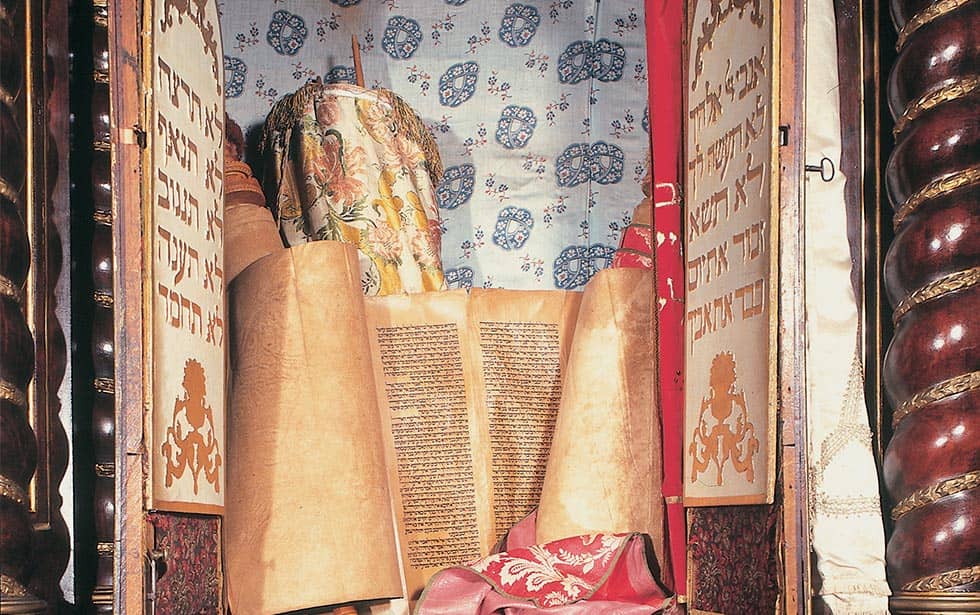
The interior also offers something very different from Dubrovnik's larger headline attractions. Inside, visitors encounter a preserved Baroque prayer hall, a museum collection connected to centuries of Sephardic life, and a space that still functions as a synagogue today. For travellers who want more than postcard views and major landmarks, this is one of the Old Town's most meaningful short visits.
- It is one of Dubrovnik's most important heritage sites: small in scale, but exceptional in historical value.
- It adds depth to the Old Town: this is one of the clearest places to understand Dubrovnik's Jewish history in context.
- It feels more intimate than the major monuments: a quieter and more reflective stop inside the city walls.
- It combines worship and museum space: visitors see both a living religious site and preserved cultural heritage.
- It fits easily into a walking itinerary: central location and a short visit time make it easy to include.
What makes the Dubrovnik Synagogue so important
One of the rarest religious heritage sites in Dubrovnik
The Dubrovnik Synagogue is important not simply because it is old, but because it remains part of a living tradition.
A direct link to Dubrovnik's Sephardic past
Its importance is also tied to the history of Sephardic Jews in Dubrovnik. After expulsions from Spain and Portugal at the end of the fifteenth century, Sephardic Jews moved through and settled in Ragusa, bringing commercial networks, skills and traditions that became part of the city's wider Mediterranean identity. The synagogue became the spiritual centre of that community and, over time, a lasting record of how Jewish life was woven into Dubrovnik's economic and social fabric.
The setting on Žudioska ulica gives it unusual depth
The building matters even more because of where it stands. Located on Žudioska ulica - Jewish Street - it is inseparable from the story of Dubrovnik's former ghetto, formally established in 1546. This means the synagogue is not just a preserved interior, but part of a whole urban history of settlement, restriction, adaptation and survival inside the Old Town itself.
It preserves both sacred space and historical memory
Unlike attractions that function only as museums, the Dubrovnik Synagogue carries both religious and documentary value. Its Baroque prayer hall, ritual objects, Torah scrolls and archival material reflect centuries of Jewish presence in the city, while its continued use gives the site a living dimension. That combination of continuity, rarity and historical depth is what makes it one of Dubrovnik's most significant smaller cultural visits.
History of the synagogue and Dubrovnik's Jewish community
Jewish life in medieval Dubrovnik
The story of the Dubrovnik Synagogue begins before the synagogue itself took its later form. Jewish presence in Dubrovnik is documented from the late thirteenth century, and by the fourteenth century the community had an established place of prayer within the city. This early history matters because it shows that Jewish life in Dubrovnik was not a short-lived episode, but part of the city's wider medieval identity as a trading centre connected to both the Adriatic and the eastern Mediterranean.
Over time, that small community became more structured. The synagogue is commonly associated with a fourteenth-century prayer space that gained formal recognition as a house of worship in 1408. Even where exact milestone dates are presented slightly differently across sources, the broader picture is clear: Jewish religious life in Dubrovnik has very deep roots, and the synagogue stands as one of its most enduring expressions.
The arrival of Sephardic Jews and the making of a community
The synagogue's wider importance is closely tied to the arrival of Sephardic Jews after the expulsions from Spain in 1492 and Portugal soon afterwards. Dubrovnik, then Ragusa, was a maritime and commercial republic with strong Mediterranean trade links, so it became a natural place of passage and settlement for Jewish merchants, physicians and craftsmen moving eastward or building new lives along Adriatic routes.
That Sephardic presence gave the local Jewish community a clearer communal identity and linked Dubrovnik to a much wider Jewish world stretching across the Mediterranean and the Ottoman sphere. The synagogue became the spiritual centre of that community, while Jewish families also contributed to the city's commercial and social life through trade, medicine, brokerage and multilingual connections with other markets.
The ghetto on Žudioska ulica
A decisive moment came in 1546, when the government of the Dubrovnik Republic allowed Jews to settle within the city ramparts on what became the Jewish ghetto on Žudioska ulica - Jewish Street. The ghetto system imposed clear restrictions, but it also concentrated Jewish communal life around the synagogue. The building's position on this narrow street is therefore not incidental. It reflects a period in which worship, residence and community organization were all closely tied to a confined but historically significant part of Dubrovnik's urban fabric.
The Baroque interior and later changes
In 1652, one of the houses on Žudioska ulica was turned into the synagogue whose Baroque interior survives today with only minor changes. That transformation is central to the building's present character. Rather than standing apart as a monumental religious structure, the synagogue was integrated into a residential block, which helped protect it and allowed it to remain discreetly embedded in the life of the street.
Later modifications expanded and adapted the space, including the addition of a women's gallery and internal arrangements that better served communal worship. The result is an interior that feels intimate rather than monumental, but that intimacy is part of its significance. It preserves the atmosphere of a functioning communal space shaped by practical needs, local constraints and long continuity rather than grand public display.
Earthquake, war and survival
Like much of Dubrovnik, the synagogue was shaped by disaster as well as continuity. The 1667 earthquake, which devastated the city, also affected the synagogue, but the building survived and continued in use. In the twentieth century the Jewish community suffered much heavier losses, especially during World War II, when occupation, deportations and the destruction of Jewish life across the region deeply reduced the local community.
The synagogue again came under threat during the Croatian War of Independence, when the Old Town was shelled in 1991 and the building was damaged. Its later restoration was therefore more than a conservation project. It was an act of cultural recovery that helped preserve both the synagogue itself and the memory of the community that built, maintained and used it across many centuries.
A living monument today
Today the Dubrovnik Synagogue is both a historic monument and a living communal site. The local Jewish community is small, but the building still functions as a synagogue while also housing a museum with religious artefacts and archival material. That dual role gives the site unusual depth: visitors are not entering a former place of worship emptied of its original purpose, but a space where history, memory and religious identity still meet.
That is ultimately what makes its history so compelling. The synagogue tells the story of a minority community that adapted to regulation, migration, disaster and war, yet still preserved a visible place for itself inside Dubrovnik's walls. Seen in that light, it is not only one of the city's oldest religious sites, but one of its clearest symbols of continuity and resilience.
The synagogue is still active and remains closely tied to the urban history of Dubrovnik's former Jewish ghetto on today's Žudioska ulica - Jewish Street. From the outside, it blends into the surrounding row of Old Town houses, but there are subtle details that set it apart, especially the first-floor windows with Saracen-style arches and the inscription above one window that reads, "Be blessed upon your arrival."
These are exactly the kinds of details that are much easier to appreciate with expert context rather than on a quick self-guided walk. For visitors who want a deeper understanding of Dubrovnik's Jewish heritage, a Dubrovnik Jewish Heritage Private Walking Tour can connect the synagogue, Jewish Street and the wider story of the community into a much clearer and more meaningful experience.
Dubrovnik Jewish Heritage Private Walking Tour
Explore the captivating Jewish heritage of Dubrovnik on a private 2-hour walking tour.
Discover significant landmarks such as the Jewish fountain, remnants of the old Jewish ghetto, and visit one of Europe's oldest synagogues.
You can further customise the experience according to your interests, ensuring an enlightening journey guided by an expert.
What to see inside
The prayer hall and Baroque interior
The most striking part of the visit is the prayer hall itself. The synagogue does not impress through size, but through atmosphere: the space feels intimate, layered and deeply historic, with a preserved Baroque interior that gives the visit a very different character from Dubrovnik's larger religious monuments.
The museum collection
The visit also includes the synagogue museum, which adds important context to what you see in the prayer space. Rather than relying on architecture alone, the museum helps explain how Jewish life in Dubrovnik developed over centuries, and why this small site has such an outsized place in the city's cultural history.
Torah scrolls, ritual objects and historical material
Among the most important items associated with the synagogue are Torah scrolls, ceremonial objects and archival material connected to centuries of Jewish life in Dubrovnik. Official sources also note that the synagogue houses ceremonial objects from the sixteenth to eighteenth centuries, along with religious artefacts and documents that deepen the historical value of the site.
Why this visit feels different from Dubrovnik's bigger museums
The Dubrovnik Synagogue offers a more focused and intimate experience than the city's larger museums. You are not moving through a broad survey of local history, but through one highly specific story told in the place where it actually happened.
Documents
- Documents related to the first recorded Jewish inhabitant of Dubrovnik in 1421.
- Documents connected to notable Jewish figures associated with Dubrovnik.
- A record from 1546 showing that the Dubrovnik Senate allowed Jews to inhabit four houses and six warehouses on the then-named Lojarska Street.
- A document related to the establishment of the Jewish ghetto.
- A list of casualties from the 1667 earthquake.
- The medical practice licence of Amatus Lusitanus.
- A marital agreement from 1641.
- A ban on medical practice issued in 1557.
- The decree of 22 June 1808, in which Marshal Marmont abolished old laws against Jews and granted equal civil rights.
Practical visitor information
Exact location in the Old Town
The Dubrovnik Synagogue is located at Žudioska ulica 5 in Dubrovnik Old Town, on the historic Jewish Street that once formed the centre of the city's Jewish quarter. That central location makes it easy to include in an Old Town walk, but it also means the synagogue can be easy to miss if you do not know what you are looking for, since the building still blends closely into the surrounding row of stone houses.
How to find it from Stradun
The easiest way to think of the route is as a short detour from Stradun into one of the Old Town's narrower side streets. Once you turn into Žudioska ulica, the synagogue is reached within the former ghetto area rather than on a large open square, which suits its discreet character and historic role within the neighbourhood.
Visitors should also expect a more intimate arrival than at Dubrovnik's major monuments. This is not a large standalone museum building with a broad entrance, but a heritage site integrated into the Old Town's residential fabric, so the approach feels quieter and more hidden.
Opening hours and seasonal changes
The synagogue had longer summer opening hours and a shorter winter schedule, daily opening from 10:00 to 20:00 between 1 May and 1 November, and 10:00 to 15:00 from 1 November to 1 May, with winter closure on Saturdays and Sundays.
Tickets and what to expect on arrival
Visitors should expect a paid visit rather than free entry, as the synagogue also functions as a museum and preservation site. The visit itself is usually short and focused. Most people spend around 20 to 40 minutes here, depending on how closely they engage with the museum material.
Dress, etiquette and accessibility
The synagogue is still an active religious site, so visitors should approach it with the same respect they would show in any living place of worship. Modest dress is the safest choice, voices should be kept low, and any on-site guidance about photography should be followed carefully rather than assumed in advance.
It is also worth noting that access is not as straightforward as at a modern museum. The synagogue is reached within an older residential-style building and involves stairs, so visitors with mobility concerns should plan with that in mind before adding it to their Old Town itinerary.
How to fit the synagogue into an Old Town walk
Best nearby stops to combine with it
The Dubrovnik Synagogue works best as part of the eastern Old Town cluster rather than as a separate detour. Because Žudioska ulica branches directly off the Stradun side of the Old Town core, it combines naturally with nearby civic and historic landmarks such as Sponza Palace, Luža Square, Rector's Palace and the Old City Port.
- Sponza Palace: an easy pairing at the eastern end of Stradun, right by the main square.
- Luža Square area: ideal if you want the synagogue to sit within a wider Old Town heritage walk.
- Rector's Palace: a strong follow-on stop if you want more political and civic history after the synagogue.
- Old City Port: a good final stop if you want to finish the walk with views and a change of pace.
Simple 30 to 60 minute route
A simple way to include the synagogue is to walk along Stradun, turn into Žudioska ulica for the visit, then continue back toward the eastern end of the Old Town for Sponza Palace and Rector's Palace. If you have more time, continue down toward the Old City Port and Porporela afterwards.
This route works well because it keeps the synagogue in proportion to its scale. It remains a focused cultural stop, but one that adds depth to a broader walk through the most historically layered part of the Old Town.
Best time of day to visit
The synagogue makes the most sense when you are already exploring the Old Town on foot rather than trying to build a full schedule around it alone. It works especially well as a mid-walk indoor stop between larger outdoor sights, giving your route a quieter and more reflective pause without requiring a major time commitment.
If you are planning carefully, it is worth checking the day's opening hours first and then placing the synagogue between your main Stradun and Luža Square stops. That way the visit feels integrated into the Old Town rather than added on at the last minute.
This section of the Old Town is much easier to understand when you pair the street-level details with a broader view of the city. A tour that combines the Dubrovnik Cable Car with a guided walk through the Old Town helps connect Dubrovnik's physical layout, defensive setting and historic core in a way that is often hard to piece together on your own.
The Dubrovnik Cable Car Ride and Old Town Walking Tour works especially well for first-time visitors who want more context without overcomplicating the day. It combines panoramic views from above with an expert-led route through the Old Town.
Dubrovnik Cable Car Ride and Old Town Walking Tour
See Dubrovnik from two perspectives that complement each other perfectly, first from above on Mt. Srđ, then on foot in the streets of the Old Town. This tour combines the wide panoramic setting of the city with a guided walk through its historic core, helping Dubrovnik's layout, landmarks and atmosphere make much more sense than they usually do on a self-guided visit.
It is a strong choice for first-time visitors who want both memorable views and useful context without piecing everything together themselves. Book the Dubrovnik Cable Car Ride and Old Town Walking Tour for a more complete introduction to the city with expert guidance throughout.
FAQ about the Dubrovnik Synagogue
Is the Dubrovnik Synagogue still active?
Yes. The Dubrovnik Synagogue is still an active synagogue, even though it also functions as a museum and heritage site for visitors.
How old is the Dubrovnik Synagogue?
The synagogue is generally associated with origins in the fourteenth century and is widely described as the oldest active Sephardic synagogue in the world and the second-oldest synagogue in Europe. Some early milestone dates are presented slightly differently across sources, but its historical importance is not in doubt.
Is there a museum inside?
Yes. In addition to the prayer space, the site includes a museum with religious artefacts and archive documents connected to Jewish life in Dubrovnik.
Where is the Dubrovnik Synagogue?
It is located on Žudioska ulica - Jewish Street - inside Dubrovnik Old Town, in the area that once formed the city's Jewish quarter.
How much time do you need for a visit?
Most visitors need around 20 to 40 minutes. It is best treated as a short but meaningful cultural stop within a wider Old Town walk.
Do you need to book in advance?
Usually, the main thing to check in advance is the current opening schedule rather than advance booking. This matters especially outside the main season, when shorter hours can affect your plan.
Is it worth visiting if you are not specifically interested in Jewish history?
Yes, if you enjoy smaller heritage sites with strong historical character. Even visitors without a special interest in Jewish history often find it rewarding because it reveals a quieter, less obvious side of Dubrovnik's past.
What makes it different from other Old Town attractions?
The synagogue stands out because it combines a living place of worship, a preserved Baroque interior, and a museum collection within a discreet building on Jewish Street. It offers a much more intimate and focused experience than Dubrovnik's larger monuments.