
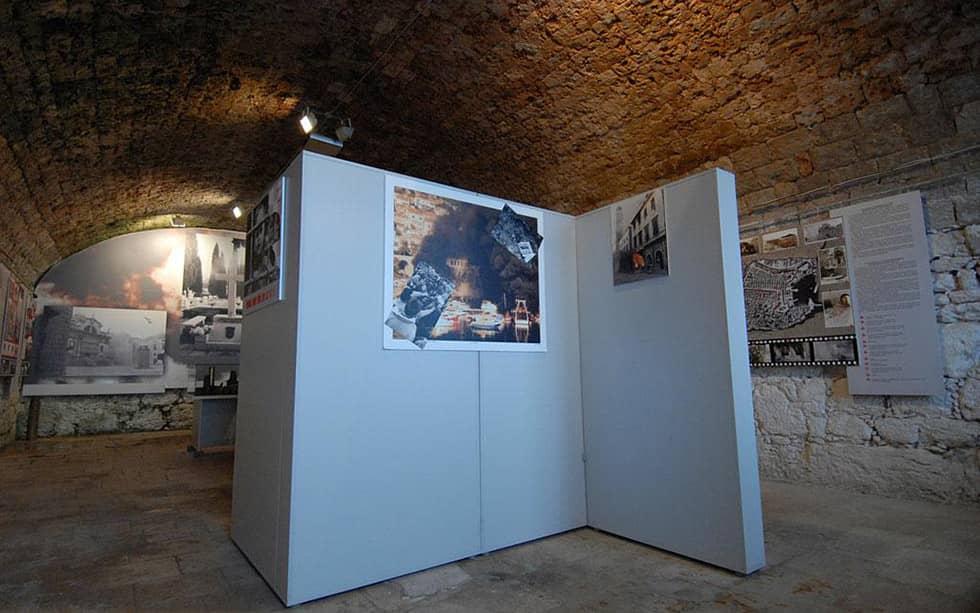
The Dubrovnik Homeland War Museum is located inside Fort Imperial on Mount Srđ, the fortress that became one of the key defensive positions during the 1991 siege of Dubrovnik. Its permanent exhibition, Dubrovnik in the Homeland War 1991-1995, uses original photographs, documents, military equipment, maps, recordings and personal objects to explain the attack on Dubrovnik, the defence of the city and the liberation of southern Croatia.
The museum is one of the best places to understand Dubrovnik's recent history and is particularly worth combining with a trip to the top of Srđ, where you also get panoramic views over the Old Town, Lokrum Island and the Adriatic coast.
Dubrovnik Homeland War Museum quick overview
| Location | Fort Imperial, Mount Srđ |
|---|---|
| Best for | Recent history, the 1991 siege of Dubrovnik and Fort Imperial |
| Time needed | About 1-2 hours |
| Adult ticket | €5 |
| Student / school ticket | €3 |
| Children under 7 | Free |
| Open | Every day |
| Parking | Free parking in front of Fort Imperial |
| Best combined with | Dubrovnik Cable Car and Mount Srđ viewpoint |
Is the Homeland War Museum worth visiting?
Yes, especially if you want to understand what happened in Dubrovnik during the war of 1991-1995 rather than seeing only the restored Old Town that exists today.
The exhibition is much more detailed than the brief war-history summaries found in most Dubrovnik guides. Original wartime photographs, documents, maps, video footage, military equipment and personal objects help explain both the military defence of Dubrovnik and the impact of the conflict on civilians and cultural heritage.
The setting makes the museum particularly powerful. Fort Imperial was itself on the frontline and served as a command headquarters during the defence of Dubrovnik, so the museum occupies one of the places directly connected with the events it describes.
Allow around 1-2 hours. Visitors who read the historical panels carefully and watch the audiovisual material can easily spend longer.
What happened in Dubrovnik in 1991?
The Dubrovnik region came under attack in October 1991 during the breakup of Yugoslavia and the Croatian War of Independence. The fighting affected the city, surrounding villages and the wider southern Croatian region.
Dubrovnik's UNESCO-listed Old Town was shelled repeatedly between October 1991 and June 1992. The most severe attack took place on 6 December 1991, when hundreds of projectiles struck the historic centre.
According to the City of Dubrovnik, 594 of the 824 buildings inside the Old Town suffered damage during the attacks of 1991 and 1992. Residential buildings, churches, monasteries, palaces, streets, roofs and sections of the City Walls were among the structures hit.
Fort Imperial on Srđ was strategically important because of its position above Dubrovnik. The battle for the fortress on 6 December became one of the defining moments in the defence of the city.
Fort Imperial and the defence of Dubrovnik
Fort Imperial was built by the French in 1812 during the Napoleonic period and was named in honour of Napoleon I. Its position on the summit of Mount Srđ gives it commanding views over Dubrovnik and the surrounding area.
During the Homeland War, Fort Imperial stood on the frontline of Dubrovnik's defence and served as the command headquarters of the Croatian Army's 163rd Dubrovnik Brigade.
On 6 December 1991, the fortress came under a major artillery and infantry attack. Fighting reached the fort itself, and its defence became one of the best-known episodes of the battle for Dubrovnik.
This history explains why the Homeland War Museum belongs here rather than in a conventional museum building in the Old Town. Fort Imperial is both an exhibition space and a historical site directly connected with the events of 1991.
What to see inside the museum
The permanent exhibition Dubrovnik in the Homeland War 1991-1995 is displayed on the ground floor of Fort Imperial and is organised into four main themes.
Fort Imperial and the fall of the Dubrovnik Republic
The first section introduces the history of Fort Imperial and provides context for the strategic importance of Mount Srđ above Dubrovnik.
The 1991 attack on Dubrovnik
The museum uses the title Serbian-Montenegrin Aggression in 1991 for the section documenting the opening phase of the war in the Dubrovnik area.
Photographs, maps, original documents, weapons, military equipment and recorded material explain the attacks, defence positions and experiences of the people involved.
Days of Victory and liberation of southern Croatia
Another section follows Croatian military operations in 1992 that lifted the blockade of Dubrovnik and restored control over occupied areas of southern Croatia.
Military maps, orders, documents and wartime material help illustrate the progression of these operations.
Civilian casualties and destruction
The final major theme documents the impact of the war on civilians, homes, public buildings and cultural monuments throughout the Dubrovnik region.
Photographs of the damaged Old Town and surrounding settlements are particularly striking because much of Dubrovnik has since been carefully restored.
Photographs, documents and wartime objects
The museum's collections contain thousands of photographs, documents and objects connected with the defence of Dubrovnik and the wider Homeland War.
Material displayed or preserved by the museum includes:
- Original wartime photographs
- Military maps and operational documents
- War diaries and reports
- Weapons and explosive ordnance
- Parts of military uniforms and equipment
- Wartime flags
- Authentic audio recordings
- Video footage
- Minefield maps
- Personal items and memorabilia
The museum's broader collections have continued to grow through donations and field research. By 2023, the museum held more than 20,000 photographs and around 7,000 objects and documents connected with Dubrovnik's recent history.
Homeland War Museum tickets
| Ticket | 2026 price |
|---|---|
| Adult | €5 |
| Schoolchildren and students | €3 |
| Children under 7 | Free |
Admission covers the museum's permanent and temporary exhibitions inside Fort Imperial.
Check the official Homeland War Museum website before visiting.
Opening hours
April 1-September 30
08:30-22:00
October
09:00-20:00
November 1-March 31
09:00-17:00
The museum is currently open Monday-Sunday throughout the year.
How to get to the Homeland War Museum
The museum is at the summit of Mount Srđ above Dubrovnik. There are four practical ways to reach Fort Imperial.
Dubrovnik Cable Car
The easiest option for most visitors is the Dubrovnik Cable Car. The upper cable car station is only a short walk from Fort Imperial.
This is the best option if you want to combine the museum with panoramic views but do not want to hike or drive the winding road to the summit.
Bus 17 to Bosanka
Libertas bus line 17 runs toward the village of Bosanka. From Bosanka, allow roughly 15 minutes to walk to Fort Imperial.
Check the current timetable before relying on this option because bus schedules can change seasonally.
Hiking the Way of the Cross
A steep serpentine trail known as the Way of the Cross climbs from above Dubrovnik toward the summit of Srđ.
The route provides excellent views but is exposed to the sun and involves a sustained uphill climb. Wear suitable footwear and carry plenty of water, particularly during summer.
Car or taxi
Fort Imperial can also be reached by road. Driving or taking a taxi can be useful if several people are travelling together or if you want to stay on Srđ after the Cable Car stops operating.
Parking at Fort Imperial
The museum currently provides free parking directly in front of Fort Imperial.
The road to the top of Srđ is narrow and winding in places, so drive carefully and allow extra time during busy summer periods.
The museum and Mount Srđ viewpoint
A visit to the Homeland War Museum is easy to combine with the famous viewpoint on Mount Srđ. From the area around Fort Imperial and the Cable Car station you can see the walled Old Town, Lokrum Island, the Adriatic and the Elaphiti Islands.
The terrace of Fort Imperial itself also offers excellent views. This combination of history and landscape is one reason the museum is worth including even for travellers who might not normally prioritise military museums.
If you are taking the Cable Car, allow enough time for both the exhibition and the viewpoint rather than planning the museum as a quick stop immediately before your return ride.
Dubrovnik Super Saver: Cable Car, Old Town and City Walls
Combine the panoramic Dubrovnik Cable Car with a guided walk through the Old Town and a visit to the Dubrovnik City Walls.
This tour does not replace a visit to the Homeland War Museum, but it can be useful if you want to combine Mount Srđ with Dubrovnik's main historic sights in a guided itinerary.
Other museums and historical sites in Dubrovnik
The Homeland War Museum focuses on Dubrovnik's most recent conflict, while museums inside the Old Town cover much earlier periods of the city's history.
See our guide to museums in Dubrovnik for more options, including the Maritime Museum for the Republic's seafaring history and the Ethnographic Museum Rupe for traditional everyday life in the Dubrovnik region.
The Dubrovnik City Walls also provide another perspective on the city's long history of defence and fortification.
Address and official information
Homeland War Museum Dubrovnik
Fort Imperial, Mount Srđ
Dubrovnik
Croatia
Official website: Homeland War Museum Dubrovnik