
Dubrovnik is one of the easier Croatian cities to visit safely, especially if you stay within the main tourist areas, use normal city awareness, and plan around summer crowds. Violent crime against visitors is rare, and most trips pass without any safety problems.
The issues that do affect travellers are usually practical rather than dangerous: pickpockets in crowded places, unclear taxi pricing, heat, slippery stone streets, beach valuables, and public-behaviour fines inside the Old Town. This guide explains where to be alert, what to do in an emergency, and how to avoid the small problems that can disrupt a holiday.
For wider planning beyond safety, see our Dubrovnik travel information guide.
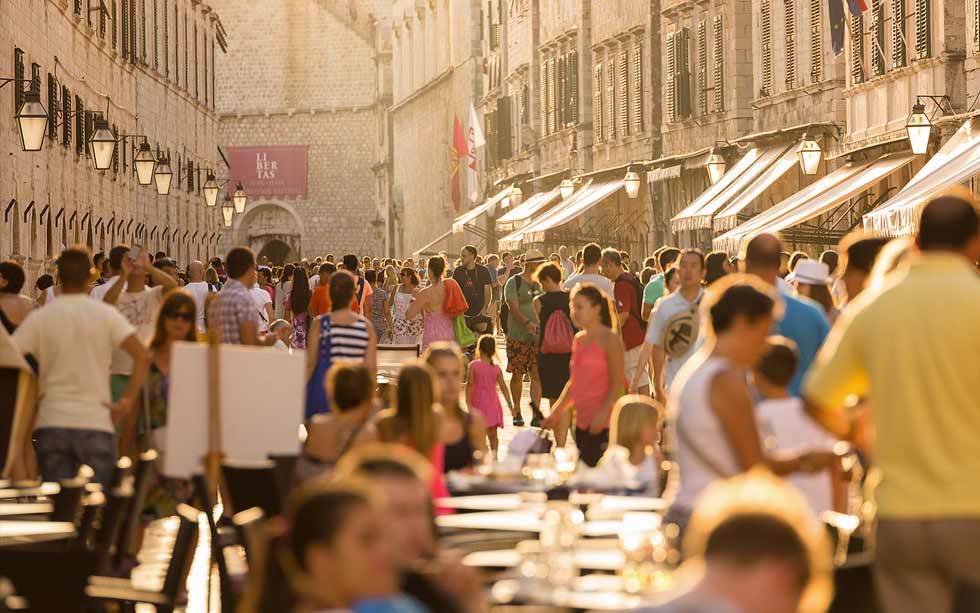
Croatia is currently treated as a low-risk destination by major government travel advisories, and Dubrovnik fits that pattern. The Old Town, Lapad, Babin Kuk, Ploče, Gruž, and the main hotel areas are all normal visitor zones where standard precautions are enough for most travellers.
The busiest parts of Dubrovnik need the most awareness. Around Stradun, Pile Gate, the city walls entrance, cable car queues, cruise-ship arrival times, packed buses, and Gruž Port, keep wallets and phones out of back pockets and avoid leaving bags unattended at café tables or beaches.
Safety in Dubrovnik is also about the setting. The city has steep stair streets, polished limestone paving, strong summer sun, rocky swimming spots, and traffic pressure around the Old Town approaches. Good shoes, water, shade breaks, and sensible transport choices prevent more problems than worrying about serious crime.
Dubrovnik Safety quick checklist
Most safety problems in Dubrovnik are avoidable with simple habits. Use this checklist before sightseeing, swimming, taking taxis, hiking, or heading out at night.
- Keep valuables secure in crowds. Use a zipped bag or front pocket around Stradun, Pile Gate, city wall queues, buses, cable car lines, and Gruž Port.
- Use 112 for urgent help. Call 112 for police, ambulance, fire, mountain rescue, maritime rescue, or any emergency where you are unsure which service you need.
- Know the direct numbers. Police is 192, fire is 193, emergency medical help is 194, maritime rescue is 195, and roadside assistance is 1987.
- Choose transport carefully. Use licensed taxis, agreed fares, hotel-arranged transfers, or ride apps, especially late at night or when leaving the port, airport, or Old Town gates.
- Dress properly away from the beach. Do not walk through the Old Town shirtless or in swimwear, and do not climb monuments or behave drunkenly in public spaces.
- Plan around heat and stone streets. Carry water, wear proper shoes, avoid the city walls in the hottest part of the day, and take shade breaks in July and August.
- Do not leave beach bags unattended. Rocky beaches and swim spots are relaxed, but phones, wallets, passports, and room keys should not be left exposed while swimming.
- Stay on marked paths outdoors. For Mount Srđ, coastal walks, and rural day trips, use marked routes, carry a charged phone, and avoid hiking alone in extreme heat.
- Check official updates before longer trips. Re-check weather, ferry, road, wildfire, and travel-advisory information if you plan islands, remote hikes, or road travel outside Dubrovnik.
For related practical planning, use our health and medical tips for Dubrovnik before you travel.
Emergency Numbers in Dubrovnik
Call 112 for any urgent emergency in Dubrovnik. It is Croatia’s main emergency number and can connect you with police, ambulance, fire, mountain rescue, maritime rescue, or other services.
If you are unsure which service you need, call 112 first. The number works throughout Croatia, including Dubrovnik, and is the safest option for visitors because the operator can direct the call to the correct emergency service.
| Need help with | Number | What to prepare |
|---|---|---|
| Any emergency | 112 | Your location, what happened, how many people need help, and whether there is immediate danger. |
| Police | 192 | Use for theft, assault, threats, lost documents, traffic incidents, or urgent police help. |
| Fire | 193 | Use for fire, smoke, wildfire, gas smell, or any immediate fire-related danger. |
| Emergency medical help | 194 | Use for serious injury, severe illness, collapse, breathing problems, chest pain, or major bleeding. |
| Maritime search and rescue | 195 | Use for accidents at sea, missing swimmers, boat trouble, or urgent incidents on the water. |
| Roadside assistance | 1987 | Use for car breakdowns, roadside help, and vehicle trouble while driving in Croatia. |
When calling, speak slowly and give your exact location first. In Dubrovnik, useful reference points include Pile Gate, Ploče Gate, Stradun, Gruž Port, Lapad Bay, Babin Kuk, Mount Srđ, the cable car station, and the name of your hotel or apartment street.
If your phone has mobile data, keep your map app open so you can read the street name or share a pin. If you are at sea, give the boat name if known, the route, the nearest island or coastline, and whether anyone is in the water.
For non-urgent medical planning before your trip, see our health and medical tips for Dubrovnik.
Pickpockets, Crowds and Tourist Scams
Pickpocketing and scams are not severe in Dubrovnik, but crowded tourist spots create easy opportunities. Keep valuables secure around the Old Town, check prices before agreeing to anything, and avoid unofficial transport or tour offers.
Dubrovnik does not have the aggressive scam culture found in some larger European tourist cities. The usual problems are softer but still frustrating: inflated prices, unclear taxi fares, restaurant extras, unofficial tour offers, and opportunistic theft when visitors are distracted by crowds.
Where to be most alert
Be most careful in places where people naturally slow down, queue, take photos, or carry luggage. In Dubrovnik, that usually means Stradun, Pile Gate, Ploče Gate, the city walls entrance, cable car queues, busy bus stops, crowded beaches, Gruž Port, and ferry or cruise arrival areas.
Summer crowding increases the risk. When several cruise groups arrive at the same time, the Old Town entrances and main streets can feel compressed, and it becomes easier for bags, phones, and wallets to be handled without notice.
How to avoid pickpockets
- Use a zipped bag. Keep the opening facing your body in dense crowds.
- Avoid back pockets. Phones and wallets are easiest to take from rear trouser pockets.
- Do not hang bags on chairs. Keep them on your lap or between your feet in busy cafés.
- Limit what you carry. Leave spare cards, excess cash, and passports in secure accommodation when possible.
- Stay alert during distractions. Crowded photo spots, street performances, queues, and luggage areas are common moments for theft.
Common tourist scams and overcharging
- Unclear taxi fares: Confirm the price before entering, use a licensed taxi, or choose an app with the fare shown in advance.
- Unofficial transfers: Be cautious with drivers approaching you at Gruž Port, Pile Gate, the airport, or ferry areas without clear licensing.
- Restaurant bill surprises: Check the menu, cover charges, service charges, specials, and fish or seafood prices before ordering.
- Unofficial tours: Book walking tours, boat tours, and day trips through licensed providers with clear terms, especially in peak season.
- ATM conversion: When withdrawing or paying by card, choose to be charged in euros rather than accepting dynamic currency conversion in your home currency.
- Beach valuables: Do not leave phones, wallets, room keys, or passports exposed while swimming.
What to do if something is stolen
If your wallet, phone, passport, or bag is stolen call police on 192 or use 112 if you need urgent help. Ask for a written police report if you will need documentation for travel insurance, card replacement, or passport replacement.
Freeze bank cards immediately, contact your insurer, and report stolen travel documents to your embassy or consulate.
City areas and time of day
Dubrovnik is considered to be a safe city for everyone, so it is perfectly safe to walk the streets of all city areas during the day or night. Dubrovnik does not have obvious no-go zones for normal visitors. The Old Town, Pile, Ploče, Lapad, Babin Kuk, and Gruž are all standard places to stay, walk, eat, and use public transport. The difference between them is mainly crowd level, lighting, stairs, and how easy it is to get back to your accommodation late at night.
Taxi, Bus, Boat and Road Safety
Transport in Dubrovnik is generally safe, but visitors should use licensed taxis, official bus and ferry operators, and clear prices before starting a journey. Most problems come from crowding, unclear fares, late-night decisions, or weather-related boat changes.
Dubrovnik is easy to move around without a car if you plan the first and last part of each journey. The Old Town itself is pedestrian-only, so taxis, buses, airport shuttles, and private transfers drop passengers at nearby gates or transport points rather than inside the walls.
Taxis and ride apps
Taxis are safe to use, but always make the price clear before you get in. This matters most at the airport, Gruž Port, Pile Gate, Ploče Gate, ferry arrivals, and late at night when visitors are tired or carrying luggage.
- Use licensed vehicles. Choose marked taxis from official ranks, hotel-arranged transfers, or reputable ride apps.
- Confirm the fare first. Ask for the approximate price before departure, especially for airport, port, or late-night rides.
- Avoid unclear street offers. Be cautious if someone approaches you aggressively outside the port, bus station, airport, or Old Town gates.
- Check the drop-off point. The Old Town is pedestrian-only, so you may still need to walk with luggage from Pile, Ploče, or Buža Gate.
- Use a map if unsure. Following the route on your phone helps avoid misunderstandings about where you want to go.
City buses and airport transfers
Local buses are widely used by residents and visitors. They are safe, but can be crowded in summer, especially on routes connecting the Old Town, Lapad, Babin Kuk, Gruž, and the main bus station. Keep bags closed and phones secure when boarding, standing, or moving through packed buses.
The official airport shuttle is a practical option between Dubrovnik airport, the Old Town area, and Gruž main bus station. It is linked to flight arrivals, but you should still check the current timetable before travel, especially for very early departures, late arrivals, or winter flights.
Boats, ferries and sea safety
Ferries and catamarans from Dubrovnik are normal, reliable ways to reach nearby islands and other Croatian coastal destinations, but weather and port conditions can affect departures. Always check the official operator close to travel day and avoid planning a tight connection after your final island boat.
- Use official operators. Buy ferry and catamaran tickets direct from Jadrolinija, Kapetan Luka Krilo, TP Line, or another verified operator.
- Arrive early in peak season. Gruž Port can be busy with luggage, cruise passengers, ferries, buses, taxis, and private transfers.
- Watch the last return. For Elaphiti Islands, Lokrum, Mljet, and longer island trips, confirm the last boat back before you leave Dubrovnik.
- Respect weather changes. Wind, storms, and sea conditions can delay or cancel boats even when the day starts sunny.
- Do not swim near active boats. Avoid harbour areas, ferry approaches, mooring points, and marked boat channels.
For official local island routes, Jadrolinija operates Dubrovnik links to islands Koločep, Lopud, and Suđurađ on Šipan. For longer catamaran routes, re-check the operator schedule before booking and again before departure. Our Dubrovnik ferries guide explains the main routes from the city.
Driving, parking and roadside help
Driving around Dubrovnik is safe if you are comfortable with narrow roads, hills, summer traffic, and limited parking near the Old Town. The main challenge is not road danger, but congestion, one-way streets, expensive parking zones, and the difficulty of stopping near the city gates.
- Do not drive into the Old Town area unless necessary. Park outside the historic core and walk or use public transport.
- Check parking rules before leaving the car. Dubrovnik parking zones and garages can be costly, especially close to Pile and the Old Town.
- Leave extra time in summer. Airport roads, port roads, and Old Town approaches can slow down around flight, ferry, and cruise arrivals.
- Use 1987 for roadside assistance. This is Croatia’s roadside assistance number if you break down while driving.
- Do not leave luggage visible. Keep bags out of sight when parking at viewpoints, beaches, ports, and roadside stops.
For car access and parking planning, see our parking in Dubrovnik guide and our overview of Croatian motorways.
Health, Heat and Beach Safety
Heat, dehydration, slippery stone, rocky beaches, and unattended valuables cause more visitor problems in Dubrovnik than crime. Plan sightseeing around the sun, wear practical shoes, and treat swimming spots as natural rocky coast rather than managed resort beaches.
Summer conditions can be tougher than they look. In July and August, the combination of stone streets, little shade on the city walls, steep staircases, crowded buses, and beach time can quickly lead to dehydration, sunburn, dizziness, or falls.
Heat and sun exposure
The safest approach is to avoid the most exposed sightseeing during the hottest part of the day. The city walls, Mount Srđ, exposed viewpoints, open boat decks, and long walks across polished stone are best planned for the morning or later afternoon in summer.
- Carry water before you need it. Do not wait until you feel thirsty, especially on hot sightseeing days.
- Avoid direct sun when it is strongest. In summer, plan shade breaks between late morning and late afternoon.
- Wear a hat and sunglasses. The glare from stone, sea, and white walls can be strong.
- Use sunscreen and reapply it. Boat trips, beaches, and city-wall walks all increase exposure.
- Choose light clothing. Breathable fabrics are more comfortable on stair streets and crowded buses.
- Slow down with children and older travellers. Heat affects them faster, especially inside the Old Town at midday.
If someone becomes dizzy, confused, very weak, extremely thirsty, or stops sweating despite the heat, move them into shade or air conditioning and seek medical help. For serious symptoms, call 112 or 194.
Pharmacies and medical help
Pharmacies are common in Dubrovnik and can help with minor issues such as sunburn, insect bites, stomach upset, small cuts, blisters, and basic over-the-counter medication. For serious symptoms, injury, chest pain, breathing difficulty, heavy bleeding, or collapse, use the emergency numbers rather than waiting for a pharmacy to open.
Visitors should bring any prescription medication they need, plus a copy of the prescription or generic medicine name. If you have allergies, chronic illness, or a condition affected by heat, keep medication cool and check travel insurance before arrival.
For more detail, see our health and medical tips for Dubrovnik.
Rocky beaches and sea urchins
Many Dubrovnik beaches are pebble, rock, concrete, or platform-style swimming spots rather than soft sand beaches. The water is usually clear, but entry points can be uneven, ladders may be slippery, and sea urchins can be present around rocks.
- Wear water shoes. They help with pebbles, rocks, ladders, and sea urchins.
- Use marked entry points. Avoid jumping from rocks unless you know the depth and exit route.
- Keep valuables with you. Do not leave phones, wallets, passports, or room keys unattended while swimming.
- Watch children closely. Some beaches get deep quickly or have rocky edges.
- Respect boat areas. Do not swim near harbours, ferry approaches, moorings, or active boat lanes.
Sea quality and swimming conditions
Croatia monitors bathing-water quality during the swimming season, and results are published for official sampling points. Before swimming after heavy rain or in less familiar locations, check local notices, beach signs, and current conditions rather than relying only on how clear the water looks.
Tap water and hydration
Tap water in Dubrovnik is generally used by locals and visitors, but temporary local notices can occasionally apply after heavy rain, maintenance, or supply issues. If your accommodation or local authority advises against drinking tap water, follow that notice and use bottled water until the advice changes.
Fire
During summer the whole Dalmatia Region is prone to fires, so please be careful. Read more about Regions in Croatia.
Fire prevention tips:
- Don't throw cigarette stubs out of the vehicle when travelling.
- If barbecuing, do so on designate BBQ space
- Don't light fire near dry grass
- Don't light fire in forests
Fire department's number is the same for all Croatia: 193, or you could use the common emergency telephone number 112
Hiking, Mount Srđ and Outdoor Safety
Hiking around Dubrovnik is safe if you treat it as outdoor terrain, not a casual city stroll. Mount Srđ and nearby paths need proper shoes, water, sun protection, a charged phone, and enough daylight for the return.
Mount Srđ is the most common outdoor walk for visitors because it rises directly above the Old Town. The views are excellent, but the route is exposed, stony, and hot in summer. It is easy to underestimate if you start late, wear sandals, or assume the cable car will always be operating for the way down.
Mount Srđ and local paths
The path to Mount Srđ is manageable for active travellers, but it includes loose stones, uneven ground, limited shade, and exposed sections. In July and August, start early or go later in the day rather than climbing in the strongest heat.
- Wear closed shoes. Trainers with grip are the minimum; hiking shoes are better on loose stone.
- Carry more water than you think you need. There is little shade on the exposed parts of the route.
- Check the return plan. If you plan to take the cable car down, confirm it is operating before you start.
- Avoid night hiking unless prepared. The path is not a city promenade, and descending loose stone in the dark is risky.
- Do not leave the marked path. Shortcuts can lead onto rough, unstable, or private terrain.
Mountain rescue advice
Croatia has a professional mountain rescue service, but prevention is much better than needing help. Before any hike outside the city streets, choose a route that matches the weakest person in your group, tell someone where you are going, and give a realistic return time.
- Do not hike alone if you can avoid it. A small slip becomes more serious when no one knows where you are.
- Tell someone your route. Share the path, destination, and expected return time with your accommodation or a travel companion.
- Keep your phone charged. Bring a power bank if you use your phone for maps, photos, and navigation.
- Use marked trails. Follow signs and known paths rather than informal shortcuts.
- Carry basic supplies. Water, a small first-aid kit, sun protection, and a light layer are sensible even for short hikes.
- Watch the weather. Strong sun, sudden wind, rain, and poor visibility can change a simple walk quickly.
If there is an accident, stay calm, protect the injured person from sun, cold, falling rocks, or traffic, and call 112. Be ready to explain where you are, what happened, how many people need help, and whether anyone can walk.
Animals and rural paths
Animal encounters are rarely a major concern on standard Dubrovnik visitor routes. You may see dogs, cats, insects, lizards, or occasional snakes in warmer rocky areas, but problems are uncommon if you stay on paths and avoid disturbing animals.
Most dangerous animal that you could encounter is a horned viper (Vipera ammodytes) - probably the most poisonous European snake. If encountered, you will easily recognise it by flat, pointy head with two horns on its stout. Horned viper is not aggressive and biting is its last resort of defence. Don't put yourself in situation to be bitten.
- Do not approach unfamiliar dogs. Give them space, especially near rural properties.
- Watch where you place hands and feet. This is useful on rocky walls, dry paths, and shaded stones.
- Use insect protection if needed. Mosquitoes and bites are more annoying than dangerous for most visitors.
- Seek help for bites or allergic reactions. Call 112 or 194 if symptoms are serious.
Do not rely on the cable car in bad weather
The Dubrovnik Cable Car is a convenient way to reach or leave Mount Srđ, but it can stop during strong wind or lightning. If you hike up and plan to ride down, check the official timetable and weather conditions first, and keep enough time and energy to descend safely on foot if needed.
For current operating details, use the official Dubrovnik Cable Car timetable. For broader weather planning, see our Dubrovnik weather guide.
Read more in depth about The Best Trails and Hikes in Dubrovnik
Landmine wording update
Landmine risk is often overstated in general travel writing about Dubrovnik. The Old Town, Dubrovnik city, beaches, main roads, airport transfers, ferry routes, Lapad, Babin Kuk, Gruž, Cavtat routes, and standard visitor areas are not treated as landmine-risk areas.
Official warnings apply to specific previously war-affected areas elsewhere in Croatia, especially remote or marked terrain in Ličko-senjska County and areas named in current government advisories. If you travel far inland, hike in unfamiliar rural areas, or leave paved and marked routes in formerly affected regions, follow warning signs, stay on marked paths, and check current official advice.
- Do not enter marked mine-suspected areas. Warning signs use a red triangle with a skull-and-crossbones symbol.
- Stay on paved roads and marked trails in remote areas. This is especially important outside normal tourist routes.
- Do not touch unknown metal objects. Leave immediately and report anything suspicious to local authorities.
- Use official sources for inland travel. Do not rely on old blog posts or outdated maps for mine information.
Croatian Mountain Rescue Service
Croatian Mountain Rescue Service is a volunteer, non-profit organisation, specialised in rescuing in mountains, caves and other unapproachable places. Its members do not charge their rescue missions - rescue missions are free.
The phone number for Dubrovnik territorial unit is +385 91 112 9200
Cultural differences
Culture and religion
Croatia belongs to Western European culture group (similar group: North American) with Christianity as main religion. Dubrovnik is very tolerable to other cultures and religions and you will not encounter any problems regarding your race, culture or religion. Outside of urban areas, the biggest problem you could encounter would be weird looks from individuals.
Safety for Solo Travelers, LGBTQ+ Visitors and Families
Dubrovnik is generally safe for solo travellers, LGBTQ+ visitors, and families. The main precautions are the same as for other visitors: stay alert in crowds, use sensible late-night transport, protect valuables, and plan around heat, stairs, beaches, and busy summer streets.
Dubrovnik is a straightforward city for most travellers, including people visiting alone, couples, friend groups, families with children, and older travellers. The Old Town and main accommodation areas are busy, well-used, and easy to navigate, but the city’s crowds, hills, stone steps, and summer heat can affect different travellers in different ways.
Solo and solo female travellers
Solo travellers usually find Dubrovnik easy to manage because the main visitor routes are compact, public, and active from morning until late evening in season. The most important habits are to choose accommodation with a practical route home, avoid isolated stair lanes late at night, and use a taxi or ride app if the walk back feels too long, steep, or quiet.
- Choose location carefully. Staying near the Old Town, Pile, Ploče, Lapad, Babin Kuk, or a reliable bus route makes evenings easier.
- Share your plan if hiking or boating. Tell someone where you are going and when you expect to return.
- Use clear transport at night. If taking a taxi, use a licensed vehicle or app, share ride details, and check the driver and route.
- Watch drinks and personal belongings. Keep your drink in sight and do not leave phones or bags unattended in bars, clubs, beaches, or shared accommodation.
- Trust discomfort early. Leave a place, queue, taxi, or conversation if it feels wrong.
If you need urgent help, call 112. If you want police help specifically, call 192.
LGBTQ+ visitors
LGBTQ+ travellers can generally visit Dubrovnik without special safety concerns, especially in the main tourist areas. Croatia does not ban consensual same-sex relations, and same-sex life partnerships are legally recognized, but public attitudes can still vary by setting and generation.
In practical terms, Dubrovnik is most comfortable in hotels, restaurants, beaches, bars, and central tourist zones where visitors from many countries are normal. As anywhere, use judgment with public affection late at night, in very quiet streets, or around intoxicated groups.
- Book well-reviewed accommodation. International hotels, established apartments, and central stays reduce uncertainty.
- Use normal nightlife caution. Stay with trusted companions, keep drinks in sight, and plan the return route.
- Carry key documents when needed. Couples and families should bring relevant travel, health, custody, or insurance documents where they may matter.
- Use official emergency help if targeted. Harassment, assault, threats, or discrimination should be reported to police or emergency services when serious.
Families with children
Dubrovnik is family-friendly, but the layout can be tiring. The Old Town has many steps, polished stone, crowds, limited shade, and restricted vehicle access, so strollers, toddlers, and older relatives need extra planning. Families usually do best by sightseeing early, taking a long midday break, and choosing accommodation with easy transport or beach access.
- Use ID and contact habits. Put a parent phone number in a child’s pocket or day bag, especially in Old Town crowds.
- Plan for stairs. A lightweight stroller may still be difficult inside the Old Town; a baby carrier can be easier for short visits.
- Avoid midday over-scheduling. Heat and crowds build quickly around the city walls, Stradun, buses, and beaches.
- Choose beaches carefully. Many swimming spots are rocky or deep quickly, so water shoes and close supervision help.
- Keep children away from edges. Watch them on walls, viewpoints, harbour edges, rocks, piers, stairs, and boat decks.
- Use official transport and tours. Clear departure points, licensed operators, and predictable return times matter more with children.
Older travellers and visitors with limited mobility
Dubrovnik’s biggest challenge for older travellers and visitors with mobility needs is terrain, not personal safety. The Old Town has steps, polished stone, narrow lanes, crowds, and limited vehicle access, while many accommodation areas outside the centre are hilly.
- Check access before booking. Ask about steps, lifts, slopes, parking, luggage drop-off, and distance from the nearest bus or taxi point.
- Avoid peak crowd times. Early morning and later afternoon are easier than midday in high season.
- Use taxis for hill routes. A short uphill walk can feel much harder in heat.
- Wear shoes with grip. Smooth limestone can be slippery, especially after rain.
For broader practical planning, combine this guide with our health and medical tips for Dubrovnik.
Local Laws, Public Behaviour and Cultural Respect
Visitors rarely have legal problems in Dubrovnik, but public behaviour rules are enforced more visibly in the Old Town than many travellers expect. Cover up away from the beach, avoid drunken behaviour in public, do not climb monuments, and treat churches, residential streets, and historic sites with respect.
Dubrovnik is a living city as well as a major visitor destination. The Old Town is not a resort complex, and normal beach behaviour does not belong on Stradun, in churches, on monuments, or in narrow residential lanes. The safest rule is simple: dress and behave as you would in any historic European city centre.
Old Town behaviour rules
Public-order rules matter most inside and around the historic centre. You can be fined for behaviour that might seem minor on holiday but is treated as inappropriate in Croatian town centres.
- Do not walk through town in swimwear. Cover up after leaving the beach, especially inside the Old Town.
- Do not go shirtless in streets or squares. Keep beach clothing for beaches, boats, and swimming areas.
- Do not climb monuments, walls, fountains, or historic structures. This can damage protected heritage and may lead to fines.
- Do not sleep in public spaces. This includes benches, steps, parks, beaches, and Old Town corners after a night out.
- Do not urinate or vomit in public. Use public toilets, bars, restaurants, or accommodation facilities.
- Keep noise down in residential streets. Many Old Town apartments are still local homes, not just tourist rentals.
Alcohol, drugs and public disorder
Having drinks with dinner or going out at night is normal in Dubrovnik. Problems begin when alcohol spills into public disorder, shouting, fighting, insulting officials, damaging property, or disturbing residents. Public drunkenness and disorder can lead to fines, police involvement, or problems with accommodation and travel insurance.
Illegal drugs, including cannabis, can lead to legal trouble in Croatia. Do not buy, carry, use, or transport drugs, and do not assume that relaxed behaviour around beaches or nightlife means the law is relaxed. Drug-related offences can result in fines, detention, or criminal proceedings.
- Do not drink alcohol in a way that disturbs public spaces. Bars and restaurants are the safest places to drink.
- Do not carry drugs. This includes small amounts for personal use.
- Do not wear clothing promoting drug use. Official travel advice warns this can attract fines in some town centres.
- Do not argue with police or wardens. Stay calm, cooperate, and ask for clarification if you do not understand.
- Do not drink and drive. Croatia treats drink-driving seriously, and limits are stricter for young drivers.
Spiked drinks
With the large number of tourists coming to town, it is impossible to generalise if you are going to encounter spiked drinks or not. Usually there are very few police reports of this kind of activity.
Police, ID and documents
Visitors should be able to identify themselves if asked by police. Carry your passport when necessary, and keep a separate copy of the photo page stored safely in your accommodation or secure cloud storage. For normal sightseeing, many travellers prefer to carry a copy and leave the original secured, but official advice says to carry your passport, so choose the approach that best matches your risk comfort and situation.
If your passport is stolen, report it to the police and contact your embassy or consulate. A police report is often needed for insurance, emergency travel documents, and card or identity-fraud follow-up.
Prescription medicines and controlled substances
If you travel with prescription medication, keep it in original packaging and carry the prescription or doctor’s note, especially for medication that could be controlled or restricted. Do not post medication to Croatia, and do not bring large quantities without checking whether the medicine is legal and properly documented.
If you are unsure, ask your doctor before travel and check with official Croatian customs or embassy guidance. This is especially important for strong painkillers, sedatives, ADHD medication, medical cannabis products, or medicines that may be treated differently from your home country.
Religious sites, residents and local customs
Churches, monasteries, cemeteries, and historic buildings in Dubrovnik are active cultural and religious places. Dress modestly inside churches, lower your voice, and avoid blocking doorways or taking intrusive photos during services.
Residential respect also matters. Keep noise low late at night, avoid sitting on private steps, do not hang wet towels or beachwear from historic facades unless your accommodation allows it, and follow house rules in apartment buildings.
What To Do If Something Goes Wrong
Get to a safe place first, then call 112 for urgent help or the correct direct number if you know it. For theft, lost documents, medical issues, or card problems, document what happened and contact police, your insurer, your bank, or your embassy as soon as possible.
Most problems in Dubrovnik are minor, but acting in the right order helps. Do not spend time arguing, searching alone, or trying to solve a serious problem privately if someone is injured, threatened, missing, or at risk.
- Move to safety. Step away from traffic, crowds, water, cliffs, fire, aggressive people, or any place where the problem could get worse.
- Call the right emergency number. Use 112 if you are unsure. Use 192 for police, 193 for fire, 194 for emergency medical help, 195 for maritime rescue, or 1987 for roadside assistance.
- Give your location first. Say the nearest landmark, street, beach, hotel, port, island, trail, or gate. If you can, open your map app and read the exact location.
- Write down key details. Note the time, place, people involved, taxi or vehicle details, bus route, boat name, card transactions, photos, receipts, and anything useful for police or insurance.
- Contact the next relevant service. Depending on the problem, this may be your bank, insurer, accommodation, airline, ferry operator, embassy, consulate, or emergency travel document service.
If you are robbed or pickpocketed
First, get somewhere safe and check whether anything urgent is missing, such as your passport, phone, room key, bank cards, or medication. If the theft is happening now, involves threats, or you feel unsafe, call 112 or 192 immediately.
- Freeze stolen cards. Use your banking app or call your card provider as soon as possible.
- Report the theft to police. Ask for written confirmation if you need it for insurance, passport replacement, or card claims.
- Change passwords if your phone is stolen. Prioritize email, banking, cloud storage, and travel apps.
- Tell your accommodation. They can help with local directions, police-station information, locks, spare keys, or calls.
- Contact your insurer quickly. Many policies require prompt reporting and proof of loss.
If your passport is lost or stolen
Report the loss or theft to local police and contact your country’s embassy, consulate, or emergency travel document service. Requirements vary by nationality, so follow the official instructions for the passport you hold.
- Do not wait until travel day. Emergency travel documents can take time and may require appointments, proof of identity, photos, police documentation, and onward travel details.
- Use secure copies. A passport photo page saved securely online or carried separately can make replacement easier.
- Check airline and border requirements. An emergency document may not work for every route or connection.
If you need medical help
For serious symptoms, injury, collapse, breathing problems, chest pain, heavy bleeding, severe allergic reaction, or suspected heat illness, call 112 or 194. For minor problems, a pharmacy or clinic may be enough, but do not delay emergency help when symptoms are severe.
- Keep medication details ready. Know the medicine name, dose, allergies, and any existing medical conditions.
- Use travel insurance early. Contact the insurer’s assistance line if you need treatment, hospital care, or repatriation guidance.
- Ask for documentation. Keep medical reports, receipts, prescriptions, and discharge papers for insurance claims.
If someone is missing, injured outdoors, or in trouble at sea
Call 112 immediately if someone is missing, injured on a trail, unable to return from Mount Srđ, in trouble while swimming, or affected by weather at sea. Do not wait until dark if the person is exposed to heat, rough terrain, water, or poor visibility.
- For sea emergencies, use 195 or 112. Give the nearest island, coastline, boat name, route, and whether anyone is in the water.
- For hiking emergencies, use 112. Give the route, nearest landmark, injury details, and whether the person can walk.
- Stay reachable. Keep your phone on, conserve battery, and follow the operator’s instructions.
If you have a taxi, transport, or payment problem
If there is no immediate danger, stay calm and collect evidence before escalating. Take a photo of the receipt, vehicle plate, booking screen, driver details, card charge, or tour confirmation.
- Dispute unclear charges through your bank. Keep receipts, screenshots, and messages.
- Report serious incidents to police. This is especially important for threats, theft, assault, or fraud.
- Use official operator contacts. For buses, ferries, airport transfers, and tours, contact the company listed on your ticket or booking.
For quick reference, keep the emergency numbers in Dubrovnik section saved on your phone before you travel. You can also re-check official emergency information on the Croatia emergency services portal.
Location of police offices in Dubrovnik
FAQ About Staying Safe in Dubrovnik
Is Dubrovnik safe for tourists?
Yes. Dubrovnik is generally safe for tourists, and most visits are trouble-free. The main risks are petty theft in crowded places, unclear taxi or restaurant pricing, summer heat, slippery stone streets, and normal travel mistakes rather than violent crime.
Is Dubrovnik safe at night?
Yes. The main visitor areas of Dubrovnik are usually safe at night, especially the Old Town, Pile, Ploče, Lapad, Babin Kuk, and Gruž. Use main lit routes, avoid isolated stair streets if you are alone or tired, and take licensed transport for longer late-night returns.
What is the emergency number in Dubrovnik?
Call 112 for any emergency in Dubrovnik. You can also call 192 for police, 193 for fire, 194 for emergency medical help, 195 for maritime rescue, and 1987 for roadside assistance.
Are pickpockets common in Dubrovnik?
Pickpocketing is not extreme, but it can happen in crowded tourist areas. Be most alert around Stradun, Pile Gate, city wall queues, cable car queues, busy buses, Gruž Port, ferry areas, and crowded beaches.
Is Dubrovnik safe for solo female travelers?
Dubrovnik is generally safe for solo female travelers. Choose accommodation with an easy route home, use main streets at night, keep drinks in sight, share hiking or boat plans with someone, and use licensed transport if a walk feels too quiet or far.
Are taxis safe in Dubrovnik?
Taxis are generally safe, but confirm the fare before starting the journey or use a ride app where the price is shown in advance. Be especially careful with unclear offers around the airport, Gruž Port, Pile Gate, Ploče Gate, and late-night pickup points.
Is it safe to hike Mount Srđ?
Yes, Mount Srđ is safe if you are prepared. Wear closed shoes, carry water, avoid the strongest midday heat, stay on marked paths, keep your phone charged, and check whether the cable car is operating if you plan to use it for the return.
Can you get fined in Dubrovnik Old Town?
Yes. Visitors can be fined for inappropriate public behaviour such as walking through town shirtless or in swimwear, drinking or using drugs in public spaces, sleeping in public spaces, urinating or vomiting in public, climbing monuments, or causing public-order disturbances.
Are there landmines near Dubrovnik?
Dubrovnik city, the Old Town, beaches, main roads, airport transfers, ferries, and standard tourist routes are not treated as landmine-risk areas. Official warnings apply to specific previously war-affected areas elsewhere in Croatia, so stay on marked routes if traveling far inland or into remote rural terrain.
Is Dubrovnik safe for LGBTQ+ travelers?
Dubrovnik is generally safe for LGBTQ+ travelers in the main tourist areas. Croatia has no legal restrictions on consensual same-sex relations, but public attitudes can vary, so use normal judgment with public affection late at night or around intoxicated groups.
Is it safe to swim in Dubrovnik?
Swimming is generally safe at Dubrovnik beaches and rocky swimming spots, but use common sense. Wear water shoes, avoid swimming near harbors or boat traffic, watch children closely, check sea conditions, and do not leave valuables unattended on the beach.
What should I do if my passport is stolen in Dubrovnik?
Report the theft to police, ask for documentation, and contact your embassy, consulate, or emergency travel document service. Keep a secure copy of your passport photo page separate from the original so replacement is easier if it is lost or stolen.