
The Archaeological Museum in Split is the oldest museum in Croatia, founded in 1820. Its collections tell the story of Dalmatia from prehistory through Greek colonisation, Roman rule and late antiquity to the Middle Ages.
The museum is particularly strong for finds from ancient Salona, Greek settlements such as Issa and Pharos, Roman inscriptions and sarcophagi, and its atmospheric garden lapidarium filled with ancient stone monuments.
Archaeological Museum Split quick overview
| Best for | Roman Dalmatia, Salona, Greek archaeology and ancient history |
|---|---|
| Founded | 1820 - the oldest museum in Croatia |
| Time needed | About 1-2 hours |
| Adult ticket | €8 |
| Reduced ticket | €4 |
| Combined museum + Salona ticket | €10 adult / €5 reduced |
| Location | Zrinsko-Frankopanska 25, around 15 minutes on foot from Diocletian's Palace |
| Top highlight | Garden lapidarium with Roman sarcophagi, inscriptions and sculptures |
Is the Archaeological Museum Split worth visiting?
Yes, especially if you are interested in Roman history, Salona or the ancient history of Dalmatia. The museum is quieter than the major attractions inside Diocletian's Palace and gives much more context to the Greek and Roman civilisations that shaped the region.
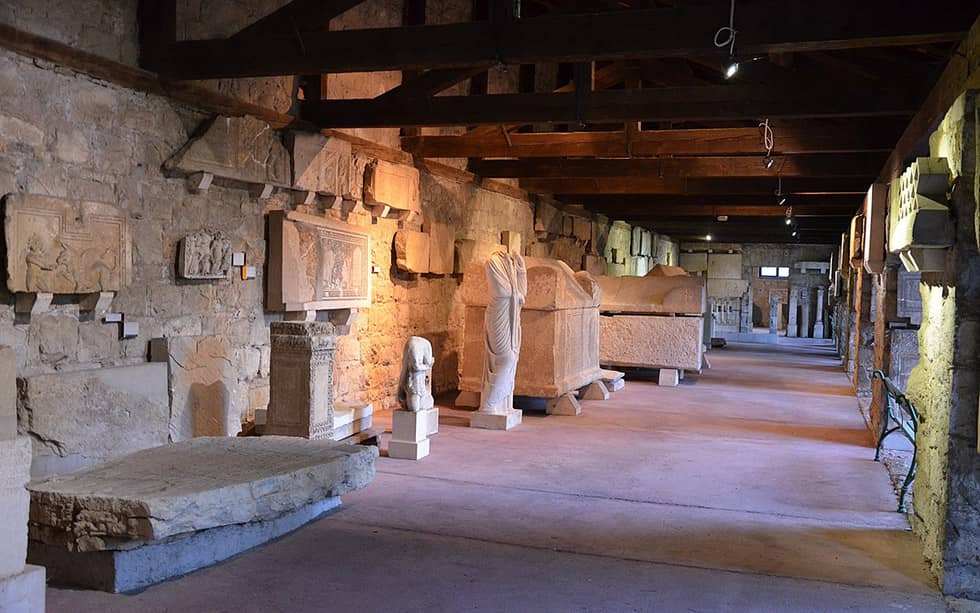
The garden lapidarium alone is worth seeing if you enjoy archaeology. Roman sarcophagi, inscriptions, statues and architectural fragments are displayed beneath covered arcades surrounding the museum garden.
Allow around 1-2 hours for a normal visit. Archaeology enthusiasts may want longer, particularly if they spend time reading the inscriptions and exploring the coin and Greek collections.
What to see at the Archaeological Museum Split
The garden lapidarium
The museum's lapidarium is one of its strongest attractions. Stone monuments are displayed through the courtyard, portico, atrium and corridors, creating an open and semi-open exhibition space around the main museum building.
The collection includes Roman sarcophagi, funerary inscriptions, sculptures, architectural fragments, mosaics and other stone monuments from ancient Dalmatia. Many of these objects come from Salona, the Roman capital of the province of Dalmatia, located in present-day Solin just outside Split.
Roman Dalmatia and Salona
The Roman Provincial Collection contains more than 17,000 objects, with around 1,600 exhibited in the permanent display and lapidarium.
Finds include military equipment, jewellery, everyday objects, religious monuments, portraits, mosaics and funerary monuments. Inscriptions are particularly valuable because they reveal the names, professions, family relationships and religious beliefs of people who lived in Roman Dalmatia. Salona dominates this part of the collection, but material also comes from other important Roman centres including Narona and Issa.
Greek and Hellenistic finds
The Greek-Hellenistic Collection contains more than 5,200 registered objects and is the oldest and largest museum collection of Greek archaeological material discovered in Dalmatia. More than 90 objects are currently presented in the permanent display and lapidarium, including pottery, inscriptions, coins, sculpture and funerary monuments dating from roughly the 6th to 1st centuries BC.
The collection is particularly important for understanding Greek colonies such as Issa on Vis and Pharos on Hvar, as well as their trade and cultural connections with the Dalmatian coast.
Prehistoric Dalmatia
The museum's story begins long before the Greeks and Romans. Its Prehistoric Collection documents communities that lived in Dalmatia from the earliest periods through the Bronze and Iron Ages. Weapons, tools, pottery, jewellery and burial finds help explain the societies that occupied the eastern Adriatic before Greek colonisation and Roman rule.
Coins and numismatics
The Numismatic Collection contains around 70,000 coins, ranging from Greek and Roman currency to Byzantine, medieval and more modern issues. Highlights include coins minted by Greek colonies and Illyrian rulers on the eastern Adriatic, Roman Republican and Imperial coins, Byzantine currency and important coin hoards discovered across Dalmatia.
Underwater archaeology
The museum also has an Underwater Archaeology Collection developed alongside systematic underwater research in central Dalmatia. Finds recovered from the sea help document ancient shipping, trade routes and maritime activity around the Dalmatian islands and coast.
Croatia's oldest museum
The Archaeological Museum in Split was founded on 22 August 1820, making it the oldest museum institution in Croatia. Its origins are closely connected with growing interest in the Roman ruins of Salona and Diocletian's Palace during the early 19th century. Emperor Francis I visited Split and Salona in 1818, helping encourage the creation of an institution dedicated to preserving the region's antiquities.
The museum's collections continued to grow through archaeological excavations, donations, purchases and research across Dalmatia.
The present museum building in Zrinsko-Frankopanska Street dates from the early 20th century and was designed specifically to combine indoor exhibition halls with the large surrounding lapidarium.
Combine the Archaeological Museum with Salona
The Archaeological Museum manages the archaeological site of Salona, the former capital of the Roman province of Dalmatia.
Many of the museum's most important Roman inscriptions, sculptures, sarcophagi and everyday objects were discovered there, so visiting both places gives a much clearer picture of Roman life in the Split region.
At Salona you can walk among remains of the ancient city, including early Christian basilicas, roads, cemeteries, theatre and amphitheatre. The museum then provides the movable objects and inscriptions that help explain the people who lived there.
A combined Archaeological Museum + Salona ticket currently costs €10 for adults and €5 reduced and is valid for seven days.
Archaeological Museum vs Museum of Croatian Archaeological Monuments
Split has two museums with very similar English names, but their collections have different focuses.
| Archaeological Museum Split | Museum of Croatian Archaeological Monuments | |
|---|---|---|
| Main focus | Prehistoric, Greek, Roman, late antique and medieval Dalmatia | Early medieval Croatian culture and the Croatian state |
| Best known for | Salona, Roman inscriptions, sarcophagi, Greek finds and coins | Early Croatian rulers, churches, stone monuments, weapons and jewellery |
| Founded | 1820 | 1893 |
| Location | Near central Split | Meje |
If Roman Salona, ancient Greece or classical archaeology are your main interests, choose the Archaeological Museum. For early medieval Croatian history, see our guide to the Museum of Croatian Archaeological Monuments.
Current exhibition in 2026
As of August 2026, the museum is presenting The Delmatae - The People Who Gave Dalmatia Its Name, a major exhibition exploring the Delmatae people who lived in the region before and during the early period of Roman expansion.
The exhibition runs until 31 October 2026. Parts of the permanent display have been temporarily rearranged to accommodate it.
If this exhibition is important to your visit, check the museum's current programme before travelling because temporary exhibitions change.
Archaeological Museum Split tickets
| Ticket | 2026 price |
|---|---|
| Adult | €8 |
| Children, students, persons with disabilities and retirees | €4 |
| Family ticket | €15 |
| Combined Archaeological Museum + Salona - adult | €10 |
| Combined Archaeological Museum + Salona - reduced | €5 |
Children up to 6 years old currently receive free admission.
The combined museum and Salona ticket is valid for seven days.
Opening hours
June 1-September 30
Monday-Saturday
09:00-14:00 and 15:00-20:00
Sunday and public holidays closed
October 1-May 31
Monday-Friday
09:00-14:00 and 15:00-20:00
Saturday: 09:00-14:00
Sunday and public holidays closed
Last admission is one hour before closing.
How to get to the Archaeological Museum Split
The museum is at Zrinsko-Frankopanska 25, north-west of Split Old Town.
From Diocletian's Palace, allow around 15 minutes on foot. The route is straightforward and the museum is close enough to combine with central Split sightseeing without needing public transport.
Its position away from the busiest Old Town streets also makes the museum noticeably quieter than many of Split's major attractions.
Accessibility
The museum offers reduced admission for persons with disabilities and is developing more accessible interpretation, including tactile models, Braille and audio-based content in selected exhibitions. Physical access can vary between the museum building, lapidarium and temporary exhibition areas. If step-free access to a particular part of the museum is important, contact the museum before visiting for current information.
More museums in Split
For more collections around the city, see our complete guide to museums in Split.
The BEST of Split by E Tuk Tuk
Embark on this captivating hour-and-a-half journey designed to unveil all the charms of Split
Our adventure encompasses visits to renowned Split beaches, iconic neighborhoods, galleries, and the famed Poljud stadium. Seated comfortably in our TUK TUK vehicle, experience the thrill of navigating through narrow, picturesque streets, immersing yourself in the recognizable aromas of Dalmatian Cuisine. For those seeking a seaside escape, arrange a refreshing swim at the stunning Kašjuni beach with your guide/driver – your only task is to relax and enjoy the journey.
Address and official information
Archaeological Museum in Split
Zrinsko-Frankopanska 25
21000 Split
Croatia
Official website: Archaeological Museum in Split