
Dubrovnik Cathedral (Cathedral of the Assumption of the Blessed Virgin Mary) is a Roman Catholic cathedral and the seat of the Diocese of Dubrovnik.
The present Baroque cathedral was built between 1671 and 1713, replacing a Romanesque basilica destroyed in the 1667 earthquake. Local tradition also links the site to the legend of King Richard the Lionheart, who is said to have supported the rebuilding of a church after surviving a shipwreck near Island Lokrum in 1192.
Archaeological excavations have revealed remains of earlier church structures beneath the cathedral, underscoring the long history of worship on this spot. Next to the main interior, the Cathedral Treasury (Riznica / Moćnik) is a major highlight, housing 132 relics of saints dating from the 11th to the 19th centuries, including celebrated reliquaries of St Blaise crafted by Dubrovnik goldsmiths.
Dubrovnik Cathedral and Treasury - Quick visit planner
- Tickets: Cathedral entry is usually free; the Treasury requires a separate ticket (commonly around €3-€5, depending on season/source).
- Opening hours (Treasury, summer season): 4 April - 1 November - Workdays 09:00-17:00; Sundays & holidays 11:00-17:00.
- Time needed: 20-30 minutes for the cathedral; 45-60 minutes if you add the Treasury and linger over the displays.
- Best time to go: Early morning or late afternoon for a quieter interior; avoid visiting during Mass/services (access may be limited).
- Where it is: In Dubrovnik Old Town (easy on foot; the historic centre is pedestrian-only).
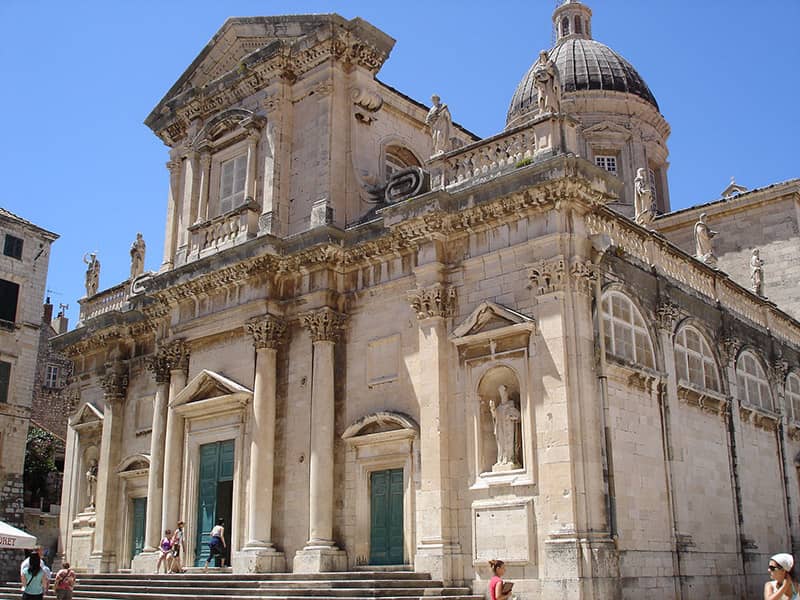
What is Dubrovnik Cathedral
Dubrovnik Cathedral is the city’s main Roman Catholic cathedral, dedicated to the Assumption of Mary, and one of the most important sacred landmarks inside the Old Town walls. On maps and guidebooks, it’s often listed simply as Dubrovnik Cathedral or the Cathedral of the Assumption.
You may also see the Croatian names used on signage and local listings:
- Katedrala Uznesenja Blažene Djevice Marije (Cathedral of the Assumption of the Blessed Virgin Mary)
- Katedrala Uznesenja Marijina (Cathedral of the Assumption of Mary)
- Katedrala Gospe Velike / Katedrala Velike Gospe (Cathedral of Our Lady of the Assumption)
If you’re short on time, you can treat this stop as a quick Old Town highlight: step inside for the Baroque interior and sacred art, then add the Cathedral Treasury (Riznica / Moćnik) next door for Dubrovnik’s most famous reliquaries. It also fits well into an organised Old Town sightseeing tour - either as a brief stop during the walk (time permitting) or as an easy add-on once the tour ends.
Dubrovnik Super Saver:
Cable Car Ride and Old Town Walking Tour plus City Walls
Embark on an unforgettable journey through the stunning city of Dubrovnik, renowned for its breathtaking architecture and rich history. Stroll along the narrow and winding streets of the UNESCO World Heritage Site of Dubrovnik Old Town. Be awe-inspired by the mesmerising views from the 16th-century city walls, and take your experience to the next level by taking a cable car ride to Mt. Srd for panoramic views of the city.
Book your tour now and discover Dubrovnik with a knowledgeable tour expert.
Cathedral history in 2 minutes
Dubrovnik Cathedral stands on a site that has hosted major churches for centuries. The building you see today is Baroque (late 17th-early 18th century), but archaeological work beneath it has revealed the remains of older church structures, evidence that this was a sacred focal point long before the present cathedral was built.
A quick timeline
- Pre-12th century: Excavations in the 1980s uncovered an older church complex below the current cathedral, older than the historically recorded Romanesque basilica.
- 12th century: A large Romanesque cathedral was built here. A local legend says King Richard the Lionheart contributed to its construction after surviving a shipwreck near Lokrum in 1192 on his return from the Third Crusade.
- 1667: The great earthquake devastated Dubrovnik and destroyed the Romanesque cathedral, prompting a long rebuilding era across the city.
- 1671-1713: The present Baroque cathedral was built as the replacement, completed in 1713 after decades of work by a succession of master builders and local craftsmen.
If you want to place the cathedral story in a wider Old Town context, this Dubrovnik chronology is a handy quick reference - it helps you connect the 1667 earthquake and the Baroque rebuilding era with other key moments in the city’s history.
From Romanesque basilica to Baroque cathedral
After the 1667 earthquake, Dubrovnik turned to Italian architectural expertise. The cathedral was built on the basis of a Baroque design associated with Andrea Buffalini, and the project passed through several hands over the decades. Among the best-documented master builders are Paolo Andreotti (1671-1674), Pier Antonio Bazzi (1677-1678), and Tommaso Napoli (1689-1700), with the final completion credited to Dubrovnik master Ilija Katičić in 1713.
What this means for visitors: you’re looking at a cathedral that reflects both Dubrovnik’s post-earthquake resilience and the wider Roman Baroque taste of its era, designed for drama, light, and a clear central focus on the high altar.
What archaeology adds to the story
Later earthquakes and restoration campaigns led to deeper investigation beneath the cathedral floor. The 1980s excavations, in particular, confirmed that the Romanesque basilica was not the first great church on this spot, adding an extra layer of historical depth to an otherwise “post-1667” monument.
What to see inside the cathedral
The interior is designed to feel bright and spacious, with a high central nave, side aisles, and a dome that draws your eyes toward the crossing. Even if you only pop in for a few minutes, focus on the high altar first, then scan the side chapels for standout paintings and marble altars.
Main highlight - Titian above the high altar
The cathedral’s signature artwork is the multi-panel altarpiece by Titian, showing the Assumption of the Virgin Mary. It’s the instant focal point of the entire church and the detail is best appreciated from the centre aisle a few steps back from the sanctuary.
Notable paintings and side altars
- The Assumption polyptych by Titian (16th century) - the cathedral’s most famous artwork.
- Madonna della Seggiola (Raphael) - a widely noted highlight listed in Dubrovnik cultural materials.
- The Flight into Egypt (Savoldo) - another frequently mentioned painting inside the cathedral.
- Marble side altars - look for richly detailed stonework and devotional chapels that reflect Dubrovnik’s Baroque rebuilding era.
Small details people often miss
- Light and proportions - the upper windows and pale stone make the space feel airy, especially on sunny days.
- Quiet corners - the side aisles are best for a slower look when the central nave is busy.
- A working church atmosphere - you may find areas roped off or movement limited during services.
Cathedral Treasury (Riznica)
The Cathedral Treasury is the main reason many visitors come to Dubrovnik Cathedral. It is a compact museum-style collection of sacred objects and relics, best known for the reliquaries of St Blaise (Sveti Vlaho), Dubrovnik’s patron saint. There are 132 relics of saints dating from the 11th to the 19th centuries.
Why the Treasury is special
- St Blaise reliquaries - the head, arms and leg relics are the headline exhibits, crafted by Dubrovnik goldsmiths and associated with the 11th to 12th centuries.
- The head reliquary shaped like a Byzantine crown - adorned with enamel medallions and jewels, it is often singled out as the symbol of Dubrovnik’s goldsmith tradition.
- Dubrovnik craftsmanship - beyond relics, look for finely worked liturgical vessels and precious metalwork connected to the city’s historic workshops.
What to look for when you enter
- Start with St Blaise - locate the head reliquary first, then compare the different forms used for relics (head, hand, limb) and the techniques used in metalwork and decoration.
- Details up close - step in slowly and scan for enamel work, filigree, gemstones, and tiny iconography that you will miss if you rush.
- Read the labels - even brief captions help you understand the dating, provenance, and why certain items are considered Dubrovnik masterpieces.
What to expect
The Treasury is relatively small, so it works best as a focused visit rather than a long museum stop. Plan to spend 15-25 minutes if you move steadily, or 30 minutes if you like reading every label and examining details.
Because this is a religious treasury, rules can be stricter than in the main cathedral, watch for posted notices about photography, flash, and respectful behaviour. If you are unsure, ask the staff before taking photos.
Tickets and opening hours
Plan this stop around two different experiences: the cathedral interior (generally free to enter outside services) and the Cathedral Treasury (ticketed, with set opening hours).
Cathedral entry
- Ticket: Entry to the main cathedral is typically free, but access can be limited during Mass and religious events.
- Services: If you arrive during a service, wait until it ends or return later for sightseeing.
Mass times (useful for planning your visit)
- Weekdays: 07:30 and 18:00
- Sundays: 09:00, 10:00 and 18:00
- July and August note: No morning Mass in the cathedral; evening Mass is at 20:00. From 12 to 15 August, Mass is at 19:00.
Cathedral Treasury opening hours
The Dubrovnik Tourist Board lists the following working hours for the Cathedral Treasury:
- Summer (4 April - 1 November): Work days 09:00-17:00; Sundays and holidays 11:00-17:00
- Winter: Work days 10:00-12:00 and 15:00-17:00; Sundays and holidays 11:00-12:00 and 15:00-17:00
Treasury ticket price and where to buy
- Price: Expect a small fee, commonly around EUR 3-4 (cash is often requested). Prices can change seasonally, so treat this as a guide.
- Where to buy: Tickets are typically sold at a small desk at the cathedral, just before entry to the Treasury.
Tip: If you are visiting on a Sunday or holiday, the Treasury starts later, so it is often better to see the cathedral first, then return for the Treasury when it opens.
Visiting rules and etiquette
Dubrovnik Cathedral is an active place of worship as well as a sightseeing stop. A little planning and respectful behaviour will make your visit smoother, especially if you also want to see the Treasury.
Dress code and behaviour
- Dress modestly - cover shoulders and avoid very short shorts or beachwear if you can.
- Keep voices low - the cathedral is usually quiet, and people may be praying even outside service times.
- Move gently around roped-off areas - sections may be restricted during preparations, events, or services.
Photography
- Cathedral interior: photography is often allowed, but avoid flash and be mindful of worshippers.
- Treasury: rules can be stricter than in the main cathedral - check the signs at the entrance and ask staff if you are unsure before taking photos.
Services and temporary closures
- Expect limited access during Mass - sightseeing is often paused or certain areas may be closed.
- Plan around Sundays and holidays - the Treasury typically opens later, so it is often best to visit the cathedral first, then return for the Treasury.
Accessibility and comfort
- Allow extra time if you need step-free access - entrances and layouts in historic buildings can be uneven and may involve steps.
- Bring water in summer - Old Town heat builds quickly, and this stop is best combined with shaded indoor visits.
How to get there
Dubrovnik Cathedral is inside the Old Town, so the easiest way to reach it is on foot. If you are staying outside the walls, head to one of the main entrances and walk through the historic centre toward the cathedral area.
Walking directions (simple and fast)
- From Stradun (Placa): walk to the eastern end of Stradun, then follow the flow of streets toward the cathedral and the nearby Rector's Palace area.
- From Pile Gate: enter the Old Town, walk straight along Stradun, then continue toward the eastern end of the Old Town until you reach the cathedral zone.
- From Ploce Gate: enter the Old Town from the east and you are already close - the cathedral is a short walk from the gate.
Getting here by bus or taxi
- City bus: buses stop outside the Old Town walls, then you continue on foot through the gates. Use this Dubrovnik city bus map to plan the best stop for Pile or Ploce Gate.
- Taxi or ride-hailing: drop-off is outside the pedestrian zone; from there it is a short walk to the cathedral.
Tip: Wear shoes with decent grip. Old Town stone streets can be slippery, especially after rain.
Combine it with nearby Old Town stops
This cathedral visit is easiest to pair with nearby highlights in the eastern half of the Old Town. If you plan it well, you can see several major sights in one short loop without backtracking.
Easy 45 minute Old Town mini-itinerary
- Start on Stradun - walk the main street while it is still relatively quiet.
- Dubrovnik Cathedral - step inside for the Baroque interior and key artworks.
- Cathedral Treasury (Riznica / Moćnik) - add a short focused visit to see the St Blaise reliquaries.
- Finish at the Rector's Palace area - a natural next stop just a few minutes away.
If you have more time
- Slow it down - revisit the cathedral when the light changes, then enjoy a longer Treasury visit for details and labels.
- Plan around services - if you arrive during Mass, walk Stradun first and return when sightseeing access is more relaxed.
- Use the gates to your advantage - entering via Pile Gate works well if you want a straight, simple walk along Stradun to reach this area.
Tours that fit this stop
If you want context without having to read signs and timelines on the go, an organised Old Town sightseeing tour can be a smart way to see the cathedral area. Many walking tours pass close by, making it easy to include Dubrovnik Cathedral as either a brief stop during the route (time permitting) or as a quick add-on once the tour ends.
Look for tours that focus on Dubrovnik history and Old Town landmarks - they typically cover the Stradun and the Rector's Palace zone, which places you just minutes from the cathedral entrance.
Dubrovnik Discovery Old Town Walking Tour - 1.5 hours with a local guide
Want an easy, high-value introduction to Dubrovnik Old Town before you explore on your own?
This guided 1.5 hour walking tour is ideal for first-timers and anyone who wants the stories, context, and hidden details you would miss solo. Walk through the heart of the UNESCO-listed Old Town with a licensed local expert, covering headline landmarks like Pile Gate, Stradun, the Franciscan Monastery, the Cathedral of the Assumption, and the Rector's Palace area.
It is also a perfect match for this page - do the tour first for the background, then visit the cathedral and Cathedral Treasury at your own pace once the walk ends.
Working Hours
Work days 9.00 am - 5.00 pm, Sundays and holidays 11.00 am - 5.00 pm
Features
132 relics of saints
Address & contact details
Street: Ulica kneza Damjana Jude 1
Postcode: 20000
City: Dubrovnik
FAQ
Is Dubrovnik Cathedral free to enter?
Yes, entry to the main cathedral is typically free for sightseeing, but access can be limited during Mass and religious events.
Do you need a ticket for the Cathedral Treasury?
Yes. The Cathedral Treasury (Riznica - Moćnik) has a separate admission fee, and tickets are usually sold at the cathedral just before the Treasury entrance.
What are the Cathedral Treasury opening hours?
Opening hours are seasonal. A commonly listed schedule is 4 April - 1 November (work days 09:00-17:00; Sundays and holidays 11:00-17:00), with shorter split hours in winter. Always check the notice at the entrance for the most up-to-date times.
How long do you need for Dubrovnik Cathedral and the Treasury?
Plan around 20-30 minutes for the cathedral, or 45-60 minutes if you also visit the Treasury and take your time with the displays.
Can you take photos inside?
Photography policies can vary. In the cathedral, photography is often allowed without flash, but the Treasury may have stricter rules. Look for posted signs and ask staff if you are unsure.
Is there a dress code?
Yes. This is an active place of worship, so modest clothing is recommended - cover shoulders and avoid beachwear when possible.
What is the main thing to see in the Treasury?
The headline exhibits are the reliquaries of St Blaise (Sveti Vlaho), Dubrovnik's patron saint, including the famous head reliquary shaped like a Byzantine crown.
What is the best time to visit?
For a calmer visit, go early in the day or later in the afternoon, and avoid service times. On Sundays and holidays, the Treasury often opens later, so visit the cathedral first, then return for the Treasury when it opens.