
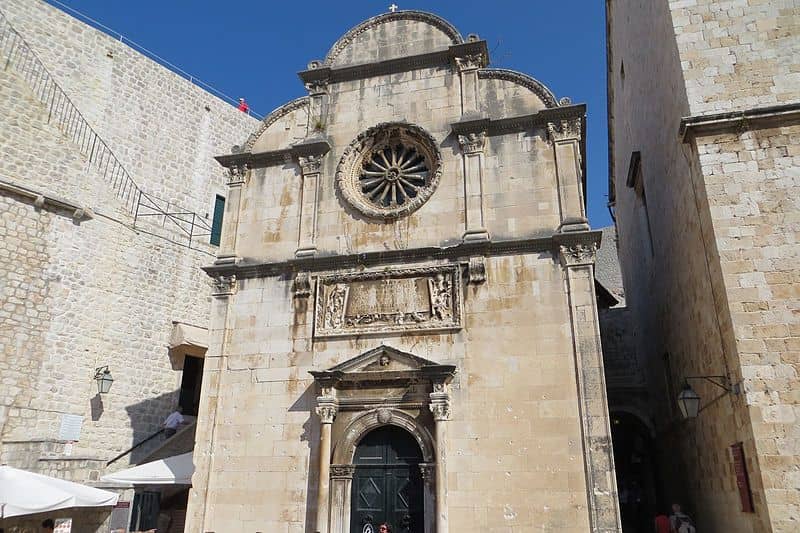
The Church of Holy Savior in Dubrovnik is a small but historically important Renaissance church just inside the western entrance to the Old Town. Built as a votive church after the earthquake of 1520, it is one of those Dubrovnik landmarks that many visitors pass in seconds, even though it tells an important part of the city's story.
If you are walking in through Pile Gate, this is one of the first monuments worth pausing for. Its location, its survival in the 1667 earthquake, and its compact but elegant design make it one of the most rewarding quick stops in Dubrovnik for travellers interested in history, architecture, and the logic of the Old Town layout.
Church of Holy Savior Dubrovnik highlights
- Location: Just inside Pile Gate, between the Franciscan Monastery, Big Onofrio’s Fountain and the City Walls
- Why it matters: Built in gratitude after the 1520 earthquake by decision of the Dubrovnik Senate
- Completed: 1528
- Style: Primarily Renaissance, with some Gothic elements
- Why it stands out: It survived the devastating 1667 earthquake and remains largely preserved in its original form
- Visit time: Around 5 to 10 minutes for most travellers
- Best for: First-time Old Town walks, architecture lovers, and anyone starting sightseeing from Pile Gate
Why visit the Church of Holy Savior?
The Church of Holy Savior is worth visiting because it gives you something many small Old Town churches do not: clear historical significance in a location you will probably pass anyway. It is one of the most meaningful quick stops near Pile Gate, with a strong story behind its construction and a rare claim to authenticity after surviving the devastating earthquake of 1667.
This is not a major standalone attraction that needs a separate itinerary slot. It works best as a short pause at the start of your Old Town walk, especially if you are heading from Pile Gate toward Stradun or planning to continue to the City Walls. In just a few minutes, you get a better sense of how history, architecture, and city planning come together in this part of Dubrovnik.
- For first-time visitors: It adds meaning to your first steps into the Old Town
- For architecture lovers: It is a compact but important Dubrovnik Renaissance landmark
- For history-focused travellers: Its origin and survival tell an essential Dubrovnik story
- For practical planners: It is easy to combine with nearby major sights without adding much time
If you want to see the Church of Holy Savior as more than just a quick photo stop, it helps to place it within the wider story of the Old Town. This part of Dubrovnik makes more sense when you move through it with contextt, from Pile Gate and the Franciscan Monastery to Stradun, the city walls, and the viewpoints above the city.
For travellers who prefer a more structured introduction, a combined experience can be a practical next step after this stop. Organized walking tours are a good fit if you want both street-level history and a broader view of how the city is laid out, without having to piece the routes together on your own.
Dubrovnik Cable Car Ride and Old Town Walking Tour
One of the easiest ways to understand Dubrovnik is to experience it both from above and on foot in the Old Town. This tour pairs the panoramic perspective from Mt. Srd with a guided walk through the historic center, so the city's landmarks, street plan, and layered history come together in a much clearer way.
It works especially well for first-time visitors who want more context than a self-guided stroll usually provides. Book the Dubrovnik Cable Car Ride and Old Town Walking Tour for a more complete introduction to the city, with expert guidance, memorable views, and a route that connects Dubrovnik's big-picture setting with its historic core.
History: why the church was built
The Church of Holy Savior was built after the earthquake of 1520, when the Dubrovnik Senate ordered the construction of a votive church in gratitude for the city's survival. That origin is what gives the building its deeper meaning today: it was not created simply as another parish church, but as a deliberate public act of thanks at a moment of fear, damage, and uncertainty.
Construction was entrusted to Petar Andrijic of Korčula, and the church was completed in 1528. Even though it is small in scale, its background makes it one of the most historically expressive churches in Dubrovnik, especially for visitors trying to understand how the Republic responded to disaster and how religion, government, and public memory were closely connected.
Its historical importance grew even more after the catastrophic earthquake of 1667. While much of Dubrovnik was destroyed, the Church of Holy Savior survived, which is why it is still valued not only as a Renaissance monument, but also as a rare witness to the appearance of the city before that disaster changed so much of the urban fabric.
Architecture: what to notice before you walk on
The Church of Holy Savior is small, but it rewards a slower look because its design reflects a transitional moment in Dubrovnik's architectural history. It is generally described as a Renaissance church with Gothic elements, which is exactly what makes it more interesting than a quick glance from the street might suggest.
Before moving on, take a moment to look at the balance of the exterior rather than just the entrance itself. The church has a simple single-nave plan, but the facade, portal, and apse give it a more refined and deliberate presence, especially in such a busy part of the Old Town where many people walk past without noticing how carefully composed it is.
- The facade: Its overall composition is clean and restrained, with Renaissance character that feels more measured than decorative
- The portal: The entrance is one of the clearest places to notice the craftsmanship associated with Petar Andrijic and the quality of local stonework
- The side windows: Their pointed form reflects the Gothic vocabulary still present in Dubrovnik at the time
- The vaulting: Inside, the Gothic ribbed structure adds a different note from the calmer Renaissance exterior
- The apse: Its rounded form helps signal the church's Renaissance identity
- The overall scale: The church is modest in size, but its proportions give it a dignity that stands out once you stop and really look
That mix of Gothic and Renaissance features is part of the reason the church matters architecturally. It is not the grandest building in Dubrovnik, but it is one of the clearest small monuments for seeing how styles overlapped in the city during the early 16th century.
How to visit
The Church of Holy Savior is easiest to visit as part of your first walk into the Old Town from Pile Gate. Because it stands right at the western end of Stradun, near the Franciscan Monastery and the entrance area for the City Walls, it fits naturally into almost any classic Dubrovnik sightseeing route.
Most travellers only need 5 to 10 minutes here unless they are especially interested in architecture, historical context, or stopping when the interior is accessible. Even a short pause is enough to notice the facade, understand why the church matters, and place it within the wider sequence of landmarks around the western entrance to the Old Town.
In practical terms, think of this as a high-value short stop rather than a destination that needs separate planning. If the church is open, it is worth stepping inside briefly. If it is closed, the exterior still makes the stop worthwhile because the history, location, and architectural character are all visible from the surrounding square.
Interior access can vary because the church is also used for concerts, exhibitions, and cultural events. That means it is best to keep expectations flexible: plan to see it from outside for sure, and treat any chance to enter as a bonus rather than something to count on at a specific hour.
The Church of Holy Savior is one of those places that becomes more interesting when someone helps connect it to the wider story of Dubrovnik. On its own, it is a quick stop near Pile Gate, but as part of a guided walk through the Old Town it starts to feel like an important piece of a much bigger picture, one that includes the city's gates, monasteries, fountains, main street, and layers of history.
If you want more than a brief look, a Dubrovnik Old Town Tour is a smart next step. It gives first-time visitors a clearer sense of how the city's landmarks fit together, while adding the kind of historical and local context that is easy to miss when exploring on your own.
Dubrovnik Discovery Old Town Walking Tour
Discover the heart of Dubrovnik with a private Old Town tour that brings the city's streets, landmarks, and history into sharper focus.
With a local guide leading the way, you move beyond the standard walk past stone facades and famous photo spots. The route ties together major landmarks such as Stradun, the Rector's Palace, gates, towers, and fortifications, while adding the historical context, museum stops, and filming-location stories that make the Old Town feel far more layered and memorable.
Opening hours, entry, and practical details
The exterior of the Church of Holy Savior is easy to see at any time while walking through this part of the Old Town. Because it stands just inside Pile Gate, you can always include it as a quick stop even if you are simply passing through on your way to Stradun, the Franciscan Monastery, or the City Walls.
Interior access is less predictable, so it is better not to plan around fixed visiting hours unless you confirm them locally. The church is also used for concerts and cultural events, which means the door may be open during some periods and closed at others. In practical terms, assume the exterior is the constant, and treat a chance to step inside as an added bonus.
There is no ticket needed to stop outside and appreciate the church from the square. If you are specifically hoping to enter, it is smart to check nearby notices or local information once you are in Dubrovnik, especially in the busier season when recitals and similar programs may take place.
Because this stop sits in one of the busiest arrival points in Dubrovnik, timing matters more than formal entry details for most visitors. Early morning and later afternoon usually make the area easier to enjoy, while the middle of the day tends to be more crowded with people moving through the western entrance to the Old Town.
There are usually more chances to find concerts, performances, and cultural events in this part of the Old Town during the summer months, especially when the Dubrovnik Summer Festival is underway. If you are visiting in that period and hope to see the Church of Holy Savior in a livelier cultural setting, it is worth checking current festival listings and local notices once you are in Dubrovnik.
Best time to stop here
The best time to stop at the Church of Holy Savior is early in the morning or later in the afternoon, when the western entrance to the Old Town usually feels a little less intense. Because the church stands right by Pile Gate, this area can become crowded quickly once tour groups and midday foot traffic build up, so a short pause here is far more pleasant before the busiest part of the day or once the light starts to soften.
Early morning works especially well if you want a calmer first impression of Dubrovnik and a cleaner look at the church's facade before the square fills up. Late afternoon is another strong option, particularly if you are pairing this stop with a walk toward the City Walls, because the light is often warmer and the atmosphere around this part of the Old Town feels less rushed than it does around midday.
If you are visiting in summer, avoiding the middle of the day is usually the smart move. Even though this is only a short stop, the stone surfaces, strong sun, and steady flow of people around Pile Gate can make the area feel much less enjoyable when temperatures rise. For most travellers, the best experience comes from treating the church as an early or late-day landmark rather than a noon-time pause.
- Best for fewer crowds: Early morning, soon after entering the Old Town
- Best for warmer light: Late afternoon
- Least comfortable time: Midday in peak summer
- Best strategy: Pair it with nearby sights instead of making a separate trip
How to combine this stop with nearby sights
The Church of Holy Savior works best as part of a short western Old Town route rather than as a standalone stop. Because it sits right by Pile Gate, you can fold it naturally into the classic first walk through Dubrovnik without adding extra distance or breaking your rhythm.
A simple way to do it is to pause at the church as soon as you enter, then continue a few steps to Big Onofrio’s Fountain before deciding whether to head up to the City Walls or carry on along Stradun. That sequence makes sense both historically and practically, since all of these landmarks sit in the same tightly connected arrival zone on the western edge of the Old Town.
- Quick 15 to 20 minute route: Pile Gate - Church of Holy Savior - Big Onofrio's Fountain - short walk onto Stradun
- Classic first-time route: Pile Gate - Church of Holy Savior - Big Onofrio's Fountain - City Walls - Stradun
- Longer orientation walk: Pile Gate - Church of Holy Savior - Onofrio's Fountain - Stradun - Old Port
- Best planning tip: See the church first, then choose between a walls walk or a slower Old Town stroll
If you are visiting on a busy day, this stop also works well as a decision point. After the church and fountain, you can judge the crowds and either go straight to the walls while you are already near the entrance or continue deeper into the Old Town for a more relaxed walk along Stradun toward the central squares and the eastern harbour area.
Where it is in the Old Town
The Church of Holy Savior stands just inside the western entrance to Dubrovnik Old Town, in one of the busiest and most recognizable arrival points in the city. If you enter through Pile Gate, the church is immediately nearby, positioned between the Franciscan Monastery and the City Walls at the point where the Old Town opens up toward Big Onofrio’s Fountain and Stradun.
That location is part of what makes the church worth noticing. You do not need a special detour to see it, because it naturally fits into the classic first walk through the Old Town. It also sits close to the main entrance for the Dubrovnik City Walls, which makes it an easy stop before a walls walk, after a quick look at the fountain, or at the start of a route deeper into the historic centre.
In practical terms, this is one of the easiest church landmarks to find in Dubrovnik. Even if you are not specifically looking for it, you will probably pass it within minutes of entering the Old Town from the west, which is exactly why it works so well as a short but meaningful first stop.
Address & contact details
Street: Poljana Paska Miličevića, 20000 Dubrovnik
Nearby attractions worth linking from this page
Because the Church of Holy Savior sits in one of the most important arrival points in Dubrovnik, it makes sense to connect it with the nearby landmarks that most visitors see next. These links help turn a short church stop into a more useful Old Town route, especially for first-time visitors who want to understand what to see immediately after entering from the west side.
The strongest related pages are the ones that follow the same natural walking flow: Pile Gate, Big Onofrio’s Fountain, City Walls, Stradun, and the main attractions in Dubrovnik hub page.
- Pile Gate: Best link for orientation, arrival context, and the western entrance story
- Big Onofrio's Fountain: Natural next stop a few steps away from the church
- City Walls: Useful for travellers deciding whether to start the walls walk from this same area
- Stradun: Helps visitors continue from the church into Dubrovnik's main street and central Old Town route
Used well, these links keep the page focused while still making it more helpful. Instead of trying to turn the Church of Holy Savior into a long catch-all guide, they let the page stay compact and historically specific while pointing readers toward the larger Dubrovnik landmarks that naturally connect with this stop.
FAQ about the Church of Holy Savior in Dubrovnik
What is the Church of Holy Savior in Dubrovnik known for?
The Church of Holy Savior is best known as a small votive Renaissance church built after the 1520 earthquake in Dubrovnik. It is also especially important because it survived the devastating earthquake of 1667 largely intact, which makes it one of the rare buildings that still preserves that earlier layer of the city's architectural history.
Where is the Church of Holy Savior located?
The church stands just inside the western entrance to Dubrovnik Old Town, next to Pile Gate. It sits between the Franciscan Monastery and the city walls, very close to Big Onofrio's Fountain and the western end of Stradun.
Is the Church of Holy Savior worth visiting?
Yes, especially if you are already entering the Old Town through Pile Gate. It is not a major standalone attraction that needs a long visit, but it is one of the most worthwhile short stops in this part of Dubrovnik because of its history, location, and architectural importance.
How long do you need for a visit?
Most visitors only need around 5 to 10 minutes. That is usually enough time to look at the exterior, understand why the church was built, and connect it with the nearby landmarks around the western entrance to the Old Town.
Can you go inside the church?
Sometimes, but not always. Interior access can vary because the church is also used for concerts and cultural events, so it is better to think of the exterior as the guaranteed part of the visit and any chance to go inside as an added bonus.
Is there an entrance fee?
You do not need a ticket to stop outside and see the church from the square. If you are specifically hoping to enter, it is best to check locally for current access details rather than assume fixed museum-style opening hours.
What should you see nearby after visiting?
The easiest next stops are Pile Gate, Big Onofrio's Fountain, Stradun, and the Dubrovnik City Walls entrance. Together, they form the most natural first-time walking route from the western side of the Old Town.