
St Ignatius Church is one of the most distinctive stops in Dubrovnik Old Town, not only for the church itself but for the whole Baroque setting around it. Sitting above Gundulić Square at the top of the Jesuit Stairs, it feels slightly removed from the busiest flow of Stradun while still being easy to reach on foot.
What makes this spot memorable is the full ensemble, the grand staircase, the church facade, the former Jesuit college, and the quieter square in front. It is a worthwhile stop for architecture, photos, and anyone building a walking route through the main Dubrovnik attractions, especially if the nearby Jesuit Stairs are already on your list for their Game of Thrones connection.
St Ignatius Church quick facts
- Location: Poljana Ruđera Boškovića, above Gundulić Square in Dubrovnik Old Town.
- Why it stands out: One of Dubrovnik's strongest Baroque ensembles, with the church, former Jesuit college, and the famous Jesuit Stairs forming one of the city's best-known visual approaches.
- Typical visit length: Allow a short stop for the church itself, then a little longer if you also want time for the stairs, square, and photos.
- Access: This is an active church, so sightseeing access can depend on services or other religious use. Check locally when you arrive.
- Best for: Baroque architecture, quieter Old Town corners, photography, short cultural stops, and Game of Thrones fans already visiting the Jesuit Stairs.
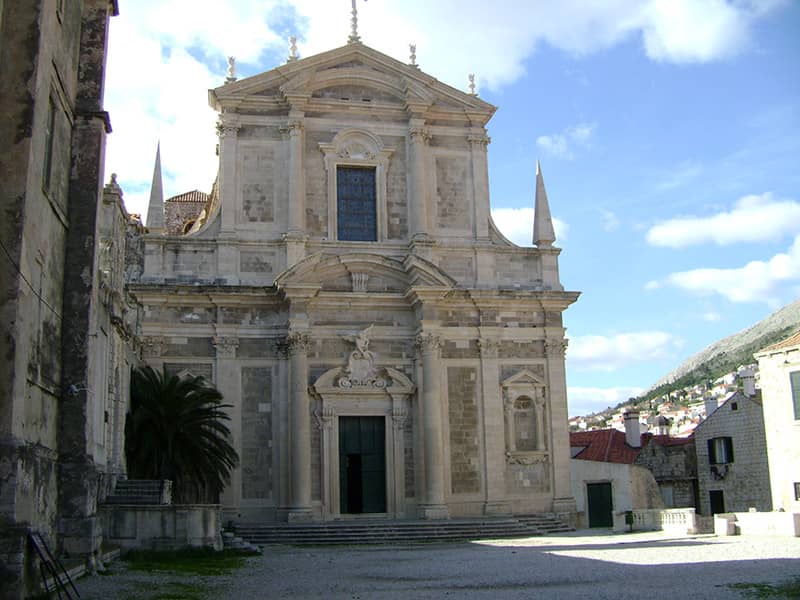
Why Visit St Ignatius Church in Dubrovnik
St Ignatius Church is worth visiting because it gives you more than a single landmark. You get one of the most elegant Baroque corners in Dubrovnik Old Town, the church itself, the former Jesuit college, and the broad stone staircase rising above Gundulić Square, all in a setting that feels calmer and more atmospheric than the busiest stretches of Stradun.
It is an especially good stop if you enjoy architecture, quieter photo spots, and short cultural visits that fit naturally into an Old Town walk. Even if you do not plan to spend long inside, the approach up the Jesuit Stairs, the open square in front, and the layered history of the complex make this one of the most rewarding small detours among central Dubrovnik attractions.
- For architecture: The church and staircase form one of the clearest Baroque set-pieces in the city.
- For photographers: The stairs, facade, and square give you strong angles without needing a long visit.
- For walkers: It fits easily into an Old Town route with nearby lanes, squares, and churches.
- For a quieter pause: The area often feels less hectic than the main tourist corridor below.
- For film fans: The famous Jesuit Stairs next to the church are already a must for many Game of Thrones in Dubrovnik visitors.
If this part of the Old Town feels familiar, that is because the area around St Ignatius Church and the Jesuit Stairs is closely tied to Dubrovnik's best-known on-screen moments. Even visitors who are here mainly for architecture often end up recognizing the staircase from the city's Game of Thrones filming locations, which makes this stop an easy fit for anyone who wants to connect Dubrovnik's real history with its cinematic side.
For travellers who want that story properly explained rather than pieced together on their own, this is also a natural point to consider joining a guided experience. The Dubrovnik Game of Thrones Tour with optional Lokrum Island visit adds the filming context, behind-the-scenes details, and extra locations that are easy to miss if you are exploring independently.
Dubrovnik Game of Thrones Tour & Optional Lokrum Island Visit
See how Dubrovnik became King’s Landing on a guided Old Town walk that links the city’s best-known filming locations with the real streets, stairways, and fortifications behind them.
The route includes standout stops such as Pile Gate, Fort Lovrijenac (St. Lawrence Fortress), and the Jesuit Stairs, so you can match major scenes to the exact places where they were filmed without having to figure out the route yourself.
Along the way, your guide adds production insight, local context, and scene-by-scene references that make the locations easier to recognize and more rewarding to visit.
What to See at St Ignatius Church
The Baroque Facade and Square
The first thing to notice is not just the church facade, but the whole setting around it. St Ignatius stands on Ruđer Bošković Square above Gundulić Square, and the open space in front gives the building room to breathe in a way that many Old Town landmarks do not. It feels more composed and theatrical, which is one reason this corner leaves such a strong impression even on a short walk. The square in front is often used as a venue during the Dubrovnik Summer Festival.
From the square, take a moment to look at how the church, the former Jesuit college, and the broad stone approach work together as a single urban composition. This is one of the clearest Baroque scenes in Dubrovnik, and it is easiest to appreciate here before you step inside or continue down toward the market square below.
The Interior, Frescoes, and Atmosphere
If the church is open, the interior is worth a quiet look for its Baroque decoration and calmer atmosphere. The best-known artistic detail is the series of trompe-l'oeil frescoes by Gaetano Garcia, which portray scenes from the life of St Ignatius and give the space much of its visual character.
Even visitors who do not usually spend long in churches often find this interior rewarding because it feels elegant rather than overwhelming. It is the kind of stop that works well as a brief cultural pause, especially once you have been moving through the busier lanes around Stradun.
The Jesuit Ensemble Around the Church
Do not treat St Ignatius as a single standalone monument. The church makes the most sense when you see it as part of the old Jesuit complex, with the adjoining Collegium Ragusinum and the famous staircase below it. Many visitors come for the steps, but the full reward is seeing how the square, facade, and college building frame one another.
This wider setting is also what makes the area such a strong photo stop. You can appreciate the church itself up close, then turn back toward the square and staircase for one of the most recognizable architectural views in the southern part of the Old Town.
Jesuit Stairs and the Famous Viewpoint
The Jesuit Stairs, constructed in 1738, are one of the most recognizable architectural approaches in Dubrovnik Old Town. Rising from Gundulić Square to Ruđer Bošković Square, they create the dramatic lead-in to St Ignatius Church and make this part of the city feel more open, grand, and cinematic than many of the tighter lanes nearby.
The staircase is usually attributed to the Roman architect Pietro Passalacqua and is widely compared to Rome’s famous Spanish Steps (Scala di Spagna). At the top of the stairs you can find the inscription Collegium Rhagvsinvm. The inscription was set up after the abolition of the Jesuit order, the originally was Collegium Societatis Iesu. The The Jesuit Stairs were used as the filming location for the "Walk of Atonement" (Walk of Shame) of Cersei Lannister in Game of Thrones (Season 5, Episode 10).
- Best lower view: Stand near the lower part of Gundulić Square and look up to see the full sweep of the staircase.
- Best upper view: From the top, turn back for one of the clearest photo angles over the steps and market square below.
- Best timing: Early morning and later in the day usually give you softer light and fewer people on the steps.
- What to expect: This is one of the most photographed spots in the Old Town, so completely empty views are uncommon in peak season.
After taking in the details around St Ignatius Church and the Jesuit Stairs, many visitors want a broader sense of how Dubrovnik fits together beyond the close-up Old Town lanes. This is a good point to switch from one landmark to the bigger picture, especially if you want to connect the city's layered streets, fortifications, and viewpoints in a more structured way.
That is exactly where the Dubrovnik Cable Car Ride and Old Town Walking Tour works well. It combines the elevated perspective from Mount Srđ with a guided walk through the Old Town, so you get both the panoramic overview and the on-the-ground context that helps places like St Ignatius, the Jesuit Stairs, and the surrounding squares make more sense.
Dubrovnik Cable Car Ride and Old Town Walking Tour
See Dubrovnik from two angles in one experience, from above on the cable car ride to Mount Srđ, and at street level on a guided walk through the Old Town. It is a smart option if you want both the wide coastal panorama and the local context that brings Dubrovnik's walls, squares, and historic lanes into focus.
With a guide leading the walking portion, you can move through the UNESCO-listed centre with more structure and less guesswork, while the cable car adds one of the city's classic panoramic viewpoints. Book the tour if you want a balanced introduction that combines scenery, orientation, and Dubrovnik's historic core in a single outing.
History and Architecture
St Ignatius Church is important not only as a religious building but as part of one of Dubrovnik's most complete Baroque urban ensembles. Together with the former Jesuit college and the staircase leading up from Gundulić Square, it shows how this part of the Old Town was reshaped in a more theatrical and formal Baroque style after the 1667 earthquake.
The church was completed in 1725 and is closely tied to the Jesuit presence in Dubrovnik, whose educational role left a lasting mark on the city through Collegium Ragusinum. That wider context matters here, because the church makes the strongest impression when you read it as part of a cultural and architectural whole rather than as a standalone stop.
Jesuit Origins and the Collegium Ragusinum
The complex reflects the importance of the Jesuits in Dubrovnik's intellectual and religious life. Collegium Ragusinum, the Jesuit college beside the church, became one of the city's major centres of education and is still one of the defining historic institutions linked with this part of the Old Town.
That background adds depth to a visit. You are not just looking at a church facade, but at a place connected with Dubrovnik's scholarly tradition, including the educational world associated with Ruđer Bošković, whose name today marks the square in front of the church.
Design, Frescoes, and Baroque Character
Official Dubrovnik sources describe the church as having been completed after the design of the Jesuit architect Ignazio Pozzo. Inside, its best-known artistic feature is the cycle of trompe l'oeil Baroque frescoes by Gaetano Garcia, showing scenes from the life of St Ignatius and giving the interior much of its visual identity.
Outside, the full Baroque effect depends on proportion and setting as much as decoration. The church facade, the adjoining college building, and the long approach from the steps below create the kind of carefully staged architectural composition that makes this one of the most distinctive church settings in Dubrovnik.
Why This Ensemble Matters
Many official Dubrovnik descriptions single out this church-college-staircase group as one of the finest Baroque ensembles in Dalmatia. That is a useful way to think about the site, because its significance comes from the relationship between the buildings, the square, and the ascent from Gundulić Square rather than from the church alone.
If you enjoy historic urban design, this is one of the clearest places in the city to see how architecture shapes movement and perspective. It also helps explain why the nearby Jesuit Stairs are so visually powerful, and why this corner feels different from the denser medieval lanes elsewhere in the Old Town.
Game of Thrones Connection
For many visitors, the best-known pop culture link here is not the church interior but the Jesuit Stairs directly beside it. This staircase became famous worldwide as one of Dubrovnik's most recognizable Game of Thrones filming locations, and it is the part of the site most fans are really looking for when they come to this corner of the Old Town.
That distinction is worth keeping in mind when you visit. St Ignatius Church forms the dramatic backdrop at the top of the steps, but the filming association is tied above all to the staircase and the surrounding approach rather than to the church as a standalone monument. In practice, that means this stop works well both for travellers interested in Baroque Dubrovnik and for fans tracing the city's better-known King's Landing locations.
If you already plan to visit the Jesuit Stairs, St Ignatius Church is a natural extra stop because the two are experienced together. Even a brief pause here gives you the chance to see how one of Dubrovnik's most important Baroque ensembles later became part of the city's modern screen identity.
Visitor Information
St Ignatius Church is easy to include in an Old Town walk, but it helps to treat it as an active place of worship rather than a standard ticketed attraction. In practice, most visitors come for the full setting, the church, square, and Jesuit Stairs, then step inside if the church is open and no service is taking place.
Location and How to Find It
St Ignatius Church stands on Poljana Ruđera Boškovića in the southern part of Dubrovnik Old Town. The best-known approach is up the Jesuit Stairs from Gundulić Square, which is also the view most visitors recognize from photos and filming-location guides.
Opening Hours, Mass Times, and Respectful Visiting
This is an active Jesuit church, so access for sightseeing depends on religious use. The official Jesuit site currently lists Sunday Masses at 8:00 and 18:00, with an English Mass at 11:00 from 1 April to 28 October, and weekday Mass at 18:00, but schedules can change and should be checked on the official parish site before your visit.
If you arrive while the church is open, keep your visit brief and quiet, especially around services or prayer. Modest clothing and respectful behaviour are the safest approach, as this is still a functioning religious space and not only a sightseeing stop.
How Long to Spend
A short stop is enough if you mainly want the exterior, staircase, and photos. Allow longer if you want to step inside, look more carefully at the Baroque details, or combine the church with nearby lanes and square-level viewpoints in this part of the Old Town.
Accessibility and Steps
The best-known route to the church is via the broad Jesuit Stairs rising from Gundulić Square. Visitors should expect a stepped approach and typical Old Town stone paving, so this is not one of the easiest central Dubrovnik landmarks for anyone trying to avoid stairs.
Best Time to Visit St Ignatius Church
The best time to visit St Ignatius Church is usually early in the day or later in the afternoon, when the light is softer and the area around the Jesuit Stairs feels less exposed to the heat. This part of the Old Town is especially rewarding when you can pause on the staircase and in the square without the heavier midday flow that builds through central Dubrovnik in the main season.
Timing also depends on what kind of atmosphere you want. Mornings bring more local life to Gundulić Square because of the daily marketbelow, while late afternoon is often better for photos and a calmer stop after the busiest part of the day. In high summer, especially during the Dubrovnik Summer Festival period, expect a livelier Old Town overall and less chance of having the staircase area to yourself.
- Best for photos: Go earlier or later in the day for softer light on the stairs and facade.
- Best for fewer people: Avoid the busiest midday hours in peak season when Old Town foot traffic is highest.
- Best for local atmosphere: Morning visits pair well with the market activity in Gundulić Square below.
- Best season overall: Spring and early autumn are often more comfortable for walking and lingering around the church complex.
- What to watch for: If a service or event is taking place, keep sightseeing more discreet and be ready to adjust your timing.
What to See Nearby
One of the best things about visiting St Ignatius Church is that it fits easily into a wider walk through the southern side of Dubrovnik Old Town. Once you have taken in the church and the Jesuit Stairs, you are only a short walk from several of the city's most important historic stops, so this part of the Old Town works well if you want to build a compact route without doubling back too much.
The easiest way to continue is to head back down toward Gundulić Square, then branch out depending on whether you want churches, palace interiors, waterfront views, or a more general Old Town stroll. If you are planning a self-guided walk, these are the most useful nearby pages to pair with this stop:
- Dubrovnik Cathedral and Treasury - a natural next stop if you want to continue with major religious and historic landmarks.
- Rector's Palace - one of the key civic monuments in the Old Town, close enough to combine in the same walk.
- Old City Port - a good option if you want to trade church interiors and stairways for sea views and the harbour edge.
- Stradun - the obvious choice if you want to reconnect with Dubrovnik's main street after exploring the quieter southern lanes.
- Church of Saint Annunciation and Ulica od Puča - useful additions if you want to keep exploring the smaller streets and lesser-known corners around this side of the Old Town.
Frequently Asked Questions About St Ignatius Church
Where is St Ignatius Church in Dubrovnik?
St Ignatius Church is in the southern part of Dubrovnik Old Town on Poljana Ruđera Boškovića, above Gundulić Square. The best-known approach is up the Jesuit Stairs, which lead directly to the square in front of the church.
Is St Ignatius Church free to enter?
There is no standard ticketed attraction setup here, but this is an active church, so access depends on whether it is open and whether a service or other religious activity is taking place. The safest approach is to treat entry as church access rather than guaranteed sightseeing access.
Are the Jesuit Stairs and St Ignatius Church the same place?
No. The Jesuit Stairs are the grand Baroque staircase leading up from Gundulić Square, while St Ignatius Church stands at the top. Most visitors experience them together because the staircase is the main approach to the church.
Was St Ignatius Church used in Game of Thrones?
The better-known filming connection is the Jesuit Stairs beside the church, which fans recognize as part of one of Dubrovnik's most famous Game of Thrones locations. The church itself forms the backdrop at the top of the staircase, but the stairs are the key filming landmark.
How long do you need at St Ignatius Church?
A short stop is enough if you mainly want to see the square, facade, and Jesuit Stairs. Allow more time if the church is open and you want to step inside or combine the visit with nearby Old Town landmarks.
Can you attend mass at St Ignatius Church?
Yes. St Ignatius is an active Jesuit church with regular services. Mass times can change, so it is best to check the official parish site shortly before your visit if you want to attend.