
The Dubrovnik Maritime Museum tells the story of the city's rise as one of the Mediterranean's great maritime and trading powers. Appropriately, the museum occupies the first and second floors of Fort St John, the fortress that once guarded the entrance to Dubrovnik's Old City Port.
With more than 11,000 objects across 15 collections, the museum covers Dubrovnik seafaring from antiquity through the Republic of Ragusa and into the modern era. Ship models, navigation instruments, maritime charts, paintings, documents and underwater archaeological finds make it particularly worthwhile for visitors interested in Dubrovnik's history beyond the City Walls.
Dubrovnik Maritime Museum overview
| Best for | Dubrovnik history, ships, maritime trade and navigation |
|---|---|
| Time needed | About 45-60 minutes |
| Adult ticket | €10 |
| Student / school ticket | €7 |
| Family ticket | €25 |
| Location | Fort St John, beside Dubrovnik Old City Port |
| Closed | Wednesdays |
| Best combined with | Dubrovnik Aquarium, Old City Port and City Walls |
Is the Dubrovnik Maritime Museum worth visiting?
Yes, particularly if you want to understand how Dubrovnik became wealthy and influential. The Republic of Ragusa depended heavily on shipping and international trade, and the museum explains the maritime network behind the palaces, churches and fortifications visitors see throughout the Old Town.
The museum is relatively compact, so it is also easy to include in a wider sightseeing day. Most visitors can see the main permanent displays in about 45-60 minutes, although anyone with a strong interest in maritime history may want longer.
If you already have the Dubrovnik Pass, the museum is especially easy to add to your itinerary because admission is currently included with the pass.
What to see inside the Maritime Museum
The permanent exhibition presents the development of Dubrovnik seafaring in chronological order, from antiquity and the medieval city through the golden age of the Dubrovnik Republic and the maritime history of the 19th and 20th centuries.
The museum's holdings include more than 11,000 objects divided among 15 specialist collections. More than 700 objects are presented in the permanent exhibition.
Ship models and half-models
Models are among the easiest exhibits to appreciate, showing the different vessels used by Dubrovnik merchants and sailors over the centuries. They help explain how ship design changed as Ragusan merchants expanded their trading routes across the Mediterranean and farther into European waters.
Navigation instruments and maritime charts
The museum preserves navigational instruments, charts and other equipment used by sailors to plan routes and determine their position at sea. These displays provide a practical look at the skills required for long-distance navigation before modern electronic systems.
Paintings of ships, captains and ports
Paintings and portraits document the people and vessels behind Dubrovnik's maritime economy. Ship portraits were particularly important records for merchant families and captains whose fortunes depended on vessels trading far from the Adriatic.
Documents and maritime books
Written material includes documents connected with ships, trade and navigation as well as old books on maritime theory and practice. Together they help explain the complex commercial system that supported Dubrovnik's merchant fleet.
Underwater archaeological finds
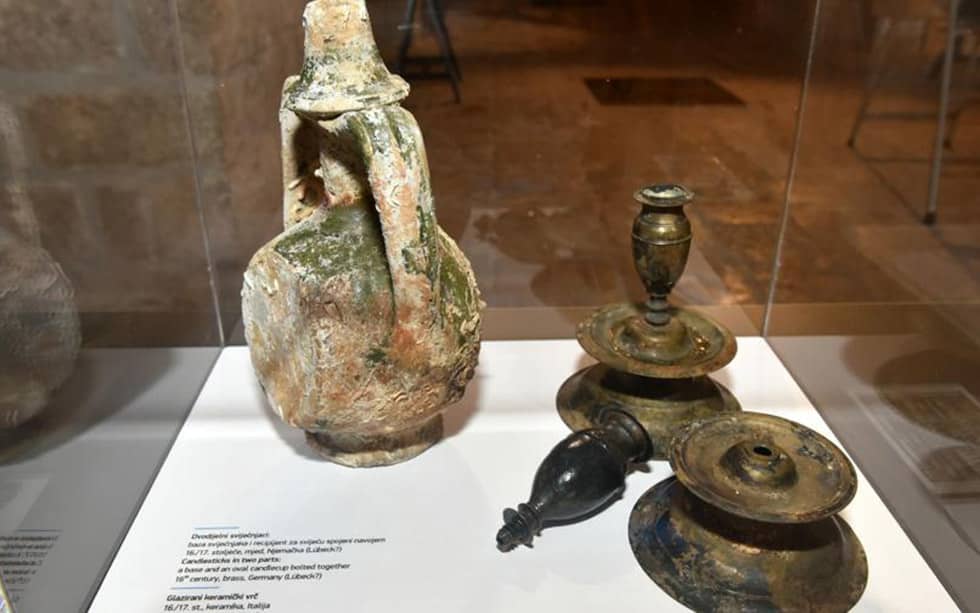
The museum's underwater archaeology collections contain material recovered from ancient, medieval and more recent shipwrecks. These objects provide evidence of the goods, equipment and vessels that once travelled through Adriatic waters.
Ship equipment and medical chests
Other collections preserve practical objects used aboard Dubrovnik ships, including figureheads, sea chests, galley equipment, shipboard religious objects and medical equipment. The museum owns particularly important 18th- and 19th-century ships' medicine chests.
Dubrovnik's maritime history
Throughout much of its history, the Dubrovnik Republic built its prosperity on maritime trade. Ragusan merchants and sailors connected the Adriatic with ports throughout the Mediterranean, the Black Sea and western Europe.
By the 15th and 16th centuries, Dubrovnik had developed a substantial merchant fleet and an international network of traders, diplomats and consuls. Its ships carried grain, salt, textiles, metals and many other goods between ports while the Republic carefully protected its commercial neutrality.
The museum gives useful context to this history because the wealth generated by shipping helped finance much of the architecture and cultural heritage that survives in Dubrovnik today.
Why does the word “argosy” relate to Dubrovnik?
One unusual linguistic reminder of Dubrovnik's maritime importance survives in the English word argosy, meaning a large merchant ship or a fleet of merchant vessels.
The word entered English through the Italian ragusea, referring to a ship from Ragusa, the historical name widely used for Dubrovnik. Ragusan merchant vessels became so familiar in European ports that the place name gradually developed into a general word for a large trading ship.
Shakespeare used the word in both The Merchant of Venice and The Taming of the Shrew, giving Dubrovnik's maritime reputation an unexpected place in English literary history.
Fort St John: a museum inside Dubrovnik's harbour fortress
The setting is part of the experience. The Maritime Museum has occupied the first and second floors of Fort St John, or Tvrđava svetog Ivana, since 1952.
Construction of the fortress began in 1346 and continued through later centuries, with much of its present appearance completed by the end of the 16th century. Its strategic position allowed Dubrovnik to defend the entrance to the Old City Port, one of the most important points in the city's defensive system.
That makes Fort St John an unusually appropriate home for the museum: the building that once protected Dubrovnik's harbour now explains the ships and maritime economy that made the harbour so important.
How long do you need?
Allow around 45-60 minutes for a normal visit. The museum occupies two floors but is not enormous, making it a manageable stop during a day of sightseeing in the Old Town.
If you are particularly interested in shipping, navigation, historic maps or the Dubrovnik Republic, allow longer. If maritime history is only a secondary interest, you can still see the main ship models and historical displays in less than an hour.
Dubrovnik Maritime Museum tickets
| Ticket | 2026 price |
|---|---|
| Adult | €10 |
| Schoolchildren and students | €7 |
| Family ticket | €25 |
| Dubrovnik Museums 10-museum ticket — adult | €20 |
| Dubrovnik Museums 10-museum ticket — student | €10 |
| Dubrovnik Museums 10-museum family ticket | €45 |
The family ticket is valid for up to two adults with children of the family aged 14 or younger.
If you plan to visit several Dubrovnik Museums properties, the 10-museum ticket may offer better value than buying separate tickets. It includes institutions such as the Rector's Palace, Maritime Museum and Ethnographic Museum.
The Maritime Museum is also currently included in the Dubrovnik Pass. This can make the museum an easy additional stop if you are already buying the pass for the Dubrovnik City Walls.
Opening hours
April 1-October 31
09:00-18:00
Closed Wednesday
November 1-March 31
09:00-16:00
Closed Wednesday
Dubrovnik Museums are closed on Christmas Day, New Year's Day and the Feast of St Blaise. On Christmas Eve and New Year's Eve, current museum hours are 09:00-12:00.
Checked: August 2026. Seasonal and holiday hours can change; check the official Dubrovnik Museums website before visiting.
How to find the Maritime Museum
The museum is inside Fort St John at the south-eastern corner of Dubrovnik's Old Town, directly beside the Old City Port.
If you are already exploring the historic centre, walk toward the harbour and Fort St John. The museum entrance leads to the exhibition spaces on the first and second floors of the fortress.
The location makes it particularly easy to combine with the Old City Port, Porporela and the Aquarium.
Combine the Maritime Museum with Dubrovnik Aquarium
The Dubrovnik Aquarium occupies the lower part of the same Fort St John complex, making the two attractions an obvious combination.
The Maritime Museum focuses on Dubrovnik's ships, sailors and maritime trade, while the Aquarium introduces marine life from the Adriatic. Visiting both gives a broader picture of Dubrovnik's relationship with the sea without requiring additional travel across the Old Town.
Afterwards, continue onto nearby Porporela for views back toward the harbour and city walls.
Other museums in Dubrovnik
The Maritime Museum is one of several museums that help explain the history of the Dubrovnik Republic and the wider region.
If maritime history interests you, the Rector's Palace provides useful political and cultural context for the Republic that controlled the merchant fleet. You can also explore our complete guide to museums in Dubrovnik.
Address and official information
Maritime Museum
Fort St John
Ul. kneza Damjana Jude 12
20000 Dubrovnik
Croatia
Official website: Dubrovnik Museums - Maritime Museum