
Dubrovnik's Ethnographic Museum offers a look at everyday life, clothing, crafts and rural traditions across the wider Dubrovnik region. The collection is displayed inside Rupe, a remarkable granary built by the Dubrovnik Republic in 1590, where grain was once stored in deep pits carved directly into the rock.
The building is as interesting as many of the exhibits. Visitors can see the original grain-storage system on the ground floor before exploring traditional costumes, textiles, agricultural life and handicrafts from Konavle, the Elaphiti Islands, Pelješac, Mljet, Korčula and other parts of the Dubrovnik area.
Dubrovnik Ethnographic Museum overview
| Also known as | Rupe Museum / Ethnographic Museum Rupe |
|---|---|
| Best for | Traditional culture, costumes, crafts and everyday life |
| Time needed | About 45-60 minutes |
| Adult ticket | €8 |
| Student / school ticket | €5 |
| Family ticket | €20 |
| Location | Western part of Dubrovnik Old Town |
| Closed | Tuesdays |
| Top highlights | Rupe grain pits, traditional costumes, textiles and rural-life displays |
Is the Ethnographic Museum in Dubrovnik worth visiting?
Yes, particularly if you want to understand how people in the Dubrovnik region actually lived rather than focusing only on the rulers, merchants and monumental architecture of the Dubrovnik Republic.
The Rector's Palace explains much of Dubrovnik's political and aristocratic history, while the Ethnographic Museum concentrates on subjects such as clothing, agriculture, household life, traditional crafts and rural communities.
It is also a relatively compact museum. Allow around 45-60 minutes for a normal visit, making Rupe easy to combine with other sights in Dubrovnik Old Town.
Why is the museum called Rupe?
Rupe means "holes", referring to the underground grain-storage pits inside the building. They were carved into the natural rock beneath the granary and formed part of the Dubrovnik Republic's system for keeping strategic reserves of grain.
The granary was built in 1590. Its ground floor contained 15 storage pits, while the upper levels were used for drying and handling grain.
Storing food securely was crucial for a densely populated walled city that depended heavily on imported grain. The Republic therefore maintained reserves that could help Dubrovnik survive shortages, disrupted trade or periods of political and military uncertainty.
The catastrophic earthquake of 1667 badly damaged the building. It was subsequently reconstructed into the form that largely survives today.
From state granary to Ethnographic Museum
Dubrovnik's ethnographic collection began to take shape during the first decades of the 20th century. Traditional costumes, embroidery and other objects documenting local culture were gradually collected, with important donations made by museum benefactor Jelka Miš.
The first permanent ethnographic display opened in 1950 on the second floor of Fort St John, which today houses the Dubrovnik Maritime Museum.
The collection later moved to Rupe, where the present permanent display opened on 2 February 1991. The granary proved an especially appropriate home because the building itself illustrates an important part of everyday economic life in the Dubrovnik Republic.
Today the Ethnographic Museum holds more than 10,000 objects connected with the traditional culture of the Dubrovnik region, Croatia and neighbouring areas.
What to see inside the Ethnographic Museum
The permanent exhibition is spread through the historic granary, with the building's original function forming part of the museum experience.
The Rupe grain-storage pits
The ground floor preserves the granary's original storage system in situ. These rock-cut pits are the feature that gives Rupe its name and make the museum different from a conventional collection displayed inside an unrelated historic building.
They also reveal something practical about the Dubrovnik Republic: maintaining reliable food reserves was considered important enough to justify constructing a specialised state granary inside the city walls.
Traditional costumes
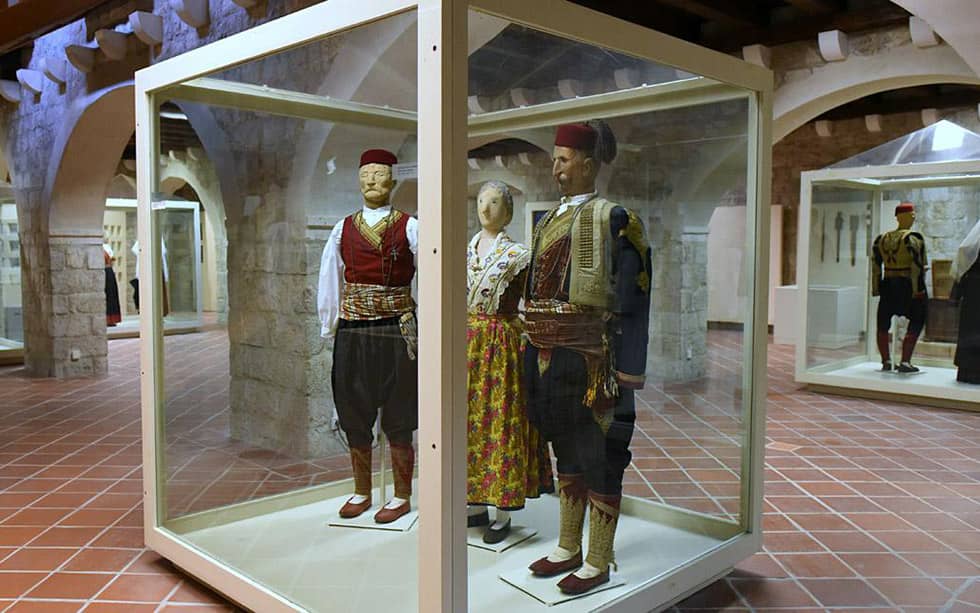
Traditional clothing is one of the museum's strongest collections. Particularly important costumes come from communities throughout the wider Dubrovnik region, including:
- Konavle
- Dubrovačko Primorje
- Elaphiti Islands
- Župa Dubrovačka
- Rijeka Dubrovačka
- Pelješac
- Korčula
- Mljet
- Lastovo
The displays help show how clothing differed between nearby communities and how dress communicated regional identity, social position, age and whether an occasion was part of everyday or festive life.
Textiles, embroidery and handicrafts
The museum has a particularly rich collection of textile handicrafts. Embroidery, lace and other forms of traditional needlework demonstrate both the technical skill involved and the strong regional differences that developed across southern Croatia.
Festive clothing from the 19th century includes some of the museum's most distinctive individual pieces.
Traditional agriculture and rural life
The upper floors also explore the traditional economy and rural architecture of the Dubrovnik surroundings. Agricultural tools and domestic objects illustrate how families worked the land, produced food and organised daily life outside the wealthy urban centre.
This makes Rupe particularly useful for visitors who have already seen Dubrovnik's palaces and churches but want to understand the communities that supplied and supported the city.
Jewellery and personal objects
Traditional jewellery and personal objects add another layer to the clothing displays. As with costumes, designs could vary between areas and provide clues about family, status and local identity.
Culture of the wider Dubrovnik region
One of the strengths of the Ethnographic Museum is that it does not treat Dubrovnik's culture as something confined within the Old Town walls. Its collections connect the city with the surrounding countryside, islands and coastal communities.
Costumes and objects from the Elaphiti Islands, Mljet, Pelješac, Korčula, Konavle and other areas demonstrate how varied traditional life could be within a relatively small geographic region.
The museum is also closely connected with seasonal customs and traditional crafts. Our guide to Easter traditions in Croatia explains Dubrovnik customs such as woven palm branches known as pome and wax-decorated pengana Easter eggs, traditions that are also documented and preserved by Dubrovnik Museums.
How long do you need?
Allow around 45-60 minutes for the Ethnographic Museum. That is normally enough time to see the original grain-storage areas and explore the main costume, textile and traditional-life displays without rushing.
Visitors with a particular interest in folk costume, textiles or regional culture may want longer. If you are mainly interested in the unusual Rupe building and a quick introduction to Dubrovnik's everyday history, the museum can fit comfortably into a shorter Old Town itinerary.
Dubrovnik Ethnographic Museum tickets
| Ticket | 2026 price |
|---|---|
| Adult | €8 |
| Schoolchildren and students | €5 |
| Family ticket | €20 |
| Dubrovnik Museums 10-museum ticket — adult | €20 |
| Dubrovnik Museums 10-museum ticket — student | €10 |
| Dubrovnik Museums 10-museum family ticket | €45 |
The family ticket is valid for up to two adults with their children aged 14 or younger.
The combined Dubrovnik Museums ticket is valid for seven days from its first use and includes the Ethnographic Museum together with the Rector's Palace, Maritime Museum, archaeological exhibitions in Revelin and several other Dubrovnik museums and galleries.
Children under seven and residents of Dubrovnik-Neretva County currently receive free admission. Tickets bought at Dubrovnik Museums ticket offices are paid by card rather than cash.
Opening hours
April 1-October 31
09:00-18:00
Closed Tuesday
November 1-March 31
09:00-16:00
Closed Tuesday
Dubrovnik Museums are closed on Christmas Day, New Year's Day and the Feast of St Blaise. On Christmas Eve and New Year's Eve, current opening hours are 09:00-12:00.
Is the Ethnographic Museum included in the Dubrovnik Pass?
The Dubrovnik Pass currently includes admission to Dubrovnik's city museums and galleries as well as the City Walls and public transport. This makes Rupe particularly easy to add to an itinerary if you already intend to buy the pass for Dubrovnik's major attractions.
If you are not using the Dubrovnik Pass but intend to visit several museums, compare the €8 individual Rupe ticket with the €20 combined Dubrovnik Museums ticket before buying.
How to get to the Ethnographic Museum Rupe
The Ethnographic Museum is at Od Rupa 3 in the western part of Dubrovnik Old Town. From Stradun, walk into the network of streets on the western side of the historic centre toward the Rupe granary.
The museum is slightly removed from Dubrovnik's busiest sightseeing axis, which often makes it feel calmer than major attractions around Luža Square and the Old City Port.
What to combine with Rupe
The museum works well as part of a western Old Town walk. Nearby cultural and historic stops include the House of Marin Držić and the streets leading back toward Stradun.
If you want to build a broader museum itinerary, combine Rupe with the Rector's Palace for the political history of the Republic and the Maritime Museum for Dubrovnik's trading and seafaring heritage.
Together, the three offer very different perspectives on the same society: government and aristocratic life in the Rector's Palace, maritime commerce in Fort St John, and traditional everyday culture at Rupe.
See our full guide to museums in Dubrovnik for more options.
Dubrovnik Cable Car Ride, Old Town Walking Tour plus City Walls
This Dubrovnik sightseeing package is a practical way to combine several of the city’s biggest highlights in one well-planned experience. It includes a cable car ride to Mt. Srđ for wide views over Dubrovnik and the Adriatic, followed by a guided walking tour through the UNESCO-listed Old Town, where landmarks such as the Church of St Blaise, Stradun, and Luža Square make much more sense with local context.
After the guided portion, the experience continues with prebooked access to the City Walls, so you can explore them at your own pace without arranging tickets separately. For first-time visitors in particular, it is a strong option because it brings together panoramic views, Old Town history, and one of Dubrovnik’s most famous attractions in a single, good-value tour.
Address and official information
Ethnographic Museum Rupe
Od Rupa 3
20000 Dubrovnik
Croatia
Official website: Dubrovnik Museums - Ethnographic Museum