
The legend of the Stone Gate is one of Zagreb's best-known stories, centred on the miraculous image of the Virgin Mary and Child that survived the great fire of 1731. The image is still venerated at the Stone Gate, one of the most distinctive landmarks in Zagreb's historic Upper Town.
The historical core of the story is documented: a contemporary chronicler recorded that the image was found undamaged after the fire and that a pious widow associated with the Modlar name had an altar erected beneath the gate. Around these events grew the much richer legend of Widow Modlar, a mysterious Christmas visitor, answered prayers and a painting believed to protect the city.
Widow Modlar
According to the legend, a pious widow named Katarina Modlar once lived above the Stone Gate in Zagreb. She had married young to a much older city judge named Ivan, who died at the age of 55 after a stone fell from a tower. The tower, neglected for years, was finally repaired after his death.
Many people in Gradec knew about the judge's darker side before his marriage to the younger woman. Beautiful, virtuous and deeply religious, Katarina was said to have had a good influence on him during their short life together. She never truly loved the marriage, however. Had it not been for her father's debt to Judge Ivan, she might have entered a convent. Instead, she respected her father's wishes and became a devoted wife, known throughout Gradec for her piety and generosity.
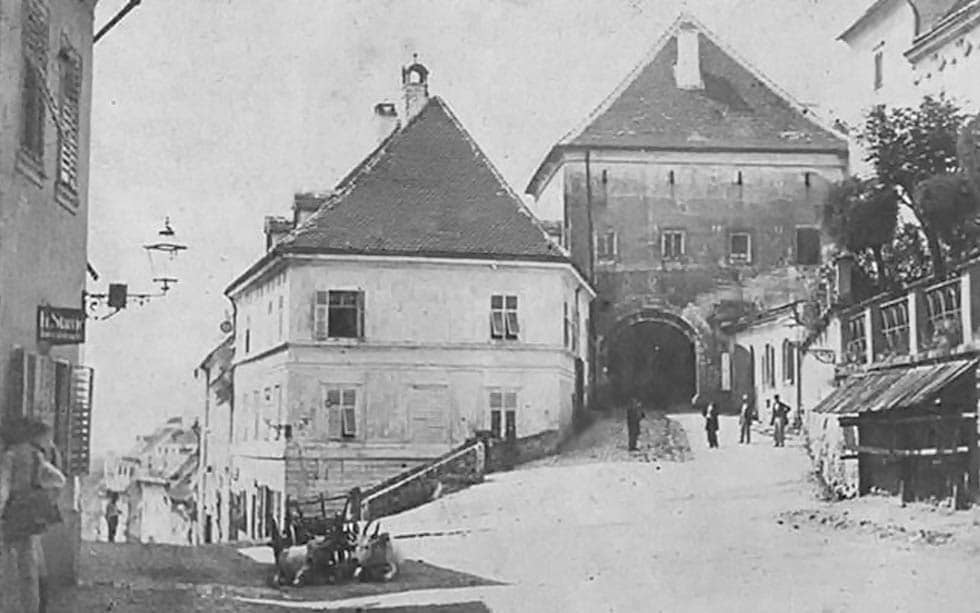
Judge Ivan left no children, but he did leave his widow a small chest full of gold, enough for her to live comfortably in her three rooms above the Stone Gate. Katarina turned one of those rooms into a chapel. Religious women visited her there, ate cake and praised her generosity, while in the evenings she read the frightening tales of Stefan Zagrabec and Stefan Fuček.
Old Zagreb Private Tour
Discover the history, culture, and modern way of life of Zagreb, the capital of Croatia, on this two-hour introduction tour.
With a leisurely pace, you'll explore the medieval predecessors of Zagreb, Gradec and Kaptol, as well as many of the city's essential sights, including Ban Jelačić Square, Stone Gate, St. Mark's Church, Lotrščak Tower and Zagreb Cathedral. Along the way, your guide can also provide recommendations for places to visit during your free time.
To two of her closest friends, Katarina confided a secret about the beautiful painting hanging on the wall of her chapel. Anyone who prayed sincerely to the Virgin Mary before the image, she said, could have a wish fulfilled.
The legend says Katarina had witnessed this herself. She once prayed for the sick son of her neighbours, the Magdić family, and the boy's fever disappeared. On another occasion she prayed for Eva Asparger, who was believed to be possessed, and soon afterwards Eva was seen walking calmly through the street again.
Mysterious Christmas Eve
But how had the painting come into Widow Modlar's possession in the first place?
The legend takes us back to Christmas Eve, a few months after Judge Ivan's death. Katarina was returning home from St. Mark's Church when she noticed a grey-haired old man near the Stone Gate. He wore only a light flax robe, his sandals were wet and he was shivering in the winter cold.
Feeling sorry for him, Katarina invited the stranger inside to warm himself. He drank a glass of wine and ate carp while Katarina watched the colour return to his face. Later they prayed together, and the old man recited from St. Paul's Letter to the Romans. During the first hour of Christmas Day, Katarina prepared a bed for him. Grateful for her kindness, he quickly fell asleep.
Zagreb City Tour including visit to Mirogoj Cemetery and Funicular Ride
Explore Zagreb on a 3.5-hour small-group tour combining driving and walking through some of the city's best-known sights.
The tour introduces Zagreb's history and architecture, the cobbled streets of Upper Town and the famous Mirogoj Cemetery. It also includes a ride on the Zagreb Funicular and pickup from selected centrally located hotels.
At first light, Katarina got out of bed, placed ham and cake on the table and waited for her guest to wake. Time passed. At around eight o'clock, she finally looked into his room.
The bed was neat, as though no one had slept in it. The old man had disappeared. In his place lay a painting of the Virgin Mary with the Child.
The Virgin was depicted in a red dress, her feet resting on the crescent moon. She appeared young and gentle, with brown hair, red lips and a smile in her eyes. The image seemed so alive that, according to the legend, Katarina could hardly look away.
She framed the painting and began praying before it every morning and evening.
The fire of 1731 and the miracle
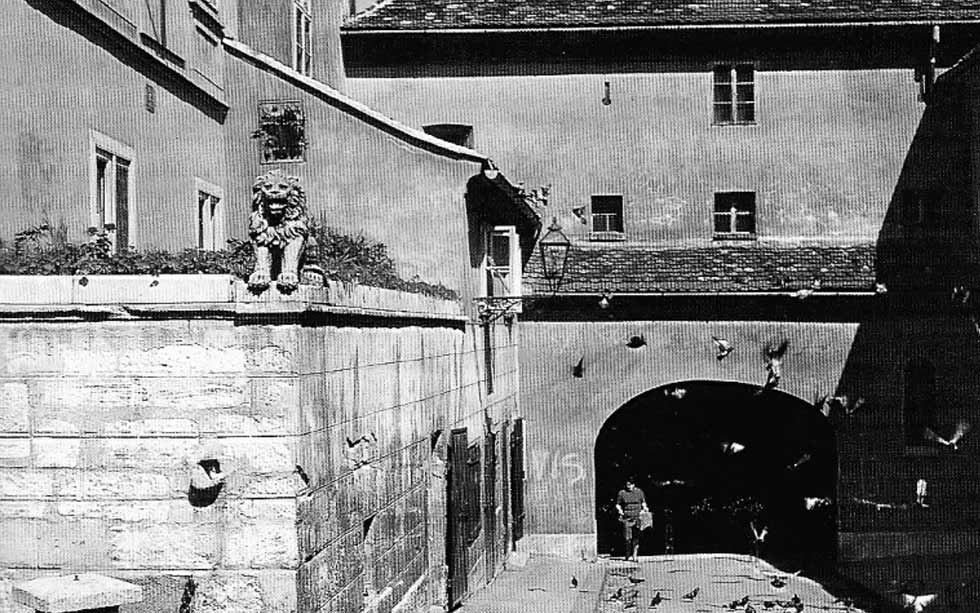
The event at the heart of the legend took place in 1731, when a devastating fire swept through Gradec and reached the Stone Gate. Zagreb City Museum records that the fire destroyed the wooden parts of the building, while the image of the Virgin Mary was found intact after the frame around it had burned.
A contemporary chronicler, Baltazar Adam Krčelić, recorded that the image was recovered undamaged from the ashes and that a pious widow associated with the Modlar name later had an altar erected beneath the arch of the Stone Gate.
The fuller legend surrounds that documented event with much more dramatic detail. In the version traditionally told here, the fire began at St. Joseph's Seminary when the drowsy warrior Klement Luković knocked a candle onto a pile of old papers. The flames reached a shelf, then the ceiling, and soon the alarm spread through Gradec.
The bells of St. Mark's Church rang out. Citizens rushed into the streets and formed chains to carry buckets of water from the wells. But a strong wind changed direction and drove the flames into the surrounding streets and houses.
Widow Modlar was away from Zagreb at the time. The legend says she had gone on pilgrimage to Trški Vrh and was staying with family in Krapina when she heard about the fire. She immediately returned home.
When she reached the Stone Gate, she found its roof and wooden structures destroyed. Her rooms, furniture, chapel and possessions had been consumed by the fire. Standing among the ruins, she prayed rather than despairing, believing that everything happened according to the will of God.
Then, as the story goes, the rain clouds that had helped save the city began to break. Among the grey ashes where Katarina's chapel had stood, she noticed a small patch of red. She stepped across the charred remains, pushed aside the ashes and discovered the painting of the Virgin Mary with the Child completely undamaged.
A miracle at the Stone Gate
Exhausted and grieving for their losses, the citizens gathered around. To them, the survival of the painting was a miracle and a sign of hope after the destruction of the fire.
The image soon became inseparable from the Stone Gate itself. People came to pray before it, asking the Virgin Mary for help and giving thanks for prayers they believed had been answered.
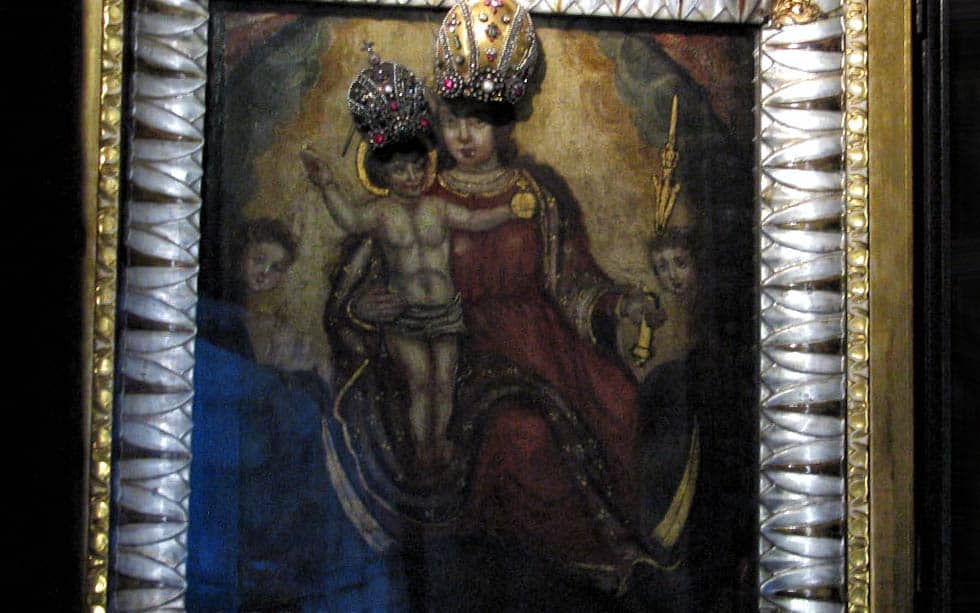
Widow Modlar understood the survival of the painting as a message: the image was no longer hers alone but belonged to the city. With the gold she still possessed, she had an altar built beneath the arch of the Stone Gate and placed the painting there.
Our Lady of the Stone Gate
Over time, devotion to Our Lady of the Stone Gate became deeply rooted in Zagreb. The old passageway developed into a place of prayer, and the walls around the shrine became covered with small votive plaques left by people giving thanks for help they believed they had received.
The legend continued to grow as well. It was said that people who tried to have the Stone Gate demolished suffered sudden misfortune or illness, while the Virgin continued to watch over the city from beneath the medieval arch.
In 1931, on the 200th anniversary of the shrine, golden crowns decorated with semi-precious stones were placed on the heads of Mary and Jesus in the miraculous image. In 1991, Our Lady of the Stone Gate was declared the patroness of Zagreb. Her feast day, 31 May, is also celebrated as the Day of the City of Zagreb.