
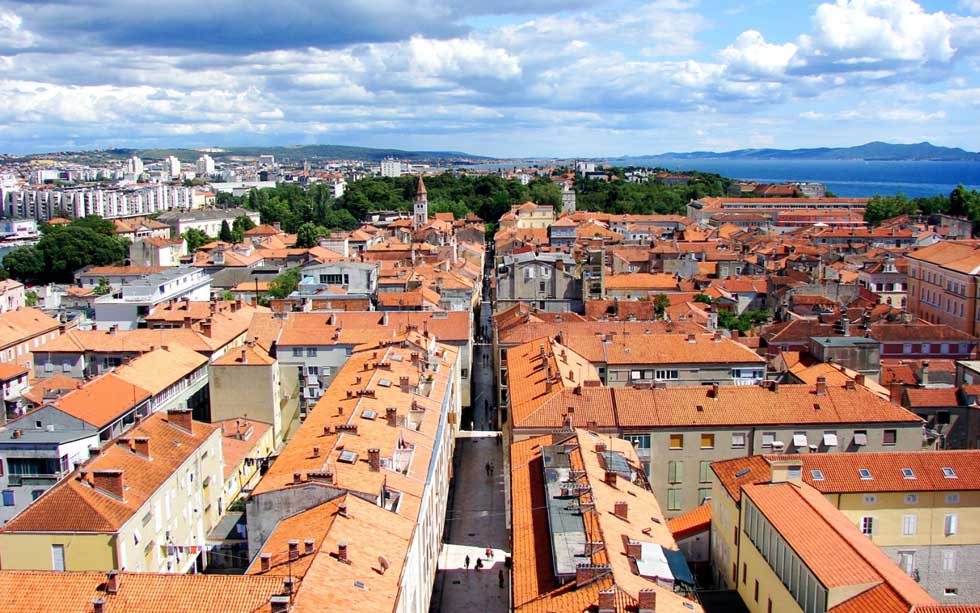
Kalelarga is the best-known street in Zadar and one of the easiest ways to understand how the Old Town fits together. Officially called Široka ulica, it follows the line of the ancient Roman decumanus through the historic peninsula and still functions as the city’s natural promenade, the route locals and visitors use to cross the centre, meet up, stop for coffee, and move between major sights.
For most visitors, Kalelarga is not a stand-alone attraction in the way a museum or viewpoint is. Its value lies in how much of central Zadar it connects in a short walk. It links key parts of the old core near Petar Zoranić Square, Narodni trg and the Forum area, so it works best as part of a broader route that also includes the Roman Forum and the Sea Organ. Walk it for orientation, for atmosphere, and for one of the clearest glimpses into Zadar’s Roman and everyday urban life.
Kalelarga quick facts
- What it is: Zadar’s main historic street, officially Široka ulica
- Why it matters: it follows the route of the ancient Roman decumanus and remains one of the city’s best-known symbols
- Where it is: in Zadar Old Town, running through the historic peninsula between the eastern approach and the Forum side of the core
- How much time to allow: about 15 to 30 minutes to walk it, or 30 to 45 minutes if you stop in nearby squares and churches
- Best for: first-time visitors, self-guided Old Town walks, short sightseeing routes, and getting your bearings quickly
- Best time to go: morning for a calmer feel and easier photos, or early evening when the street feels livelier
- Best combined with: the Roman Forum, St Donatus, Narodni trg, the waterfront, and other attractions in Zadar
- Admission and hours: free to visit and accessible at all hours as a public street
What is Kalelarga and why is it famous?
Kalelarga is Zadar’s main historic street and one of the city’s best-known landmarks. Officially called Široka ulica, it follows the line of the ancient Roman decumanus through the Old Town and is often described as probably older than the city itself. More than a route through the centre, it is one of Zadar’s strongest urban symbols, a street associated with everyday life, local identity, processions, celebrations, and the social rhythm of the city.
Over the centuries, Kalelarga was known by several names, including Via Magna, Strada Grande, Ruga Magistra and, from Venetian times, Calle Larga. Today it still runs through the heart of the peninsula, along the southern edge of Narodni trg, tracing the main longitudinal Roman street that once linked the city gates in the area of present-day Petar Zoranić Square with the Forum and Capitol.
It works best when combined with nearby sights such as the Roman Forum and other central attractions in Zadar, because its real appeal lies in how naturally it connects the historic centre.
Walking it on your own is easy, but a guided route can help connect the street’s Roman origins, its role in local daily life, and the nearby landmarks that give this part of the city its full character. That is where the Best of Zadar with St. Anastasia viewpoint tour fits especially well. It combines the atmosphere of Kalelarga and the historic core with expert context and a higher vantage point over the peninsula, making it a practical choice for first-time visitors who want a clearer introduction to Zadar in one well-structured walk.
Best of Zadar with St. Anastasia viewpoint
Join a guided sightseeing tour of Zadar and visit some of its most popular sites.
Your knowledgeable guide will take you on a walking tour to see the city's landmarks including the Zadar Land City Gates, Roman Forum, and the famous Sea Organ that produces unique sounds from the movement of the tides.
The tour also includes an admission ticket to the Cathedral of St. Anastasia. You'll also see the 9th-century Byzantine Church of Donat and walk along the ancient main street Kalelarga. The tour includes guidance from a certified local guide and the entrance fee for St. Anastasia's Cathedral Bell Tower.
What to see along Kalelarga
The best things to see along Kalelarga are not limited to the street itself. The real appeal is how easily this walk connects some of Zadar Old Town’s most important squares, churches, archaeological areas, and waterfront landmarks. In a short distance, you move from the everyday rhythm of the city into its monumental core, which is why Kalelarga works so well as the backbone of a self-guided walk.
- Petar Zoranić Square - a practical eastern starting point for entering the Old Town and beginning your walk across the peninsula
- Šime Budinić Square - a natural transition point as the route starts to feel more central and more distinctly urban
- Narodni trg - one of the key civic spaces near Kalelarga and one of the best places to feel the social side of the historic centre
- Cafés, shops and street life - part of Kalelarga’s appeal is simply walking it slowly, browsing, and watching how locals still use the street
- Roman Forum - the most important archaeological stop at the western side of the route and one of the clearest reminders of the street’s Roman origin
- Church of St Donatus - the city’s best-known pre-Romanesque landmark and one of the most recognizable silhouettes in Zadar
- St Anastasia’s Cathedral - an essential stop if you want to add a major church and a stronger sense of Zadar’s monumental core
- Sea Organ and Greeting to the Sun - not on Kalelarga itself, but easy to add at the end of the walk if you continue toward the waterfront
The smartest way to approach this part of Zadar is not to treat Kalelarga as a checklist stop. Use it as a walking axis instead. Start from the eastern side of the Old Town, move through the central squares, then finish near the Roman Forum before continuing to the Sea Organ or the Greeting to the Sun nearby.
Kalelarga today: cafés, shopping and the everyday pulse of Zadar
Kalelarga still works as Zadar’s everyday meeting street as much as a historic route through the Old Town. While visitors usually arrive because of the city’s Roman past and nearby landmarks, what gives the street its character today is the way it is still used, for strolling, meeting friends, stopping for coffee, browsing small shops, and moving between the main squares and monuments of the peninsula.
This is one of the best places in Zadar to slow down and experience the social side of the historic centre. Rather than treating it as a street to rush through, it makes more sense to walk it gradually, pause in the square areas around it, and let it lead you toward the Roman Forum, the cathedral area, or the waterfront. In summer especially, Kalelarga feels livelier in the late afternoon and evening, when the Old Town fills out and the street becomes part sightseeing route, part local promenade.
Shopping here is modest rather than destination-led, so most visitors will get more value from the atmosphere than from planning a retail stop. The stronger reason to spend time on Kalelarga is that it captures the rhythm of the city better than almost anywhere else in the centre. If you want the polished landmark version of Zadar, continue toward the major sights. If you want the lived-in version, this is the street where that feeling comes through most clearly.
Where is Kalelarga in Zadar?
Kalelarga is in the heart of Zadar Old Town, running east-west across the historic peninsula. Officially called Široka ulica, it follows the route of the ancient Roman decumanus and works as one of the clearest orientation lines in the old centre. If you are exploring the peninsula on foot, this is the street that helps connect the eastern approach around Petar Zoranić Square with the Forum side of the city.
In practical terms, Kalelarga is less a hidden lane and more the central spine of the Old Town. It passes along the southern edge of Narodni trg and makes it easy to move between some of Zadar’s best-known landmarks without overplanning your route.
Start: Petar Zoranić Square and the eastern Old Town approach
A simple way to begin is from the Petar Zoranić Square side of the peninsula, where the eastern entrance into the historic centre feels most intuitive for many visitors arriving on foot.
Middle: Šime Budinić Square and Narodni trg
As you continue west, the area around Šime Budinić Square and Narodni trg gives the street more of its social character. This central stretch is where Kalelarga feels most like a lived-in urban space, with cafés, shops, movement, and the sense that you are crossing the busiest part of the historic centre.
Finish: Roman Forum side, St Donatus, St Anastasia and the waterfront direction
Further along, the route naturally pulls you toward the monumental core around the Roman Forum, the Church of St Donatus, and St Anastasia’s Cathedral. From there, it is easy to continue toward the waterfront and combine your walk with the Sea Organ or other central attractions in Zadar.
Best time to walk Kalelarga
The best time to walk Kalelarga is in the morning for a calmer feel or in the late afternoon and early evening for atmosphere. Because Zadar has hot Mediterranean summers, the middle of the day can feel bright, exposed, and less comfortable for a slower Old Town walk, especially in peak season. If your priority is easier photos and a quieter impression of the street, go earlier. If your priority is energy, people-watching, and café life, go later in the day.
- Morning - best for a more relaxed walk, clearer orientation, and fewer people in the central stretch
- Late afternoon - good balance between sightseeing and atmosphere as the Old Town starts to fill out
- Early evening - best if you want Kalelarga to feel part of a wider promenade through the centre toward the waterfront
- Midday in summer - usually the least pleasant time if you want to walk slowly, stop often, or take photos comfortably
Practical tips before you go
- Do not treat it as a stand-alone stop. Kalelarga works best as the central stretch of a wider Old Town walk that also includes the Roman Forum, cathedral area, and waterfront.
- Go earlier or later in summer. Zadar’s summers are hot, so morning is usually better for a calmer walk, while late afternoon and early evening bring more atmosphere.
- Wear comfortable walking shoes. The Old Town is made for exploring on foot, and even short sightseeing routes are easier when you plan for steady pavement walking rather than a quick photo stop.
- Come for atmosphere as much as landmarks. Kalelarga is important because of what it connects and how it is used, not because every metre of the street is packed with monuments.
- Build it into your sunset-side route. One of the easiest ways to use Kalelarga well is to walk through the Old Town first, then continue toward the waterfront later in the day. Don't forget to include Greeting to the Sun and Sea Organ in the mix, sunsets and nights can be truly magical if the conditions are right.
- No ticket or opening hours planning is needed. Kalelarga is a public street, so the real planning question is how you combine it with nearby sights rather than how you book access.
FAQ about Kalelarga, Zadar
What does Kalelarga mean?
Kalelarga comes from the Venetian-era name Calle Larga, which means “Wide Street.” That matches its official Croatian name, Široka ulica, and helps explain why it has long been treated as Zadar’s main street and one of the city’s strongest symbols.
Is Kalelarga the same as Široka ulica?
Yes. Kalelarga is the better-known popular name, while Široka ulica is the official street name. In practice, visitors will usually hear Kalelarga used far more often than the formal name.
How long does it take to walk Kalelarga?
The walk itself is short, but most visitors spend longer because Kalelarga naturally blends into nearby squares, cafés, and the Forum area. If you are just crossing it, it takes only a few minutes. If you are using it as part of a relaxed Old Town walk, allow extra time for stops and nearby landmarks.
What should I see near Kalelarga?
The best nearby stops are Narodni trg, the Roman Forum, St Donatus, St Anastasia’s Cathedral, and, if you continue toward the waterfront, the Sea Organ and Greeting to the Sun. That is why Kalelarga works best as a connector within a broader Old Town route rather than as a stand-alone attraction.
Is Kalelarga worth visiting at night?
Yes, especially if you want atmosphere rather than just orientation. Early evening is one of the best times to walk Kalelarga because the Old Town feels livelier, the cafés are active, and the street works naturally as part of a promenade through the historic centre.
Do you need a ticket to visit Kalelarga?
No. Kalelarga is a public street, so there is no ticket, booking, or opening-hours planning involved. The only real question is how you want to combine it with nearby sights in Zadar Old Town.