
Island Koločep (Kalamota) Travel Guide
Koločep, also known as Kalamota, is the closest of the three main Elaphiti Islands to Dubrovnik and one of the easiest island escapes from the mainland. This small, car-free island is known for its clear Adriatic waters, pine-covered coastline, and relaxed pace, making it ideal for swimming, snorkelling, gentle walks, and quiet day trips away from the city crowds.
With a small permanent population and compact size, Koločep is easy to explore on foot, with walking paths linking its two villages and leading to coves, viewpoints, and swimming spots along the coast. It is also commonly included in popular day boat tours from Dubrovnik, especially for visitors who want to swim and snorkel in Koločep’s sea caves, including the Blue and Green Cave.
Island Koločep: pine forests, coves, and a relaxed island rhythm
Koločep has two settlements, Donje Čelo and Gornje Čelo, connected by footpaths that pass through dense pine forest and along the shoreline. Instead of long sandy beaches, the island offers rocky and pebbled coves with calm, clear water, particularly suited to swimming and snorkelling on calm summer days.
Koločep Blue and Green Cave tour from Dubrovnik (with Šunj Beach stop)
A good option if you want to combine Koločep’s sea caves with a fast, organised half-day on the water.
This speedboat tour typically includes time to swim or snorkel in the Blue and Green Cave area on Koločep, a stop at the sandy Šunj Beach on Lopud, and scenic cruising near Dubrovnik’s city walls and Fort Lovrijenac. Snacks and drinks are included, and you can usually choose between a morning or afternoon departure depending on your schedule.
Koločep Island overview
- Location: One of the Elaphiti Islands, just off the coast of Dubrovnik
- Best for: Easy day trips, swimming, snorkelling, light hiking, and a quieter alternative to busy Dubrovnik beaches
- Character: Small, car-free island with a relaxed pace and traditional villages
- Landscape: Pine forests, rocky coastline, pebbled coves, and clear Adriatic water
- Settlements: Donje Čelo and Gornje Čelo, connected by walking paths
- Getting there: Public ferry from Dubrovnik Gruž Port
- Getting around: On foot only; all main spots are reachable by walking trails
- Time needed: Half-day for a quick visit, full day for swimming and walking, or overnight for a quieter experience
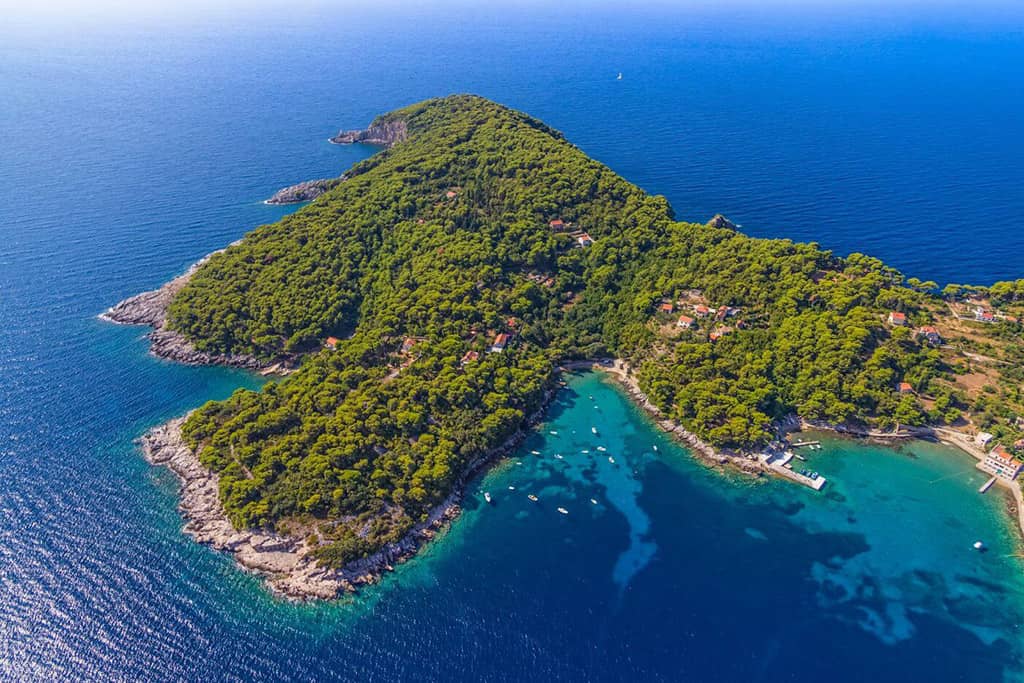
Where is Koločep and what are the two villages?
Koločep (Kalamota) sits in the Adriatic Sea just northwest of Dubrovnik, as part of the Elaphiti archipelago. Because it is the closest inhabited Elaphiti island to Dubrovnik, it works well both as a quick half-day escape and as a full-day island trip when you want a quieter alternative to the mainland.
The island has two small settlements, Donje Čelo and Gornje Čelo, set in sheltered bays and linked by footpaths through pine forest. Donje Čelo is typically the main arrival point for public ferries and is the more common base for day trippers, while Gornje Čelo feels calmer and more tucked away, with an easy walking connection back across the island.
There are no cars on Koločep, so planning is simple: choose which village you want to start in, then explore on foot between coves, viewpoints, and swimming spots along the coast.
How to get to Koločep from Dubrovnik
Public ferry from Dubrovnik Gruž Port
The most common way to reach Koločep is by public ferry operated by Jadrolinija from Dubrovnik’s Gruž Port. Ferries run year-round, with increased frequency during the main tourist season, and the short crossing makes Koločep one of the easiest island day trips from Dubrovnik.
Koločep is served by the same regular state ferry line (line 807) that continues onward to Lopud and Šipan. This makes it possible to combine more than one Elaphiti island in a single day if ferry times align.
According to Jadrolinija’s 2025 price list, the adult passenger fare from Dubrovnik to Koločep is €5.40 one way during the main season and €3.40 one way outside the main season. A same-day return ticket costs €10.80 in season or €6.80 off-season. Ticket prices are the same in both directions and are purchased at the Jadrolinija office at Gruž Port.
Because ferry schedules vary by season and day of the week, it is recommended to check the latest timetable before you go, especially if you plan to return to Dubrovnik the same day. For a detailed overview of routes and operators, see the full Dubrovnik to Elaphiti Islands ferry guide.
Where to buy ferry tickets
Tickets are sold at the Jadrolinija ticket office in Gruž Port and, on some sailings, directly on board the ferry. During summer, it is advisable to arrive early, as morning departures towards the Elaphiti Islands are often the busiest.
Private boat and speedboat options
Another popular option is visiting Koločep as part of a private boat or speedboat tour from Dubrovnik. These tours usually combine Koločep with other Elaphiti Islands and nearby sea caves, and they suit travellers who want a flexible itinerary or a shorter, more active day on the water.
Elaphiti Islands full-day cruise (Koločep, Lopud, and Šipan) from Dubrovnik
A simple option if you want to see multiple Elaphiti islands in one day without planning ferry times.
This full-day cruise typically visits Koločep along with Lopud and Šipan, with free time to swim, walk around the villages, and enjoy a relaxed day on the sea. It is a good fit for travellers who prefer an organised itinerary and a slower pace compared to speedboat tours.
Top things to do on Koločep
Swim and snorkel in bays and coves
Swimming is one of the main reasons visitors come to Koločep. The island does not have large resort-style beaches, but instead offers rocky and pebbled coves with exceptionally clear water. Calm sea conditions are common in summer, making these spots well suited to swimming and snorkelling close to shore. Water shoes are useful, as most entry points are rocky rather than sandy.
Visit the Blue Cave and nearby sea caves
The sea caves around Koločep, including the Blue and Green Cave, are among the island’s best-known natural sights. They are usually visited by boat on organised tours from Dubrovnik or by kayak when sea conditions allow. Access depends heavily on weather and sea state, so conditions on the day determine whether swimming inside the caves is possible.
Walk the island paths between villages and coves
Koločep is easy to explore on foot, with well-used paths linking Donje Čelo and Gornje Čelo and branching off toward the coast. Walking routes pass through pine forest, small fields, and quiet bays, offering a simple way to see the island without needing transport. Most walks are gentle rather than demanding, suitable for casual hikers.
Explore small churches and traces of Dubrovnik Republic history
Despite its small size, Koločep has several historic churches and remains that reflect its long connection with Dubrovnik and the former Dubrovnik Republic. These sites are scattered across the island and can be combined naturally with walking routes, adding a cultural layer to an otherwise nature-focused visit.
Best beaches and swimming spots on Koločep
Koločep has a mix of sandy, pebbly, and rocky swimming areas, depending on which bay you choose. The sea is usually very clear, and many visitors come specifically for relaxed swimming and snorkelling close to shore.
Donje Čelo is the main arrival bay and the best-known beach area on the island, with a long sandy beach right by the village. It is an easy choice for families and anyone who wants straightforward access to the sea without a long walk.
Gornje Čelo feels quieter and more tucked away, with smaller swimming spots around the bay and along the nearby coast. These areas are often better for a calm swim and snorkelling, especially if you prefer pebbly or rocky entry points and fewer day-trip crowds.
If you plan to explore coves beyond the villages, bring water shoes and carry drinking water. Some of the nicest swimming spots are simple rocky platforms and small coves reached on footpaths rather than classic developed beaches.
Suggested itineraries for visiting Koločep
Koločep in half a day
A half-day visit works well if you are short on time or combining Koločep with another Elaphiti island.
- Arrive by morning ferry and spend time swimming at Donje Čelo sandy beach
- Walk part of the coastal path or towards Gornje Čelo for views and quieter coves
- Enjoy a light lunch or drink near the harbour before returning to Dubrovnik
Koločep full-day visit
A full day allows you to see more of the island at a relaxed pace and enjoy multiple swimming spots.
- Arrive in Donje Čelo and walk across the island to Gornje Čelo through pine forest paths
- Swim or snorkel in coves along the way or near Gornje Čelo
- Return via a different walking route and spend late afternoon by the sea before the evening ferry
Overnight stay on Koločep
Staying overnight is the best way to experience Koločep once day-trippers leave.
- Enjoy quiet evenings and early-morning swims with minimal crowds
- Explore walking paths and coves at your own pace
- Use the island as a peaceful base for swimming and relaxation close to Dubrovnik
Where to eat and drink on Koločep
Food options on Koločep are limited but convenient, centred mainly around the two villages. Most places serve simple Mediterranean dishes, seafood, grilled meat, and light lunches suited to swimmers and day trippers.
Donje Čelo has the widest choice, with restaurants and cafés close to the ferry landing and sandy beach. This is the easiest place to stop for lunch, a cold drink, or coffee between swims, especially if you are visiting the island for just a few hours.
Gornje Čelo is quieter and has fewer dining options, but it can be a pleasant place for a relaxed meal if you are staying overnight or walking across the island. Opening hours can be shorter outside the peak summer months.
During high season, it is a good idea to plan lunch times in advance, as kitchens can get busy when ferries arrive. Outside summer, check ahead or carry snacks and water, as not all restaurants operate year-round.
Where to stay on Koločep
Koločep is best known as a day-trip destination, but staying overnight offers a much quieter and more relaxed experience once the ferries and boat tours leave. Accommodation on the island is small-scale and focused on apartments and guesthouses rather than large hotels.
Donje Čelo is the most practical place to stay if you want easy ferry access, dining options, and a sandy beach close by. It suits travellers planning short stays or those who prefer to be close to the main arrival point.
Gornje Čelo appeals to visitors looking for a calmer setting and a more traditional village feel. Staying here works well if you plan to explore the island on foot and prioritise peace and quiet over immediate access to services.
For a full overview of available accommodation, including apartments and small guesthouses, see the Koločep accommodation guide.
Accommodation on Koločep is limited and fills quickly in summer, so booking well in advance is recommended for July and August. Outside peak season, options are fewer but prices are generally lower, and the island is noticeably quieter.
Best time to visit Koločep
Koločep can be visited year-round, but the experience changes significantly with the season. The best time to visit depends on whether you prioritise swimming, walking, or avoiding crowds.
Late spring and early summer (May to June) are ideal for most visitors. The sea is warming up, ferry connections are frequent, and the island is lively without feeling crowded. Walking paths are comfortable to explore, and swimming conditions are usually good on calm days.
Peak summer (July and August) brings the warmest sea and the most reliable swimming weather, but also the highest number of day-trippers arriving by ferry and boat tours from Dubrovnik. Visiting early in the morning or staying overnight helps avoid the busiest periods.
Early autumn (September) is another excellent option, with warm sea temperatures, fewer visitors, and a slower pace across the island. Many travellers consider this the best balance between good weather and a quieter atmosphere.
For a better idea of temperatures, sunshine, and seasonal conditions, check the detailed weather overview for Dubrovnik, which closely reflects conditions on Koločep and the surrounding islands.
Outside the main season, ferry services are less frequent and some restaurants and accommodation close for the winter. While the island remains peaceful, swimming depends more on weather conditions, and planning ahead becomes more important.
Koločep vs Lopud vs Šipan: which Elaphiti island should you choose?
The three main Elaphiti islands closest to Dubrovnik each offer a different experience. Choosing the right one depends on how much time you have and what kind of island atmosphere you prefer.
- Koločep: The closest island to Dubrovnik and completely car-free, best for swimming, snorkelling, gentle walks, and a quiet escape close to the mainland. Ideal if you want a relaxed half-day or full-day trip without travelling far.
- Lopud: A popular choice for beach-focused day trips, with a more developed village feel and access to Šunj Beach, one of the best-known sandy beaches in the Dubrovnik area. See the full Lopud Island guide for ideas on what to do.
- Šipan: The largest and most rural of the three, with small villages, olive groves, and a slower, more local pace. Best for longer visits and travellers who prefer a less touristic island experience, with more space to explore. See the Šipan Island guide for details.
If you are short on time, Koločep is the easiest choice. For sandy beaches, Lopud stands out, while Šipan works best if you want space, quiet, and a more traditional island feel.
Practical tips for visiting Koločep
- Wear suitable footwear: Although Donje Čelo has a sandy beach, many swimming spots around the island have rocky or pebbled entry points. Water shoes are useful if you plan to explore coves beyond the main village.
- Bring water and sun protection: Shade is limited outside the villages, especially along walking paths and coastal routes. Carry enough drinking water, sunscreen, and a hat during warmer months.
- Plan around ferry times: Public ferries run on a fixed schedule, which changes by season. Always check return times in advance to avoid being stranded late in the day.
- Cash is helpful: Some smaller cafés, restaurants, and private accommodation may prefer cash, particularly outside peak summer.
- Respect the quiet atmosphere: Koločep is a small residential island. Keep noise down near villages and walking paths, especially in the evening and early morning.
- Check sea conditions: Activities such as swimming to caves or joining boat tours depend on weather and sea state. Calm days offer the best visibility and safest conditions.
FAQ: Koločep Island
Is Koločep a car-free island?
Yes. Koločep is completely car-free, with no public roads or vehicles. All movement on the island is on foot, using walking paths that connect the villages, coves, and swimming areas.
How long is the ferry trip from Dubrovnik to Koločep?
The ferry crossing from Dubrovnik to Koločep is short and suitable for a day trip. Travel time varies slightly depending on the route and number of stops, so it is best to check the current timetable close to your travel date.
Is Koločep worth visiting on a day trip?
Yes. Koločep is one of the easiest islands to visit from Dubrovnik and works very well as a half-day or full-day trip, especially if you enjoy swimming, snorkelling, and relaxed walking rather than sightseeing attractions.
Can you visit Koločep and Lopud in one day?
It is possible to visit both Koločep and Lopud in one day using the regular ferry line, provided that ferry times align. Many travellers also choose organised boat tours if they want to see multiple Elaphiti islands without managing ferry schedules.
Plan your visit to the Elaphiti Islands
If you are planning a longer stay or want to explore more beyond Koločep, these guides can help you organise ferries, accommodation, and additional day trips from Dubrovnik.
- Elaphiti Islands overview - A practical guide to Koločep, Lopud, and Šipan, including what makes each island different.
- Where to stay on Koločep - Apartments and small guesthouses for travellers who want to stay overnight.
- Ferries from Dubrovnik to the Elaphiti Islands - Routes, ports, and planning tips for island hopping.
- More day trips from Dubrovnik - Ideas for island and mainland excursions beyond Koločep.