
Split Fish Market, known locally as Peškarija, is one of the most distinctive morning stops in the city centre. Set just off Marmont Street, it is more than a place to buy seafood - it is a working market, a local landmark, and a small but memorable part of everyday Split life.
The market sits close to the Old Town and pairs easily with Diocletian's Palace and the wider shopping areas in Split, giving you a quick look at the Adriatic catch, the market atmosphere, and a more local side of the city than the Riva waterfront alone. For the freshest selection and liveliest feel, go early in the day.
Split Fish Market highlights
- Local name: Peškarija
- Where it is: In central Split, beside Marmont Street and a short walk from the Old Town and Riva
- Best time to go: Early morning, when the choice is best and the market feels most alive
- What to expect: Fresh fish and shellfish, market noise, wet floors, and a real working-market atmosphere
- Who it suits: Food lovers, photographers, curious first-time visitors, and anyone who wants to see a more local side of Split
- Worth visiting if you are not shopping? Yes - it works as a quick cultural stop as much as a practical market
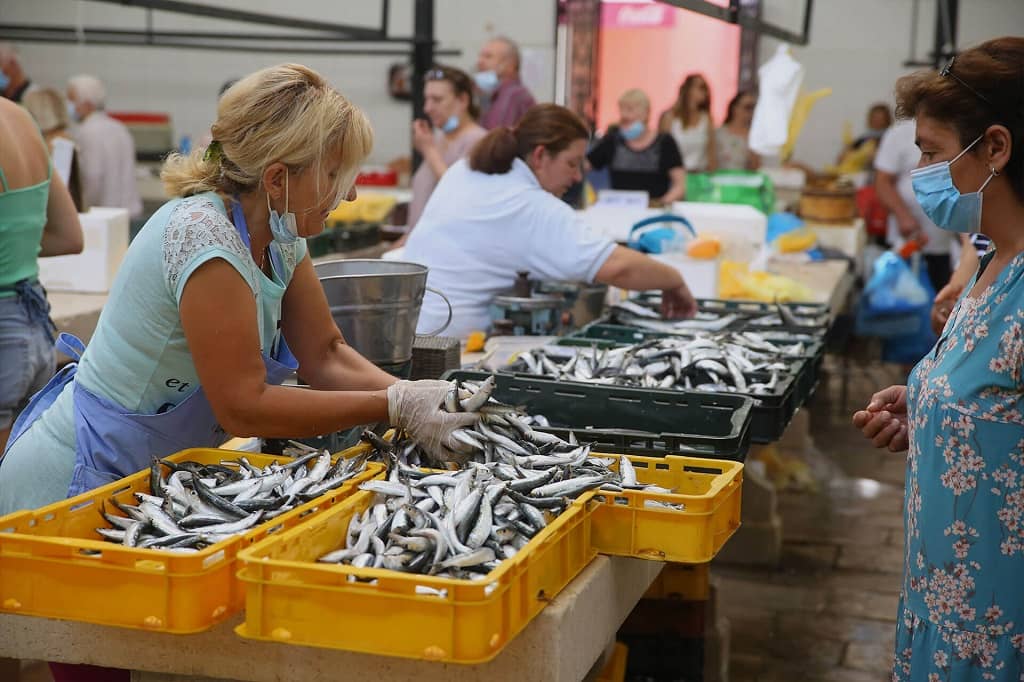
What is Split Fish Market?
Split Fish Market, known locally as Peškarija, is a historic covered fish market in the city centre of Split. It is a real working market first, but it is also worth seeing as a small architectural landmark and a quick cultural stop near Marmont Street.
Why Peškarija matters in Split
Peškarija is not just a place to buy seafood. It is one of the market spaces that still shows the everyday rhythm of Split, with locals coming for fresh Adriatic catch and visitors getting a more grounded feel for the city than they would from the waterfront alone.
The Secession-style building and local character
The market is housed in a Secession-style building that is more than a century old, with ironwork and white stone slabs that give it a character very different from a modern supermarket or indoor hall. Even a short walk through the market feels distinctly local, especially in the morning when the counters are fuller and the trading atmosphere is still at its liveliest.
Why there are no flies
One of the details people most often notice here is the unusual lack of flies. The standard local explanation is that nearby sulphur from the old spa area repels them, linking the market to the wider story of why this part of Split mattered long before it became a visitor stop.
What to expect at the market
Expect a real working fish market rather than a polished visitor attraction. Split Fish Market is best in the morning, when the counters are fuller, the atmosphere is livelier, and the market feels most connected to everyday life in the city.
What seafood you are likely to see
The exact selection changes day by day, but the market is known for fresh Adriatic seafood ranging from everyday fish such as sardines and mackerel to higher-value species such as dentex, red porgy and sea bass. You may also see shellfish, lobster and other seasonal catch.
What the atmosphere is like in the morning
In the morning, Peškarija feels active, practical and unmistakably local. You are likely to see shoppers moving quickly between counters, fish displayed on white stone slabs, and a market setting that feels very different from Split's more polished waterfront and cafe areas. It is a good place to pause for a few minutes if you want to see a more everyday side of the city.
Who should visit - shoppers vs sightseers
If you are staying in an apartment or anywhere with a kitchen, this is one of the best places in central Split to buy fresh seafood. If you are not cooking, it still works well as a short cultural stop while exploring the Old Town.
What visitors should know before buying fish
If you are buying seafood, look for clear eyes, firm flesh, and a fresh sea smell rather than a strong fishy odour. It also makes sense to buy only what you plan to cook the same day. If you are staying in self-catering accommodation, stick to species you already know how to prepare or ask for simple local advice. Carrying some cash is also sensible for small market purchases.
Opening hours, location and how to get there
Split Fish Market is in the city centre, right by Marmont Street, so it is easy to add to a walk through the Old Town. The working hours are 06:00 - 13:00, but if you are visiting on a Sunday, public holiday, or outside the main season, it is smart to treat early morning as the safest window and check locally if timing matters.
Exact address and where it sits in the Old Town area
The listed address is Obrov 5, 21000 Split. In practice, most visitors find it by using Marmont Street as their main reference point rather than the street number, because the market sits right in the central pedestrian area between the waterfront side of town and the wider Old Town core.
Walking from Riva, Diocletian's Palace and the main bus station
From the Riva, the walk is very short. From Diocletian's Palace, it is also an easy extension on foot through the city centre rather than a separate trip. If you are arriving from the main bus station in Split, expect a straightforward walk through the port-side approach and into the Old Town area, then onward toward Marmont Street. Most visitors do not need a taxi for this route unless they are carrying heavy luggage.
Facilities, accessibility and parking
Split Fish Market is easy to reach on foot from the city centre, but it is not the kind of stop where driving right to the door usually makes sense. Because Peškarija sits in the central pedestrian zone near Marmont Street, most visitors have a smoother experience by walking in from the Old Town or waterfront and treating parking as a wider central Split planning issue rather than a market-specific one.
Parking reality near the Old Town
If you are driving, the simplest strategy is to park once and walk. Central Split parking fills quickly in peak season, and the streets closest to the Old Town are rarely the easiest or cheapest option for a short market visit. For realistic choices, start with parking in Split, then use the fish market as one stop within the same central walking route.
Accessibility and mobility notes
The market is easier to include in a central Split walk than attractions that involve steep climbs or major detours, but it is still a working fish market rather than a purpose-built visitor site. Expect wet surfaces, a practical layout, and less personal space when it is busy. Visitors using wheelchairs, strollers, or mobility aids may find the surrounding central streets manageable but should expect the market itself to feel more functional than comfort-focused.
Practical limitations visitors should know
There are no visitor-focused facilities that make Peškarija a long stop in its own right. It works best as a short visit combined with nearby sights, shopping streets, or the Old Town. If you are arriving by car from outside the centre, plan your wider route first with travelling to Split by car, then decide where to park before you head into the busiest part of town.
Nearby places to combine with Split Fish Market
One of the best things about Split Fish Market is how easy it is to combine with other central sights and local stops. Because Peškarija sits right in the heart of the city, it works naturally as part of the same walk as Marmont Street, the Old Town, the Riva, and the nearby green market rather than as a separate outing.
Marmont Street
The market sits right by Marmont Street, one of the best-known pedestrian stretches in central Split. That makes it an easy stop if you are already browsing shops, heading toward the waterfront, or simply walking through the centre without a fixed plan.
Split Green Market / Pazar
If you want the fuller market experience, combine Peškarija with the Split Green Market, known locally as Pazar. The two markets show different sides of everyday food shopping in Split, with fish and seafood at Peškarija and fruit, vegetables, cheese, and other local produce at Pazar.
Riva and Diocletian's Palace area
The market also fits easily into the same outing as the Riva and Diocletian's Palace. That is one of the strongest reasons to include it: you can move from Split's headline landmarks to a more local, working part of the city in just a short walk, without changing neighbourhoods or needing transport.
Practical tips for visiting Split Fish Market
Split Fish Market is easiest to enjoy when you treat it as a short morning stop rather than a major attraction. Go early if you want the market at its most atmospheric, and fold it into the same walk as Marmont Street, the Old Town, or the nearby green market rather than making a separate trip just for this one stop.
- Go in the morning: This is when the selection is strongest and the market feels most alive.
- Use Marmont Street as your landmark: It is the simplest reference point for finding the market in the city centre.
- Do not skip it just because you are not buying fish: Browsing is part of the appeal, especially if you want a more local feel for Split.
- Combine it with nearby stops: Peškarija works best as part of the same outing as Pazar, the Riva, and the Old Town area.
- Keep the visit short and purposeful: Most visitors only need a quick look unless they are shopping for seafood.
- Check locally if timing matters: Opening hours can be less reliable on Sundays, public holidays, and outside the main season.
FAQ about Split Fish Market
These quick answers cover the questions most visitors have before stopping at Split Fish Market, from timing and location to whether it is worth visiting if you are not planning to cook.
What is Split Fish Market called locally?
Locals usually call it Peškarija. You may also see it referred to as Ribarnica, but Peškarija is the name visitors hear most often in Split.
Where is Split Fish Market located?
Split Fish Market is in the city centre beside Marmont Street, a short walk from the Riva and the Old Town area.
What time should you visit Split Fish Market?
The best time to visit is early in the morning, when the selection is strongest and the market feels most active. Later in the morning can still work for a quick look, but the best seafood may already be gone.
Is Split Fish Market worth visiting for tourists?
Yes. Even if you are not buying fish, it is worth a short stop because it shows a more local side of Split than the waterfront and main monument circuit alone. It works especially well as part of a morning city-centre walk.
Can you buy fresh fish there as a visitor?
Yes, visitors can buy fresh fish and seafood there just like locals do. It makes the most sense if you are staying in self-catering accommodation or somewhere with access to a kitchen.
How long do you need for a visit?
Most visitors only need around 10 to 20 minutes unless they are actually shopping for seafood. It is best treated as a quick stop rather than a major standalone attraction.
Is there parking near Split Fish Market?
There is parking in central Split, but driving right up to the market is usually not the easiest plan because it sits in the pedestrian core near Marmont Street. It is generally easier to park once in central Split and walk in.
What else should you see nearby?
The easiest nearby stops to combine with Peškarija are Marmont Street, the Riva, Diocletian's Palace, and Split Green Market / Pazar. They all fit naturally into the same central walking route.