
Marmont Street in Split is the city's best-known central shopping street and one of the easiest places to combine a casual browse with a walk through the historic centre. If you want a simple stop between the Riva waterfront and the west side of the Old Town, this marble-lined pedestrian stretch gives you branded shops, smaller boutiques, cafés, and one of the liveliest city-centre routes.
For most visitors, Marmont Street works best as a short shop-and-stroll rather than a stand-alone attraction. It fits naturally into a central Split walk that also includes the Riva promenade, Diocletian’s Palace and Prokurative, so it is a practical stop whether you are shopping, sightseeing, or simply moving through the centre on foot.
Quick answer: what is Marmont Street in Split?
Marmont Street, or Marmontova ulica, is Split's main city-centre shopping street and one of the best-known pedestrian routes in the city. It is worth visiting for a short walk, casual shopping, people-watching, and an easy stop between the waterfront and several nearby landmarks.
- What it is: Split's best-known central shopping street.
- Best for: Casual shopping, a short stroll, and a central meeting point.
- Location: In the city centre, linking the Riva side with the Prokurative (Republic Square) and theatre side.
- How long you need: Around 15 to 30 minutes for a walk, longer if you browse shops or stop for coffee.
- Who it suits: First-time visitors, short-stay travellers, and anyone already exploring central Split.
- Best nearby stop: The Fish Market, which adds a more local and everyday side to the walk.
- Worth it? Yes, especially if you want a simple, central stop that combines shopping, atmosphere, and easy access to nearby sights.
If you want the broader picture first, start with our shopping in Split guide.
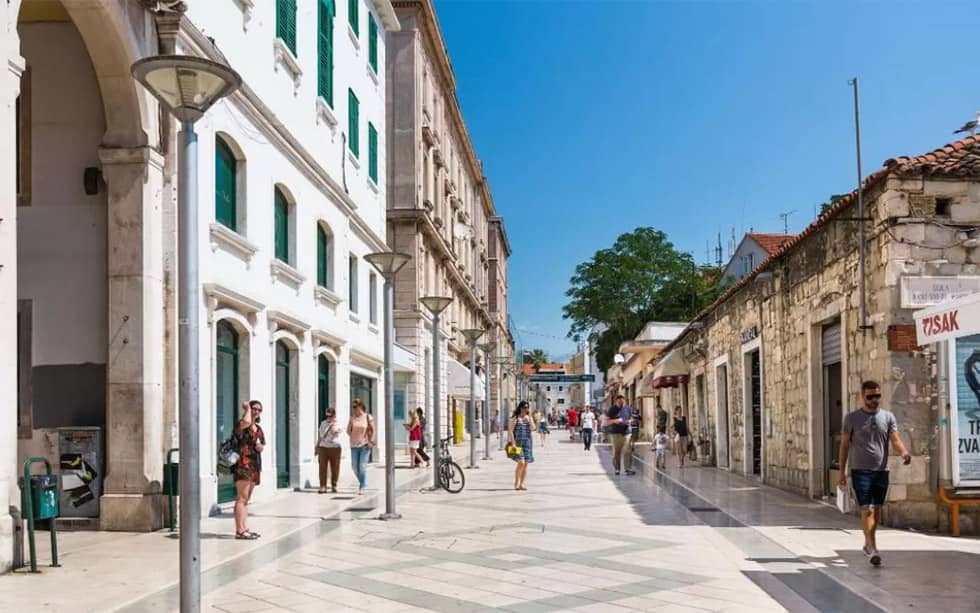
What to expect when shopping on Marmont Street
Expect a polished pedestrian street with a convenient mix of high-street fashion, smaller boutiques, souvenirs, and easy café stops in the centre of Split. Marmont Street is a good place for casual browsing and central shopping, but it is not the best choice if you want a full mall-style selection or serious bargain hunting.
The main advantage here is convenience. Marmont Street lets you browse while staying in the heart of the city, so it works well if you want to add a little shopping to a wider walk through Split rather than set aside half a day just for retail. If you want a broader overview of central retail options, see our shopping in Split guide. If you want a larger mall-style option, Joker is the more practical alternative.
- Best for fashion basics: Marmont Street is strongest for easy city-centre browsing rather than destination shopping.
- Mixed retail feel: You can expect a blend of familiar brands, smaller fashion shops, souvenirs, and a few more local-style stops nearby.
- Easy to combine with breaks: This is the kind of street where shopping naturally blends with coffee, pastry, or a short pause in the middle of the day.
- More useful than special: The appeal is less about one standout store and more about having several central options in one pedestrian stretch.
- Good add-on nearby: The Fish Market adds a more local and everyday stop just off the same central route.
- Not ideal for: Big shopping hauls, outlet-style prices, or the widest brand selection in Split.
History and architecture of Marmont Street
Marmont Street is not just a shopping street, but one of the clearest signs of Split's more modern urban history outside the Roman core. Its name, buildings, and institutions reflect the city's 19th and early 20th century development, which gives this short pedestrian stretch more depth than first-time visitors often expect.
The street is named after Marshal Auguste Marmont, the French military governor associated with the urbanisation of Dalmatian cities during the Napoleonic period. That background helps explain why Marmont Street feels different from the older lanes around Diocletian's Palace, it belongs to a later layer of Split's growth and gives the centre a more open, planned, and city-modern feel.
Several details make the street historically more interesting than a quick browse suggests. A Francophile library and reading room was founded here in 1922 and later became Alliance Francaise, while Split's first cinema was also located on Marmont Street. In architectural terms, the street is known for its Secession-era buildings, and its northern end meets the area of the Venetian bastion, the theatre, and the church of Our Lady of Good Health.
- French-era legacy: The street's name reflects Marmont's role in the city's urban development.
- More modern city layer: Marmont Street contrasts with the tighter Roman and medieval fabric nearby.
- Cultural footprint: Alliance Francaise and the city's first cinema give the street a stronger cultural story than most shoppers notice.
- Architectural detail: Look out for the Secession character of the street's better-known facades.
- Important end points: The street connects central shopping with the theatre side and nearby city landmarks.
Best nearby stops on the same walk
The best nearby stops to combine with Marmont Street are the Fish Market, the Riva, and Prokurative.
You can start on the Riva, move into Marmont Street for a short browse, stop at the Fish Market for a more local feel, and continue toward Prokurative without needing a separate detour.
- Best order: Riva - Marmont Street - Fish Market - Prokurative.
- Time needed: Around 30 to 45 minutes without long stops.
- Best for: First-time visitors who want an easy central route on foot.
Fish Market (Peškarija)
The Fish Market is the most characterful nearby stop because it adds a real local-life moment to an otherwise polished shopping street. It is especially worth it in the morning, when the atmosphere is strongest and the market feels most connected to daily life in Split.
The Fish Market sits right on Marmont Street, so it is the easiest nearby stop to add without changing your route. It is one of the central points of city life with its Secession-style architecture, which means it works both as a practical local market stop and as a small point of interest in its own right.
Riva promenade
The Riva is the best place to begin or end this walk because it gives Marmont Street a clear waterfront anchor. If you want the easiest version of this route, start on the Riva and move inland from there.
The Riva is the stage of city life in Split and a pedestrian space filled with cafés and restaurants.
Prokurative
Prokurative is the best nearby square to pair with Marmont Street because it adds open space, architecture, and a different mood within a very short walk. It is the cleanest way to extend the route beyond the shopping street itself.
Prokurative, or Republic Square, lies west of the Riva and is known for its neo-Renaissance buildings and open view toward the harbour. Passageways lead directly from Marmont Street to Prokurative, which is why the two places feel naturally linked on foot.
Marmont Street works especially well when you treat it as part of a wider walk through central Split rather than a stop on its own. After a short browse here, it is easy to continue toward the Riva, the edges of the Old Town, and the layers of history that make the city centre much more than a shopping area.
If you want to connect this street with Split's best-known landmarks in a more structured way, a private walking tour is a smart option. It gives you the chance to combine the atmosphere of Marmont Street with the main historic sights nearby, while adding the kind of local context that is hard to get from a casual walk alone.
SPLIT-PRIVATE Walking Tour of Old Town & Diocletian's Palace
Private Walking Tour+Cellars Museum
Guided tour of Old Town Split, including the famous Diocletian's Palace (UNESCO World Heritage Site), Peristyle and the basement cellars.
What to buy on or near Marmont Street
Marmont Street is best for fashion, accessories, jewellery, and easy souvenir shopping in the centre of Split. For local food gifts and a more market-style experience, it makes more sense to combine Marmont Street with the nearby Split marketplace.
Think about shopping here as separate street shopping from market shopping. Marmont Street is the more polished, central option for browsing clothing, accessories, and small gifts, while nearby market stops are better if you want something more local, edible, or tied to everyday life in Split.
- Fashion and accessories: Marmont Street is the easiest central stop for casual clothes shopping, shoes, and everyday fashion basics.
- Jewellery and small gifts: This is one of the better central areas to look for easy take-home items without making a separate shopping trip.
- Souvenirs: Marmont works well for convenient city-centre souvenir browsing, especially if you want to buy something quickly while already sightseeing.
- Croatian designer pieces: The street is a better fit for small fashion-led finds than for heavily traditional souvenir shopping.
- Pastries and quick treats: If you want a light edible stop rather than a full gift shop purchase, Marmont and its immediate surroundings are good for that too.
- Local food gifts nearby: For olive oil, preserves, produce, or more market-style purchases, continue to the marketplace rather than expecting Marmont Street itself to cover that well.
Practical tips before you go
Marmont Street is easiest to visit on foot as part of a central Split walk. The main things to watch are variable shop opening hours, limited Sunday trading, and the fact that this area works better for a short browse than for a dedicated half-day shopping trip. On major Croatian public holidays, shop openings, service availability, and transport timetables may differ from the usual schedule. If you are travelling over a holiday weekend, it is best to check ahead: public holidays in Croatia.
- Go on foot if possible: Marmont Street is a pedestrian city-centre stretch, so it makes most sense as part of a walk from the Riva, the Old Town, or Prokurative.
- Do not rely on one fixed opening schedule: Marmont Street is lined with individual shops and cafés, so opening hours vary by business and season.
- Be careful with Sundays: Croatia restricts Sunday retail trading, so some shops may be closed even in busy periods. Check current hours before you go, especially outside peak summer.
- Use it as a short stop: Marmont Street is best for 15 to 30 minutes of browsing, not for a major shopping session.
- Morning is better for nearby market stops: If you want to combine the walk with the Green Market (Pazar) and Fish Market, earlier in the day is usually more rewarding.
- Late afternoon is better for atmosphere: If you want a livelier city-centre feel, cafés, and people-watching, later in the day usually works better.
- Cards are widely used: Card payment is common in central Split, but a little cash can still be useful for smaller purchases or nearby market stops.
- If you are driving, park first: It is easier to leave the car in a proper garage or parking area and continue on foot through the centre. For practical options, see parking in Split.
FAQ about Marmont Street in Split
Is Marmont Street worth visiting if I am not planning to shop?
Yes. Marmont Street is still worth visiting even if shopping is not your priority because it works well as a short central walk with cafés, people-watching, and easy access to nearby stops such as the Riva, the Fish Market, and Prokurative. It is one of the simplest ways to add a different city-centre atmosphere to a wider walk through Split.
What is the best time to visit Marmont Street?
The best time depends on what you want from the visit. Morning is better if you want to combine Marmont Street with the nearby Fish Market, while late afternoon and early evening are usually better for atmosphere, café stops, and a busier city-centre feel.
Is Marmont Street close to the Riva and Diocletian's Palace?
Yes. Marmont Street is right in central Split and is very easy to combine with the Riva and the wider Old Town area around Diocletian's Palace. It works best as part of a compact walk through the centre rather than as a separate stop that needs extra planning.
What can I buy on Marmont Street?
Marmont Street is best for casual city-centre shopping such as fashion, accessories, jewellery, and easy souvenir browsing. If you want local food gifts or a more everyday market feel, it makes more sense to combine it with nearby shopping stops rather than expect Marmont Street itself to cover everything.
Are shops on Marmont Street open on Sundays?
Some may be, but you should not assume that all shops will be open. Sunday trading in Croatia is restricted, and actual opening can vary by business, season, and holiday periods, so it is best to check current hours directly if Sunday shopping matters to your plans.
What should I combine with Marmont Street in the same walk?
The easiest combination is the Riva, Marmont Street, the Fish Market, and Prokurative. That gives you waterfront atmosphere, a short shopping-and-strolling stretch, a more local market stop, and one of Split's best-known squares in a single compact route on foot.