
Ultra Europe Split returns to Park Mladeži from July 10 to 12, 2026, bringing three nights of major electronic music to the heart of Split. If you are planning Ultra Europe Split 2026, this guide is designed to help you sort out the essentials quickly - dates, tickets, venue logistics, where to stay in Split, and what to expect before you arrive.
For most visitors, the real challenge is not deciding whether to go, but planning the weekend well enough to enjoy it. Ticket types, entry rules, bag policy, hydration, transport after the shows, and choosing the right base in Split can all make a big difference once the festival starts, so it helps to have everything in one place before you book.
Split works especially well for Ultra because the venue is close enough to stay connected to the city rather than cut off from it. You can spend the daytime on the Riva waterfront, at the beach, or in the Old Town, then focus on getting to Park Mladeži with a clear plan for entry, late-night returns, and the practical details that matter most during a busy festival weekend.
Ultra Europe Split 2026 quick facts
Ultra Europe 2026 takes place in Split from July 10 to 12 at Park Mladeži, the festival’s main venue in the city. For most visitors, the essentials are simple: book your ticket early, stay somewhere practical for late-night returns, and plan around the fact that this is a three-night, 18+ festival with cashless on-site payments.
- Dates: July 10, 11 and 12, 2026
- Main venue: Park Mladeži, Hrvatske mornarice 10, 21000 Split
- Minimum age: 18+ only
- Festival format: 3-day electronic music festival in Split
- Main ticket types: 3-day GA, VIP, VIP ULTRA and Fan Pit, plus selected 1-day VIP options
- Current official starting prices: GA from €229, VIP from €449, VIP ULTRA from €499, Fan Pit from €299 - before service charges and fees
- Payment on site: Fully cashless - cards and digital NFC payments are accepted
- Water policy: Bottles and cans are not allowed, but empty hydration packs that are not backpacks are allowed and can be refilled at the venue water station
- Best base in Split: Central Split, Bačvice or areas within a manageable late-night walk or short taxi ride
- Who should book earliest: Groups, first-timers, and anyone who wants central accommodation at sane prices
What is Ultra Europe in Split?
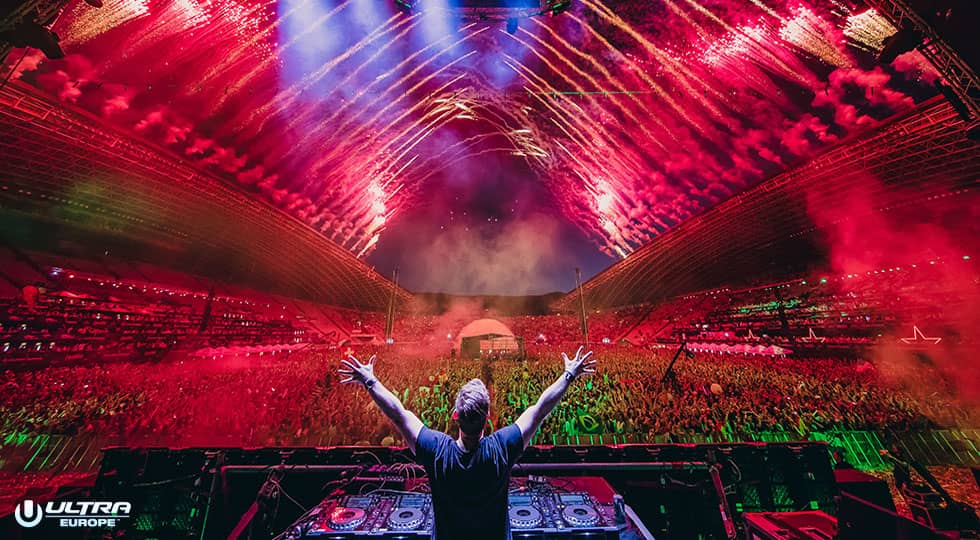
Ultra Europe is a three-day electronic music festival held in Split, with the main event taking place at Park Mladeži. In practical terms, it is one of the biggest weekends of the summer in the city, large international crowds, major production, late finishes, and a festival atmosphere that spreads well beyond the venue itself.
For many visitors, Ultra is not just about the lineup. It is also a Croatia summer trip built around Split, with beach time, late dinners, boat parties, and extra island events shaping the wider experience. That wider format is one of the main reasons the festival appeals to people who want more than a standard in-and-out city event.
Who this event is best for
Ultra Europe works best for travellers who want a high-energy electronic music weekend and do not mind planning ahead. It suits groups of friends, festival-first visitors, and people who want to combine Split nightlife with a few days of beach time or island-hopping before or after the main event.
It is less suited to travellers looking for a quiet city break, very low-cost last-minute accommodation, or a casual one-night concert experience. The scale, timing, and peak-season demand mean it is much easier to enjoy if you treat it as a short festival trip rather than a spontaneous add-on.
- Best for: EDM fans, groups, repeat festival-goers, and travelers building a summer trip around Split
- Works well if you want: big production, late nights, beach days, and a social atmosphere across the city
- Less ideal if you want: quiet evenings, flexible last-minute planning, or a family-style city break
Main event vs Destination Ultra week
The main Ultra Europe event is the three-night festival in Split. That is the core experience most visitors mean when they say they are going to Ultra Europe, and for many people it is the only ticket they need.
Destination Ultra is the wider seven-day format built around the festival week. It typically includes the three Split festival nights plus additional branded events and parties connected with other locations such as islands Brač and Vis. That broader option makes more sense for visitors who want a full festival holiday rather than just the main weekend, but the exact schedule and included events should always be checked on the official site for the year you are traveling.
- Main Ultra Europe ticket: best for visitors focused on the Split festival itself
- Destination Ultra option: better for people who want the festival plus extra island and party events across the week
- Planning note: the wider package is more time-intensive and usually needs earlier accommodation and transport planning
Ultra Europe 2026 dates, location and official schedule
Ultra Europe Split 2026 takes place from Friday, July 10 to Sunday, July 12 at Park Mladeži in Split. These three nights are the core festival dates, and they are the part of Ultra Europe most visitors are planning around when they book tickets, accommodation, and transport.
At this stage, the key details are clear: the dates are confirmed, the venue is confirmed, and official ticket sales are already live. What usually becomes more useful closer to the festival is the finer planning layer - daily set times, stage-by-stage running order, and any last operational updates that affect entry, movement around the venue, or late changes.
Main festival dates at Park Mladeži
The main Ultra Europe weekend runs across three nights in Split. For trip planning, it is best to think of this as a Friday to Sunday festival with late finishes, rather than a casual evening event that fits neatly around normal city sightseeing.
- Friday, July 10, 2026: opening night of the main festival in Split
- Saturday, July 11, 2026: second night of the main festival
- Sunday, July 12, 2026: final night of the main Split event
- Planning takeaway: arrive before Friday if you want a low-stress check-in, wristband pickup, and time to settle into the city
Venue address and walking distance from central Split
Ultra Europe takes place at Park Mladeži, at Hrvatske Mornarice 10, Split 21000. The venue is not inside the Old Town or directly on the waterfront, but it is still close enough that many visitors staying in central Split can reasonably walk there instead of depending on a taxi both ways.
From the main transport zone near the ferry port, main bus station, and train station, public route planners put the walk at roughly 30 minutes. That makes central neighbourhoods workable, but it also means your exact accommodation choice matters more than many first-timers expect.
- Official venue address: Hrvatske Mornarice 10, 21000 Split
- From central Split on foot: manageable for many visitors staying in the centre
- From the main port and station area: roughly 30 minutes on foot
- Best practical approach: choose accommodation with a realistic return route after midnight, not just a cheap rate on the map
What is confirmed so far for 2026
The confirmed essentials for 2026 are already enough to plan the basics of the trip. The official site shows the festival dates, Park Mladeži as the venue, current ticket sales, and dedicated lineup and set-times sections. What you should still expect to check again closer to travel is the detailed daily program and any final operational guidance released nearer the festival weekend.
- Confirmed now: Ultra Europe runs July 10 to 12, 2026 in Split
- Confirmed venue: Park Mladeži
- Already live: official ticket sales and official lineup and set-times sections
- Still worth rechecking later: exact daily schedule, artist timings, and final pre-event updates
If you want to see more of Split The BEST of Split by E Tuk Tuk is an easy fit. It combines the city’s main highlights with a quieter, fully electric ride, scenic viewpoints, and local guiding, which makes it especially useful if you want a broader feel for Split without spending half the day navigating hills, traffic, or summer heat.
It works particularly well for first-time visitors who want a practical overview before focusing on the Old Town on their own. With a route built around top city sights and short stops rather than a long, tiring walk, this tour is a smart way to add context, views, and a more relaxed pace to your Split stay - so the affiliate box below makes sense as a genuinely useful upgrade, not just an extra booking option.
The BEST of Split by E Tuk Tuk
Embark on this captivating hour-and-a-half journey designed to unveil all the charms of Split
Our adventure encompasses visits to renowned Split beaches, iconic neighborhoods, galleries, and the famed Poljud stadium. Seated comfortably in our TUK TUK vehicle, experience the thrill of navigating through narrow, picturesque streets, immersing yourself in the recognizable aromas of Dalmatian Cuisine. For those seeking a seaside escape, arrange a refreshing swim at the stunning Kašjuni beach with your guide/driver – your only task is to relax and enjoy the journey.
Ultra Europe lineup, stages and what to expect
Ultra Europe is built around big-name electronic music, large-scale production, and a festival format that gives different parts of the crowd different reasons to be there. Some visitors come mainly for the stadium-sized headline sets, while others care just as much about the darker house and techno side, smaller discovery stages, or the overall atmosphere of one of the busiest weekends of the summer in Split.
For 2026, the safest planning assumption is that the lineup will continue to develop in waves and that the full daily picture will only become genuinely useful closer to July. That means you should treat the official lineup page as a live planning tool rather than assuming the first names announced are the final story.
How lineup announcements usually roll out
Ultra Europe is already promoting a 2026 Phase 1 announcement on its homepage, and the official lineup page for July 10 to 12, 2026 is live. In practical terms, that usually means the artist rollout starts with a first wave of headline names, then becomes more useful as additional acts, stage splits, and eventually set times are added closer to the festival.
The smart way to use the lineup is not to build your whole trip around one artist too early. Instead, book the trip once you are confident in the event itself, then keep checking the official lineup and set-times pages as the festival gets closer.
- Current status: the official 2026 lineup page is live
- What that means: lineup information is active, but not necessarily complete yet
- Best planning move: treat early lineup announcements as a starting point, not the final schedule
- Important reality: lineups can expand and change before the event
- Official lineup page: Ultra Europe lineup
Main Stage and other stage expectations
Official Ultra Europe recap material shows that the festival has recently operated with four stages: Main Stage, RESISTANCE, UMF Radio, and Oasis. Ultra is not just one giant headline stage with filler around it, it is a broader festival layout with different sounds, crowd energy, and pacing depending on where you spend your night.
Main Stage is the most obvious draw for many first-timers, with the biggest crowd-pull acts and the most stadium-scale production. RESISTANCE is the more underground side of the festival and has long been one of Ultra Europe’s defining features for people who want house and techno rather than only headline EDM moments. UMF Radio and Oasis add more variety and help the weekend feel like a real multi-stage festival rather than a single-focus event.
- Main Stage: best for headline sets, biggest visuals, and the most explosive crowd energy
- RESISTANCE: the key destination for visitors who want the underground side of the weekend
- UMF Radio: a useful stage for variety and discovering artists outside the biggest names
- Oasis: part of the broader multi-stage layout that makes the festival feel less one-dimensional
- What to expect overall: strong production, large LED setups, and a much bigger scale than a typical city festival
How late the music typically runs
Ultra Europe is a late-night festival, and you should plan the weekend around that. The official help centre currently shows the previous Split edition running until 05:00 each night, with entry allowed until 02:00 AM, but the exact 2026 set times page has not yet been populated with the final 2026 schedule.
The practical takeaway is simple: expect long nights, do not plan early-morning sightseeing after every festival day, and keep checking the official set-times page as July approaches. If you build your trip around the assumption of late finishes, you will usually make better choices about accommodation, hydration, transport, and daytime plans.
- General expectation: Ultra Europe runs late and should be treated as a full night event
- Official past pattern shown: previous Split timings ran until 05:00, with entry allowed until 02:00 AM
- 2026 caution: exact 2026 set times are still worth rechecking closer to the festival
- Best planning rule: choose accommodation and return transport with very late finishes in mind
- Official set-times page: Ultra Europe set times
Ultra Europe 2026 tickets and current official prices
Ultra Europe 2026 tickets are already on sale, and the official site currently lists several main access levels depending on how close to the action you want to be. For most people, the real decision is simple: choose a standard 3-day ticket if you are coming for the main festival in Split, or look at a wider Destination Ultra product only if you know you want the full week of extra events as well.
As of April 2026, the official starting prices begin at €229 for a 3-day GA ticket. Premium categories cost more, and some ticket types can sell out or move up in tier, so it is best to treat these as live starting prices rather than fixed season-long rates.
| Ticket type | What it covers | Current official starting price | Best for |
|---|---|---|---|
| 3-Day GA | Main Ultra Europe festival in Split | €229* | Most first-time visitors |
| 3-Day VIP | Main festival with upgraded access | €449* | Visitors wanting more comfort |
| 3-Day VIP ULTRA | Premium festival access | €499* | People prioritizing the highest tier |
| 3-Day Fan Pit | Reserved pit area near the main stage | €299* | Main-stage focused fans |
| 1-Day VIP | Single-day premium entry | €199* | Short-stay visitors |
| 1-Day VIP ULTRA | Single-day premium top tier | €249* | One-night premium splurge |
| 1-Day Fan Pit | Single-day reserved pit access | €149* | One-night main-stage focus |
*Prices checked April 2026. Official prices are subject to availability and do not include service charges, taxes, or fees.
GA, VIP, VIP Ultra and Fan Pit explained
The easiest way to think about Ultra ticketing is by access level rather than branding. GA is the default entry product for most visitors, VIP adds a more comfortable premium experience, VIP ULTRA sits above that as the highest listed access tier on the standard festival ticket page, and Fan Pit is the choice for people who care most about being in a reserved area right in front of the main stage.
- GA: the standard choice for most festival-goers and usually the best value if your main goal is simply to attend all three nights
- VIP: a step up for visitors who want a more upgraded festival experience without going to the top premium tier
- VIP ULTRA: the highest listed standard access tier on the current 2026 festival page
- Fan Pit: designed for people who want reserved access right in front of the main stage
- Practical takeaway: if this is your first Ultra Europe and budget matters, 3-day GA is usually the simplest and most balanced choice
Destination Ultra ticket vs standard festival ticket
A standard Ultra Europe festival ticket is for the main festival in Split. That is the right option for most visitors staying in Split for the core Friday to Sunday event and not planning to follow the full week of branded parties and island events.
A Destination Ultra ticket is different. According to the official help centre, it grants access to all events across the full 7-day Destination Ultra week, including Ultra Europe Split and additional events such as Resistance Brač, Ultra Beach, and the Resistance Vis closing party. That broader option only makes sense if you already know you want the full festival-holiday format rather than just the three main nights in Split.
- Choose a standard festival ticket if: your focus is Park Mladeži and the main Split weekend
- Choose a Destination Ultra product if: you want the wider 7-day experience across Split and the islands
- Value rule: for most first-timers, the standard 3-day festival ticket is the simpler and safer choice
- Planning note: the wider Destination Ultra format usually means more accommodation and transport coordination
Important pricing disclaimer and official booking link
Ultra Europe ticket pricing is dynamic by tier and availability, so the safest way to present prices on this page is as current official starting prices rather than hard promises. The official site also states that all sales are final and that listed prices do not include service charges, taxes, and fees.
- Verify current rates on the official Ultra Europe ticket page"
- Important cost note: the final checkout total will be higher than the base ticket figure once fees are added
- Availability note: some categories can sell out or move to a higher tier without much notice
- Official booking page: Ultra Europe festival tickets
How entry works - wristband exchange, ID and gate rules
Ultra Europe does not work like a simple scan-and-enter concert. Before you go into the festival, you first need to exchange your coded voucher or e-ticket for a wristband, and that wristband then becomes your valid entry credential for the event. This is one of the most important practical steps of the whole weekend, because if your ticket name, ID, or wristband situation is wrong, fixing it at the gate is much harder once the crowds build up.
The smartest approach is to treat entry as a process, not a last-minute detail. Make sure your ticket is in your own name, bring acceptable photo ID, and collect your wristband early rather than aiming to do everything right before you want to enter. That usually means less stress, shorter queues, and fewer chances of getting caught out by a rule that was already stated on the official help pages.
Where to collect your wristband
According to the official Ultra Europe help centre, you must collect your wristband from the exchange point at the main festival entrance before entering the event. VIP and VVIP customers are directed to dedicated exchange points on the east and south sides of the festival for faster collection, while Travel2Ultra customers are told to follow the separate instructions sent with their package documents.
- Main rule: no wristband, no festival entry
- Standard pickup point: wristband exchange at the main festival entrance at Park Mladeži
- VIP and VVIP: separate dedicated exchange points operate during the festival
- Package customers: follow the instructions provided with your Travel2Ultra documents if that applies to your booking
Wristband exchange opening hours
The official help centre currently shows a wristband exchange schedule that starts before the festival and then runs daily from 15:00, with late-night exchange hours on festival days. However, the dates shown in that article still reflect the previous edition rather than the already confirmed 2026 calendar, so you should use it as a guide to the usual pattern, not as a final 2026 timetable.
In other words, expect the exchange to open in advance and continue into the evening on event days, but always verify the final 2026 hours on the official help page shortly before arrival. If you can, collect your wristband before the nightly rush rather than leaving it to the last possible moment.
- Current official pattern shown: exchange begins before the festival and stays open into the night on event days
- Freshness warning: the help article still displays the previous edition's dated schedule
- Best strategy: re-check the official wristband article close to travel and pick up early if possible
- Why this matters: late arrivals face more pressure if there are queues, ticket issues, or ID problems
ID requirements and name-matching rules
Ultra Europe requires both a valid coded voucher or e-ticket and a valid identification document at wristband exchange. The official help centre also states that the ticket must be in the attendee's own name, and that the name on the ticket must match the person collecting the Ultra Europe wristband.
Accepted identification includes a valid passport or national ID card, or a valid driver's license with a photo and date of birth together with a photocopy of a valid passport. Expired identification, documents without a photo and date of birth, and simple photocopies of identification are not accepted.
- You need both: a valid coded voucher or e-ticket and valid ID
- Name rule: the ticket name must match the attendee collecting the wristband
- Accepted ID: passport, national ID card, or a valid driver's license with photo and date of birth plus a photocopy of a valid passport
- Not accepted: expired ID, ID without photo and date of birth, or photocopies on their own
- Age rule: Ultra Europe is strictly 18+
Gate rules that catch people out
Two rules matter more than many first-timers expect. First, Ultra Europe states that entry to each festival day or event is allowed only once, which means no general re-entry after you leave the venue. Second, your wristband has to remain valid and undamaged throughout the event period if you want to keep using it for access.
That means you should enter prepared, especially on busy nights. Bring what you need, know the bag and prohibited-item rules in advance, and do not assume you can leave and come back later once you are inside.
- No general re-entry: once you leave the venue, you should not expect to be allowed back in that same night
- One-time entry logic: official guidance treats each event day as single-entry for security reasons
- Wristband condition matters: entry is allowed only with a valid and undamaged wristband
- Practical takeaway: sort out your essentials before you enter rather than planning to step out and return later
What happens if your wristband is lost or damaged
The official rule here is strict. Ultra Europe states that no replacement tickets or wristbands will be issued under any circumstances if a wristband is lost, damaged, or becomes unusable for any other reason. The organizers also say they are not responsible for lost, stolen, or damaged tickets or wristbands.
That makes wristband care much more important than many people realize. Once you collect it, treat it like the key to the whole weekend. Do not remove it, do not tamper with it, and do not assume there is an easy help-desk fix if something goes wrong.
- No replacement policy: lost or damaged wristbands are not reissued
- Organizer position: the event is not responsible for lost, stolen, or damaged wristbands
- Best prevention: keep the band secure, intact, and untampered with from the moment you collect it
- Simple rule: treat your wristband like your actual ticket
What to bring and what not to bring
Ultra Europe entry works much more smoothly when you keep your setup simple. The official rules are strict on bag type, bottles, cameras, medication, and outside food or drink, so this is one part of the weekend where guessing is a bad idea.
The easiest strategy is to arrive with the minimum you actually need: your valid wristband, ID if relevant, phone, payment card or NFC payment method, earplugs, and only an approved bag if you really need one. Anything bulky, non-transparent, open, or unnecessary increases the chance of delays at security.
Allowed bags, hydration packs and cameras
Ultra Europe allows only a limited range of bag types, and the safe assumption is that smaller is better. Clear bags, one-gallon clear zip-top bags, fanny packs, and very small clutch bags are allowed, while hydration packs are allowed only if they are not backpacks and are empty upon entry.
For cameras, the line is practical rather than broad. Non-professional cameras and action cameras such as GoPros are allowed, but professional cameras, flash cameras, camera poles, and larger recording setups are not.
- Allowed clear bags: transparent plastic, clear vinyl, or clear PVC bags up to 13 x 17 inches
- Also allowed: one-gallon clear zip-top bags
- Also allowed: fanny packs and very small clutch bags about the size of a hand
- Hydration packs: allowed only if they are not backpacks and are empty when you enter
- Cameras allowed: non-professional cameras and action cameras
- Good extras: sunglasses, hats, earplugs, phone, and sealed cigarettes if you smoke
- Medication rule: prescription medication is allowed if you carry the prescription or label in your name
Prohibited items that regularly catch people out
The biggest mistakes are usually very ordinary items rather than obviously banned ones. Standard backpacks, bottles, outside food, opened cigarettes, open over-the-counter medication, vapes, and umbrellas are all listed among the items you should not expect to get through security.
Some rules are stricter than many first-timers assume. For example, opened packs of cigarettes are not allowed on entry, and neither are bottles, cans, canteens, flasks, or coolers. Professional cameras, camera poles, drones, large chains, self-defence sprays, and anything that looks risky or disruptive are also prohibited.
- Not allowed: backpacks, purses, or non-clear bags
- Not allowed: outside food, alcohol, bottles, cans, flasks, canteens, and coolers
- Not allowed: opened over-the-counter medication or eye drops
- Not allowed: opened packs of cigarettes or opened tampons on entry
- Not allowed: vapes and e-cigarettes
- Not allowed: umbrellas, chairs, blankets, tents, scooters, skateboards, and personal motorized vehicles
- Not allowed: professional cameras, flash cameras, video or audio recording equipment, and camera poles
- Not allowed: drones, laser pointers, noisemakers, spray paint, fireworks, weapons, and self-defence sprays
- Medical exception: medically required items may be allowed after inspection, but you should bring documentation
Water refill points, food and festival essentials
You cannot bring bottles into the venue, but Ultra Europe states that there is a water station inside where approved hydration packs can be refilled. Food is available on site throughout the day and night, and the festival also provides locker service at the stadium in the merch tent.
The practical implication is simple: do not rely on cash, do not bring a bottle expecting to refill it, and do not overpack. A phone, a card or digital wallet, earplugs, and an approved bag or hydration pack are usually enough for a much easier festival night.
- Water: refill stations are provided inside the venue for approved hydration packs
- Bottles: empty bottles are still not allowed, even though hydration packs are
- Food: food is sold on site all day and night
- Lockers: locker service is available at the stadium in the merch tent
- Payments: the festival is fully cashless
- Best essentials: phone, credit or debit card or NFC payment, earplugs, sunglasses, and only an approved bag if needed
- Best entry tip: arrive with as little as possible and avoid anything that needs a judgment call from security
How to get to Ultra Europe in Split
Getting to Ultra Europe in Split is usually easier than first-timers expect, but getting away from the venue after the music ends can be slower and more chaotic. Park Mladeži is close enough to central Split that many people can walk at least one side of the journey, which is often the simplest option during the busiest hours.
The best strategy depends less on the map and more on your timing. If you are staying in central Split, Old Town, Bačvice, or nearby neighbourhoods, walking is often the most reliable plan. If you are coming from farther out, the safest approach is to sort out your route before you head in, rather than assuming taxis or quick pick-ups will be easy after closing.
Walking from Old Town, Bačvice and nearby areas
If you are staying in central Split, walking is often the most practical way to reach the venue. The route is straightforward enough for many visitors, and it avoids the usual festival-night issues of traffic, waiting, and surge pricing. It also gives you more flexibility if you leave a little earlier than the main rush.
Walking becomes even more useful after the final sets, when demand for cars rises and roads around the stadium area slow down. Many visitors find that walking at least part of the return is quicker than waiting at the edge of the crowd for a car to arrive.
- Best for: Old Town, Bačvice, Lučac, Manuš, Spinut, and other central bases
- Most useful when: you want the least complicated arrival and return
- Smart move: wear comfortable shoes and expect a warm walk before midnight and a busy one after closing
- Late-night reality: walking is often faster than waiting for a car right outside the venue
Taxi and rideshare reality after closing
Taxis and rideshares are workable in Split during Ultra, but they are rarely the smooth option right after the festival finishes. Demand jumps late at night, pick-up points get crowded, and prices can rise quickly once large groups leave Park Mladeži at the same time.
If you are relying on a car, it is usually smarter to walk a little away from the stadium before ordering one, or to head toward a clearer main road rather than trying to be collected right beside the venue. For short distances inside central Split, that can save both time and frustration.
- Works best for: longer returns, airport arrivals, and accommodation outside the center
- Main drawback: higher demand and slower pick-ups after the final acts
- Best tactic: avoid ordering from the most crowded immediate edge of the venue
- Good expectation: late-night rides are convenience-first, not budget-first
Arriving from Split Airport, ferry port and bus station
If you are flying in, start with Split flight and airport information, then keep your final move into the city simple. Promet Split's official airport line lists a direct airport-to-Split service of about 50 minutes, while Split Airport also publishes shuttle-bus information for transfers into the city. From there, you can continue to your accommodation and then decide whether walking or a short taxi ride makes more sense for the venue.
If you arrive by ferry, bus, or train, you are already in the main waterfront transport zone of Split, which makes the venue easier to manage. For deeper planning, use our pages on Split ferries, Split main bus station, and Split train station. Ultra Europe also lists an official festival transfers page, which is worth checking if you want shuttle options tied to official accommodation and festival planning.
- From Split Airport: airport bus, shuttle, taxi, private transfer, or rideshare into Split first
- From the ferry port: easy base for central stays, but still plan your final move to the venue
- From the bus or train station: convenient for arrivals, especially if you are staying near the centre
- Best planning rule: solve airport or intercity arrival first, then treat the venue trip as a separate short city transfer
Parking and drop-off strategy near Park Mladeži
Driving all the way to the venue is usually not the smoothest option during Ultra Europe. Streets around Park Mladeži get busier, drop-offs are less predictable, and searching for a last-minute space close to the gates is rarely the least stressful way to start the night.
If you need to bring a car, it is generally better to use official city parking and finish the last part on foot or by short taxi ride. For overview and live reference, use our Split parking guide and the official Split Parking website, which publishes garage locations and current parking information. One concrete official example is Garage Sukoišan, where the official price page notes commercial spaces at 1.50 EUR per hour, but the smarter move is still to think in terms of fallback parking rather than venue-adjacent parking.
- Best use of a car: reach Split, park sensibly, then switch to walking or a short local transfer
- Do not count on: easy curbside access right beside the festival entrance
- Safer approach: use official garages or public parking rather than hunting for street space near the venue
- Price example: Garage Sukoišan is listed by Split Parking at 1.50 EUR per hour for commercial spaces
- Checked: April 2026 - verify current parking details on the official site
Where to stay for Ultra Europe in Split
Where you stay can shape the whole Ultra Europe weekend almost as much as the ticket you buy. Because the festival takes place at Park Mladeži in Split and the city centre is relatively compact, most first-timers are better off staying in central Split or a nearby neighbourhood with a realistic late-night return, rather than chasing a slightly cheaper option far outside the city.
The general rule is simple: the closer you are to the center or to a clear shuttle route, the easier the weekend becomes. If you want the least complicated Ultra trip, focus on central hotels, apartments, or hostels first, then only look farther out if you are comfortable depending on the official festival shuttle, taxis, or longer rides back after the final sets.
Best areas for first-timers
For most first-time Ultra visitors, the safest booking strategy is to stay in or near central Split. The city’s old centre is compact, Bačvice sits near the harbour and beach area, and Veli Varoš and nearby central districts give you a practical base that still feels connected to the city rather than isolated from it.
If you already know you are staying outside the centre, make sure the location works with the official Ultra transport setup. Ultra Europe’s 2026 shuttle system is organized around multiple zones including Split 1, Split 2, Kašteli, Podstrana, and Omiš, so outlying stays are possible, but they are best for travellers who are comfortable planning around a shuttle network instead of walking home or taking a short taxi ride.
- Best overall: central Split for the easiest festival weekend
- Best for beach plus festival: Bačvice and nearby harbour-side areas
- Best for atmosphere: Veli Varoš and nearby old residential parts of the centre
- Best for bigger groups on a looser budget: outer zones only if you are happy using shuttle or taxi logistics
Old Town vs Bačvice vs Veli Varoš vs outside the centre
Old Town and the city core are the easiest choice if you want to be near Split’s main sights, restaurants, bars, and transport hub. They suit first-timers especially well because the centre is compact and easy to navigate, which matters when you are balancing daytime city time with late festival nights.
Bačvice works well if you want a beach-and-festival base. The Bačvice beach is a sandy beach in the heart of the city near the city harbour, and that location makes it especially convenient for visitors arriving by ferry or staying near the transport zone.
Veli Varoš is a better fit if you want more local character and do not mind some slopes and stone lanes. Veli Varoš and Lučac are historic suburbs wrapping the city core, and they remain one of the most atmospheric parts of Split for travellers who prefer charm over straight-line convenience.
Outside the centre can work, but it changes the rhythm of the weekend. Places in Split’s outer districts or in zones such as Podstrana, Kašteli, or Omiš make more sense if you are intentionally prioritizing resort-style accommodation, larger group space, or shuttle-based planning rather than quick independent returns after the festival.
- Old Town: best for first-timers, walkability, and city atmosphere
- Bačvice: best for beach access and harbour-side convenience
- Veli Varoš: best for character, stone streets, and a more local feel
- Outside centre: best only if space or shuttle convenience matters more than spontaneity
Hotels, hostels and group stays - what books out first
If you want a simple hotel base, start with our guide to hotels in Split. If budget and social atmosphere matter more, check hostels in Split. For larger groups or travellers who want more privacy, space, or pool-style stays, villas in and around Split become more relevant.
- Hotels: best for couples, comfort, and low-stress logistics
- Hostels: best for solo travellers, smaller budgets, and meeting other festival-goers
- Apartments and villas: best for groups who want space, kitchens, or shared costs
- What usually gets snapped up first: central properties that cut down on late-night transport hassle
- Best booking rule: once your Ultra ticket is sorted, lock accommodation before you spend time optimizing the perfect option
Practical survival tips for the festival weekend
Ultra Europe is much easier to enjoy when you plan for the conditions rather than just the lineup. In Split in July, the combination of heat, late nights, crowds, and movement between the city and the venue can wear people down faster than they expect, especially if they treat the weekend like a normal city break.
The best approach is to keep your daily plan simple, protect your energy early, and avoid avoidable mistakes. That usually means hydrating before you arrive, eating properly, wearing the right shoes, carrying as little as possible, and thinking ahead about your return route before the final rush starts.
Heat, hydration and sleep strategy
The official Ultra Europe guidance itself tells visitors to keep warm summer temperatures in mind, and that matters in Split in July. Even though the festival happens at night, the real challenge usually starts earlier in the day, when beach time, city walking, alcohol, and little sleep begin to add up.
The simple survival rule is to pace the weekend instead of trying to max out every hour. Drink water before you arrive, use the venue refill station if you are carrying an approved hydration pack, and avoid planning heavy sightseeing early the next morning after every festival night.
- Start hydrating early: do not wait until you are already inside the venue
- Use the official refill option: approved hydration packs can be refilled at the festival water station
- Eat properly before entry: going in hungry usually makes long nights harder
- Wear real footwear: this is not the weekend for flimsy sandals if you plan to walk a lot
- Protect your sleep where you can: even a short daytime reset helps if you are staying for all three nights
- Best pacing tip: treat each day as a full festival cycle, not as a normal day plus a night out
Cashless payments and spending expectations
Ultra Europe is officially cashless, so you should assume that cash will not help you once you are inside the festival. The event accepts credit and debit cards as well as NFC payments on phones and smartwatches, which means the smoothest setup is to have at least one reliable primary payment method and one backup.
Spending also feels faster at cashless events, especially over three nights. A simple way to control that is to decide your rough drink and food budget before the weekend starts instead of making every decision in the moment once you are already tired.
- Do not rely on cash: it is not accepted inside the festival doors
- Best setup: bring a physical card and keep phone or smartwatch payment active as backup
- Before you leave your stay: make sure your battery is healthy if you depend on mobile payments
- Budget tip: decide a daily spend limit before each night starts
- Practical backup: keep one payment method separate from your main phone in case of loss or battery trouble
Safety, scams and emergency basics in Split
Most of the useful safety advice for Ultra weekend is not dramatic. Keep your valuables close, do not leave your phone loose in a pocket during crowded exits, and avoid making yourself dependent on one device for payments, tickets, navigation, and communication all at once.
If you need help, Ultra Europe states that first aid and medical services are available at the venue, and Croatia's general emergency number is 112. There are also official festival info points in Split and at Park Mladeži, so use those rather than guessing if you have a genuine problem during the weekend.
- Know the emergency number: call 112 in Croatia if you need urgent help
- Use official help first: the festival provides info points and on-site first aid support
- Protect the essentials: phone, wallet, card, and ID should stay secure and easy to check quickly
- Do not depend on one thing: one phone should not be your only payment, map, and contact plan
- Pickup rule: if meeting friends after the show, choose a clear point before the music ends
- Smart city habit: use normal late-night awareness, especially in crowds and around transport bottlenecks
Respecting local neighbourhoods after the festival
One of the good things about Ultra Europe in Split is that the venue is still tied closely to a real city rather than isolated from it. The trade-off is that your walk back, taxi pickup, or late stop for food happens in neighbourhoods where people are also trying to sleep, work, or just live through a very busy summer weekend.
That is worth respecting. The easiest way to do that is to keep the energy for the festival and the afterparties, not for shouting through residential streets at five in the morning. It makes the city more pleasant for everyone and usually makes your own return feel smoother as well.
- Keep noise down on return walks: especially in residential streets and apartment areas
- Do not block entrances or narrow lanes: central Split can be tight and residential
- Sort food and transport calmly: late-night frustration usually creates unnecessary chaos
- Leave no litter behind: especially around beaches, side streets, and waiting areas
- Best mindset: enjoy the weekend fully, but remember Split is a living city, not only a festival backdrop
What to do in Split before and after Ultra
Before and after Ultra, the smartest plan is to keep Split simple: one historic walk, one beach or sea reset, one proper meal, and only one bigger add-on if you are staying longer. Split is compact enough that you can combine the Old Town, the waterfront, and a short recovery stop without turning the weekend into a second full itinerary.
One of Split's biggest advantages during Ultra weekend is that you are not trapped in a festival-only setting. The city gives you a UNESCO-listed old core shaped by Diocletian’s Palace, an easy waterfront rhythm, city beaches close to the centre, and quick food and coffee stops that work well between late nights. The best version of this section is not a huge sightseeing checklist - it is a realistic plan for what still feels good when you are balancing a festival with a summer city break.
If you only have the Ultra weekend itself, think in short, low-friction blocks rather than ambitious sightseeing marathons. Then, if you are staying beyond the festival, Split becomes a strong base for beaches, island trips, and easy day trips that feel much more rewarding once you are no longer planning around late finishes.
Best easy daytime resets
The best daytime reset in Split is usually the one that asks the least of you. For many visitors, that means starting with the old centre and the Riva at a slow pace, then choosing either the sea or shade depending on how much energy you actually have after the previous night.
If you want history without overcomplicating the day, Diocletian's Palace and the Substructures are the obvious first choice. If you want air, sea, and less noise, Bačvice or Marjan make more sense - but Marjan is one place where you should check the latest visitor notice first, because remediation works are still affecting access in 2026.
- Slowest, easiest start: coffee and a short walk along the Riva before deciding how much else you want to do
- Best history reset: explore Diocletian's Palace and the old core at an unhurried pace
- Best sea reset near the centre: head toward Bačvice if you want the easiest beach option close to the harbour side of town
- Best green escape: Marjan is still Split's classic break-from-the-city option, but check current access notices before you go
- Best energy-saving rule: do one thing well rather than trying to turn every afternoon into a full sightseeing day
Beach, food and old town ideas between nights
If you are trying to make the most of Split between festival nights, the best combination is usually one beach stop, one short Old Town walk, and one solid meal. Bačvice is the easiest beach choice for many Ultra visitors because it is a sandy city beach near the harbour, while the old centre lets you see the city's Roman core without needing a big time commitment.
Food is where a lot of people improve the whole weekend without over planning. Split's official gastronomy pages lean into seafood, taverns, and Dalmatian flavours, which works well for a festival trip because you can keep it simple: one real sit-down lunch or dinner, then lighter stops and coffee the rest of the time.
- Best short old-town plan: wander through the palace area, Peristyle, and nearby lanes rather than trying to "complete" every sight
- Best quick beach option: use Split's parks and beaches guide to choose a low-effort swim stop
- Best meal strategy: book or choose one proper Dalmatian meal instead of grazing randomly all day
- Best food follow-up: browse our Split restaurants page before the weekend gets busy
- Best sightseeing mindset: Split works better as a place to absorb in pieces than as a city to rush through on a checklist
Short add-ons for people staying longer
If you are adding extra days before or after Ultra, that is when Split really starts to feel like more than a festival base. Once you are not building the day around late-night entry and returns, you can use the city as a launch point for islands, nearby historic towns, and slower sea-focused outings.
The best add-on depends on what you want after the festival. Some people want one calm day by the water, while others want to leave the city entirely and do a clean day trip. Either works, but it is better to choose one direction rather than trying to squeeze island hopping, beaches, and heavy sightseeing into the same recovery window.
- Best for another city hit: look at day trips from Split if you want one clean extra excursion
- Best for staying local: keep it to beaches, the old centre, and a longer meal instead of forcing a full-day transfer
- Best for sea-focused travellers: use Split as your base, then add one island or boat day once the festival is over
- Best recovery rule: schedule bigger outings after the final Ultra night, not between the busiest festival days
- Best planning mindset: let Split be both the festival city and the soft landing around it, rather than trying to over-optimize every spare hour
FAQ about Ultra Europe Split 2026
When is Ultra Europe Split 2026?
Ultra Europe 2026 takes place from July 10 to 12, 2026. Those are the main festival dates in Split, and they are the core dates most visitors should plan around for tickets, accommodation, and transport.
Where is Ultra Europe held in Split?
Ultra Europe takes place at Park Mladeži in Split. The official mapping address used by the organizers is Hrvatske Mornarice 10, Split, Croatia 21000.
Is Ultra Europe 18+?
Yes. Ultra Europe is strictly for visitors aged 18 and over, so it is not a family festival and under-18 entry is not allowed.
Do I need ID and does the ticket need to be in my own name?
Yes. You need valid ID when collecting your wristband, and the official rules say the name on the ticket must match the attendee collecting the Ultra Europe wristband.
Can I leave the venue and come back later the same night?
No. Ultra Europe states that entry is allowed only once per festival day or event, so you should not expect general re-entry after leaving the venue.
Can I bring a bag or a water bottle into Ultra Europe?
You can bring only certain approved bags, such as clear bags within the stated size limit, one-gallon clear zip-top bags, or small fanny packs and clutches. Empty hydration packs are allowed only if they are not backpacks, but bottles and cans are not allowed.
Is Ultra Europe cashless?
Yes. Ultra Europe uses a fully cashless payment system, so the practical setup is to bring a working credit or debit card and have phone or smartwatch payment ready as a backup.
Is there a festival shuttle in Split?
Yes. Ultra Europe offers a festival shuttle bus service in Split and nearby zones, and the official transfers page presents it as one of the main transport options for getting around during the event period.
What happens if I lose or damage my wristband?
The official rule is strict: no replacement tickets or wristbands are issued if they are lost, damaged, or become unusable. Once you collect the wristband, treat it like the key to the whole weekend.
Are Ultra Europe tickets refundable?
In general, no. The official policy says tickets are non-refundable and non-transferable across official ticket outlets, although some sellers offer separate booking protection products that may allow a refund in specific situations.
| Question | Short answer |
|---|---|
| When is Ultra Europe 2026? | July 10 to 12, 2026 |
| Where is it held? | Park Mladeži, Split |
| Is it 18+? | Yes, strictly 18+ |
| Do I need ID? | Yes, for wristband exchange |
| Must the ticket match my name? | Yes, the ticket name must match the attendee |
| Can I re-enter the same night? | No, entry is single-use per day or event |
| Can I bring bottles? | No, bottles and cans are not allowed |
| Are hydration packs allowed? | Yes, but only empty ones that are not backpacks |
| Is the festival cashless? | Yes, cards and NFC payments are accepted |
| Are tickets refundable? | Normally no, unless separate booking protection applies |